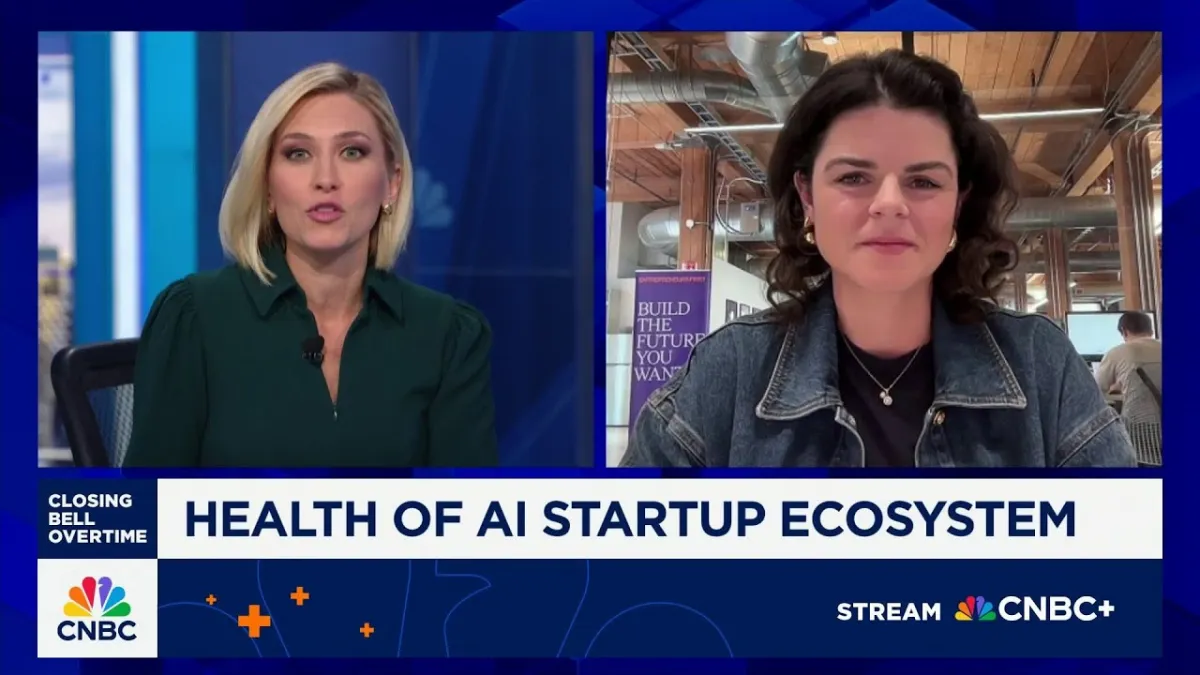
Artificial intelligence is not merely a technological wave; it is a profound economic restructuring, creating unprecedented opportunities for early-stage startups and reshaping the venture capital landscape. This sentiment was robustly articulated by Alice Bentinck, Co-founder and CEO of Entrepreneur First, during her recent appearance on CNBC's Closing Bell Overtime, where she spoke with Morgan Brennan and Jon Fortt from a bustling demo day in San Francisco. Bentinck’s insights painted a vibrant picture of an AI-driven startup ecosystem, highlighting its complementary nature rather than a competitive one with established tech giants, alongside a remarkably buoyant early-stage funding environment.
Entrepreneur First, described by Brennan as a "CAA for startup founders," operates at the vanguard of identifying and nurturing top talent across Europe, India, and the U.S., helping individuals forge co-founding teams and launch ventures from inception. Bentinck revealed that a staggering "85% of this cohort is working on AI or AI-related products," underscoring the undeniable gravitational pull AI exerts on aspiring entrepreneurs. This statistic alone speaks volumes about where the most ambitious and innovative minds are directing their energies.
The appeal of AI extends far beyond the typical tech sectors, permeating industries long considered resistant to rapid digital transformation. Bentinck observed a keen interest among young founders in "using AI to disrupt some of the more traditional industries, whether it be agriculture, whether it be manufacturing, whether it be finding rare minerals." She cited Daisy AI, a company transforming food processing by increasing efficiency by up to 80%, as a prime example of AI's broad applicability and disruptive potential in established markets. Such innovations are not confined to software; they are fundamentally altering physical and operational processes across diverse sectors.
A critical point of discussion revolved around the perceived threat posed by mega AI companies like OpenAI and Anthropic to smaller startups. Jon Fortt inquired if these well-funded behemoths were "eating their lunch" by incorporating features that might otherwise be developed by nascent companies. Bentinck firmly rejected this zero-sum perspective, stating, "We really see this as a complementary part of the ecosystem." She elaborated that while large AI labs are developing "absolutely incredible models," there is an equally exciting layer of application AI startups building innovative products and services *on top* of these foundational models. As the underlying models improve, so too does the potential for novel applications, fostering a symbiotic relationship rather than cutthroat competition.
This cooperative dynamic is fueling an exceptionally robust early-stage venture capital market. Bentinck reported that the early-stage market is "really hot right now." She noted that "prices, so the valuations of the companies, [are] going up every quarter," reflecting strong investor confidence and heightened competition for promising ventures.
Related Reading
- Sequoia’s Roelof Botha: Paranoia, Cost, and the Realities of Venture Capital
- AI Cycle's Long Runway: Why It's Not Your Grandfather's Tech Bubble
- AI's Phase Shift: Navigating the Supercycle's Creative Destruction
The speed at which capital is being deployed is equally remarkable. Bentinck highlighted that companies are "being able to raise, you know, 5 to 7 million dollars within a matter of days post demo day." This rapid fundraising cycle is a testament to the intense demand for AI innovation and the efficiency of the current VC ecosystem. This environment makes founding an increasingly attractive career path for talented individuals.
The overall outlook, according to Bentinck, is overwhelmingly positive. The increased flow of capital and the acceleration of fundraising are drawing more founders into the ecosystem, particularly younger individuals who view entrepreneurship as an aspirational career. While some might question if there's an "oversupply of capital," Entrepreneur First actively addresses this by increasing the supply of high-quality, founder-led companies through its unique incubation process. The sustained enthusiasm and investment in AI startups suggest a durable trend, driven by both technological advancements and a supportive funding environment, paving the way for a new generation of industry disruptors.