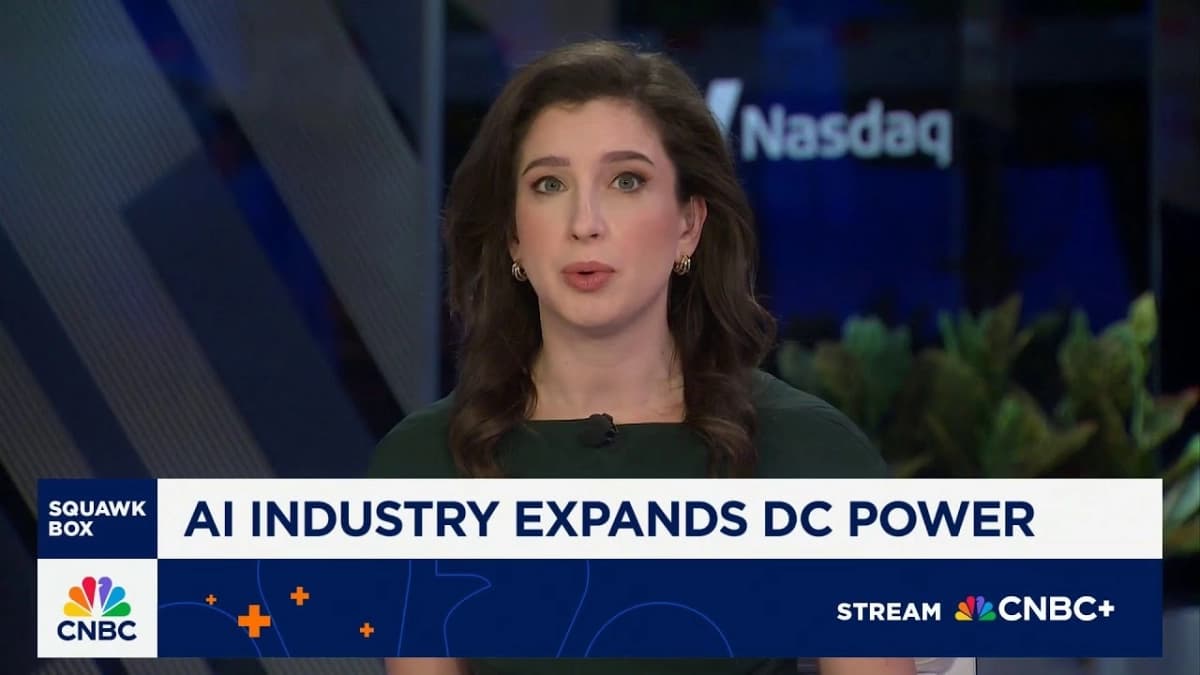
The artificial intelligence industry is rapidly escalating its engagement with Washington D.C., marking a significant shift in its approach to policy and regulation. As CNBC's Emily Wilkins reported to Becky Quick on "Squawk Box," AI companies are not merely observing the legislative landscape; they are actively shaping it through a multifaceted strategy involving increased lobbying, physical expansion, and direct advocacy. This aggressive push highlights a recognition within the industry that its future is inextricably linked to federal oversight and the rules of engagement set by the government.
Wilkins underscored this burgeoning influence, stating, "the AI industry, it's really making itself felt in DC right now through lobbying efforts, through these new campaigns that are being launched, even its physical presence in DC." This sentiment is corroborated by concrete actions: companies like Anthropic, OpenAI, CoreWeave, NVIDIA, and Scale AI are either establishing new offices in the capital area or significantly expanding their existing footprints. This physical proximity facilitates more direct and frequent interactions with lawmakers and regulators, an essential strategy for any sector seeking to influence policy.
Beyond physical presence, the financial commitment to lobbying has surged. Data from the last quarter reveals unprecedented spending by major AI players. NVIDIA, for instance, which only began formal lobbying earlier this year, dramatically increased its spending to $1.9 million in Q3. Similarly, Andreessen Horowitz (A16Z), a prominent venture capital firm with significant AI investments, surpassed $1 million in lobbying expenditures for the first time in Q3. These figures represent a clear "AI lobbying blitz," as Wilkins termed it, demonstrating a concerted effort to sway legislative outcomes.
However, the AI industry is not a monolith with unified priorities. While many companies seek a conducive regulatory environment for innovation, some, like Anthropic, have taken a distinct stance. Anthropic’s CEO has advocated for more robust AI safety standards, even suggesting a moratorium on certain AI laws if they are deemed too blunt or restrictive. This divergence reflects the complex ethical and practical considerations inherent in AI development, where the pace of technological advancement often outstrips the legislative capacity to understand and govern it.
Lawmakers, too, are deeply divided on the optimal approach to AI regulation. The White House has expressed a desire for federal preemption, aiming to establish uniform national standards that would override disparate state laws. Conversely, some Republicans, including Senators Josh Hawley and Marjorie Taylor Greene, have voiced caution against such an approach. This tension between federal and state authority mirrors historical patterns in emerging tech sectors. Becky Quick astutely observed, "It takes a long time for the federal government to figure out these new industries," citing e-commerce and social media as precedents where states often stepped in first to regulate before federal action coalesced.
The absence of a comprehensive AI bill with a clear path through Congress further complicates matters. The legislative process is slow, often lagging behind the rapid evolution of technology. While there is a general consensus on the necessity of regulation, the specifics remain elusive. As Wilkins highlighted, "I think what most folks on the Hill will tell you is give me the details. Let's actually see something on paper." This demand for concrete proposals underscores the difficulty in translating broad principles into actionable legislation that can garner bipartisan support and navigate the intricacies of congressional procedure.
The debate also carries significant geopolitical weight. The US is acutely aware of the global race in AI, particularly concerning China. This broader strategic competition influences discussions around regulation, with some advocating for policies that prioritize development and deployment to maintain a competitive edge, while others emphasize safety and ethical considerations to prevent potential harms. The challenge lies in striking a balance that fosters innovation without compromising national security or public welfare.
Related Reading
- Amazon's $50 Billion AI Bet: Reshaping Government Supercomputing
- Alphabet's Vertical AI Dominance Threatens Nvidia-OpenAI Ecosystem
- Alibaba's Qwen and the Geopolitics of AI Integration
Despite these hurdles, there is bipartisan interest in addressing AI. Task forces have been formed, and various members of Congress, such as Majority Leader Steve Scalise and Representative Brett Guthrie, are actively engaged. These efforts suggest a willingness to find common ground, but the devil remains in the details.
Legislation in Congress is often 90% there, with the last 10% proving the most difficult to negotiate. The AI industry's push for influence in D.C. is a clear indicator of this ongoing struggle.