
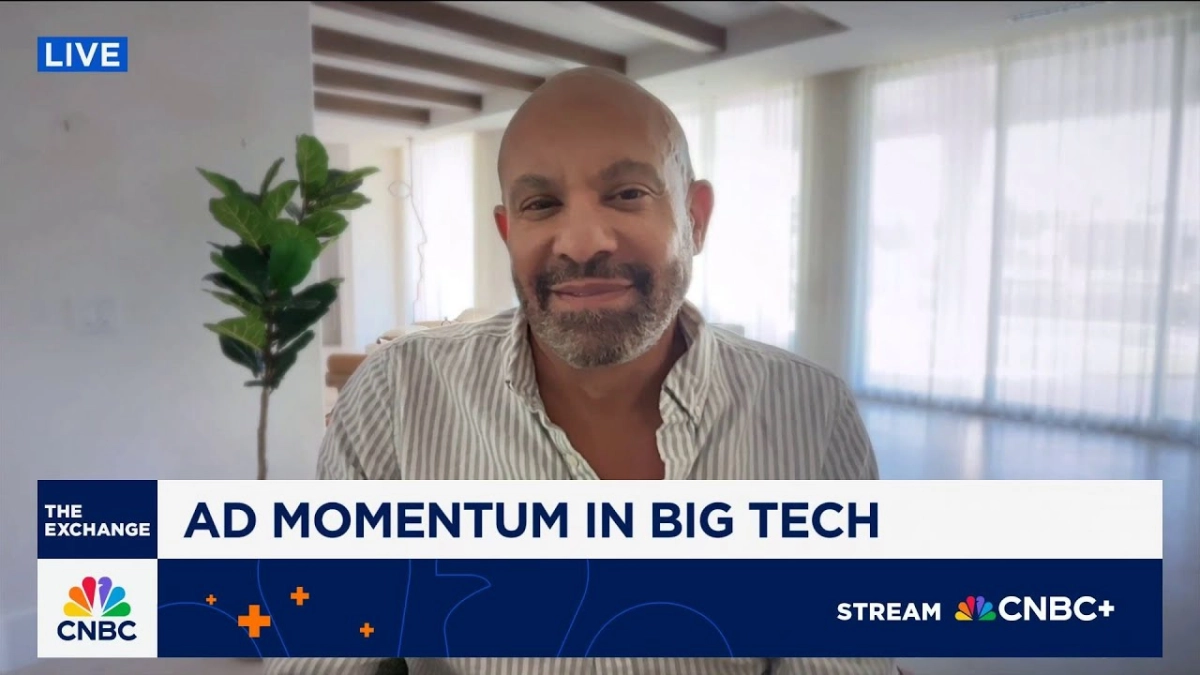
“If someone came to you and said, ‘Hey, let’s play a game, you give me a dollar and I’ll give you three dollars back,’ when would you stop playing that game?” This potent analogy, offered by MNTN CEO Mark Douglas, encapsulates the fundamental shift driving the current digital advertising boom: artificial intelligence is making ad spend demonstrably profitable, transforming marketing from a speculative endeavor into a calculated investment. The era of vague brand awareness campaigns is yielding to a new paradigm where every dollar spent is tracked, optimized, and expected to yield a measurable return.
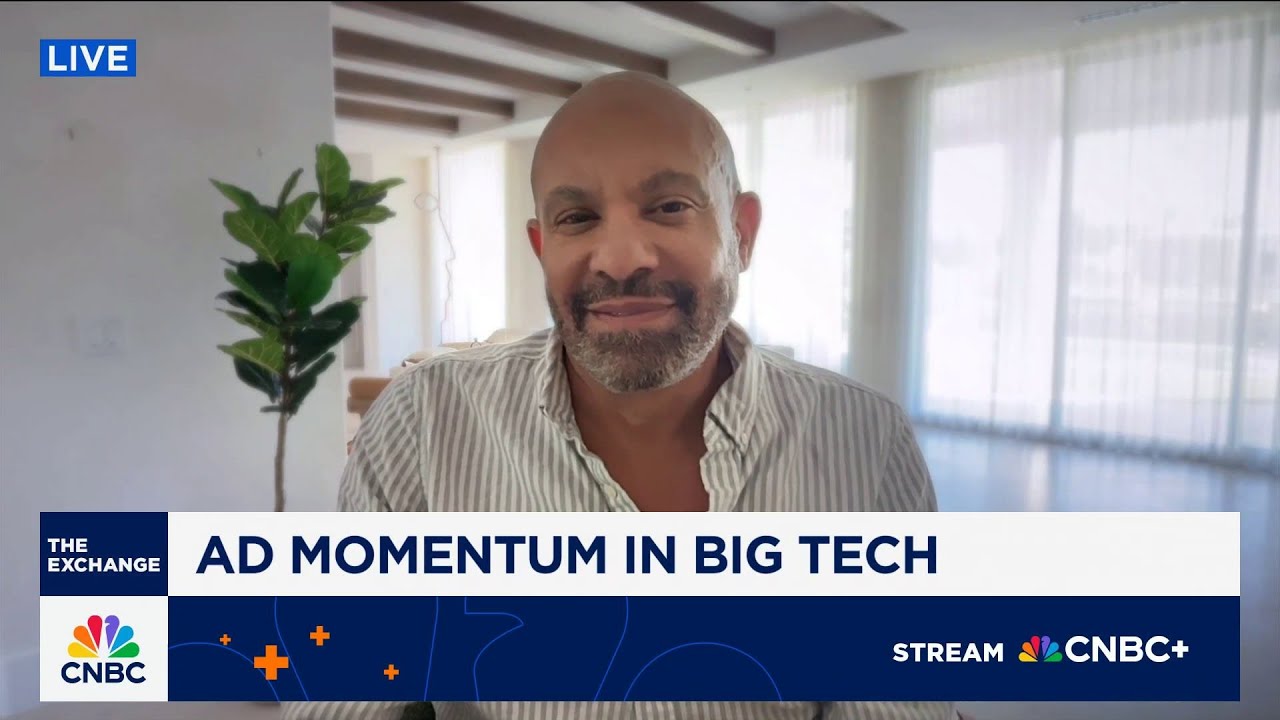
Douglas recently spoke with CNBC’s ‘The Exchange’ about how AI is profoundly reshaping the digital advertising landscape, highlighting two critical areas of impact: the precise targeting of audiences and the efficient generation of ad creative. His insights illuminate the mechanisms behind the unprecedented revenue growth seen across major tech platforms and signal the future trajectory of the industry.
At its core, advertising has always been about connecting a product with a potential buyer. Douglas notes that while many focus on the ad itself, "what really underpins advertising is the who, who is the ad being delivered to." AI is rapidly enhancing this capability across the board, enabling companies like Meta, Google, Amazon, and MNTN to identify with increasing accuracy who is most likely to be interested in a particular product or service. This hyper-targeting ensures that ad impressions are not wasted on indifferent audiences, drastically improving the efficiency of campaigns.
The second major area where AI is proving transformative is in creative production. Douglas introduced MNTN’s QuickFrame AI, a platform designed to create professional-grade video ads by leveraging multiple AI models. This innovation "lowers the cost and increases the number of ad units a business has access to," democratizing high-quality creative development that was once the exclusive domain of large agencies and hefty budgets. Businesses can now experiment with diverse messaging and visuals at an unprecedented scale, quickly iterating to find the most effective creative combinations.
The financial results of this AI-driven evolution are staggering. Last quarter, Amazon reported $17.7 billion in ad revenue, a 24% year-over-year increase. Meta’s ad revenue soared to $50.08 billion, up 26% annually. Alphabet recorded $74.18 billion in ad revenue, a 13% jump, while Netflix achieved its best quarter for ad sales ever.
These astronomical figures are not merely coincidental; they are a direct consequence of AI's ability to drive a high return on ad spend. Douglas emphasizes that the key metric in advertising is no longer abstract "ratings" but a tangible "return on ad spend." When advertisers can confidently measure that for every dollar invested, they receive three dollars back, the incentive to increase investment becomes irresistible. This direct, measurable correlation between ad spend and revenue generation encourages businesses to allocate more budget, fueling the exponential growth observed in digital advertising.
Related Reading
- Alphabet's AI Investments Drive Record Revenue, Defying Cannibalization Fears
- Meta's AI Patience Test: Goldman Sachs on Divergent Tech Fortunes
- Alphabet's AI Advantage: A Bullish Outlook on Google's Enduring Dominance
The continuous improvement of these AI technologies means that companies are consistently finding more effective ways to deploy their ad budgets. This feedback loop creates a virtuous cycle: better AI leads to higher ROAS, which in turn leads to more investment, further refining the AI models and processes. The market thus expands not just through volume, but through enhanced efficacy.
Looking ahead, the logical extension of this trend points towards an even more individualized advertising experience. When asked about the prospect of individual ads being delivered to individual people, even during collective viewing events like the Super Bowl, Douglas affirmed that this future is "not that far away." While regulatory and approval processes for traditional television might introduce some delays, the underlying technology for such hyper-personalization is already being developed and deployed across various digital channels. The future of advertising is one where every consumer receives content uniquely tailored to their interests, dynamically generated and delivered with precision, making the "who" and the "what" of advertising more interconnected than ever before.




