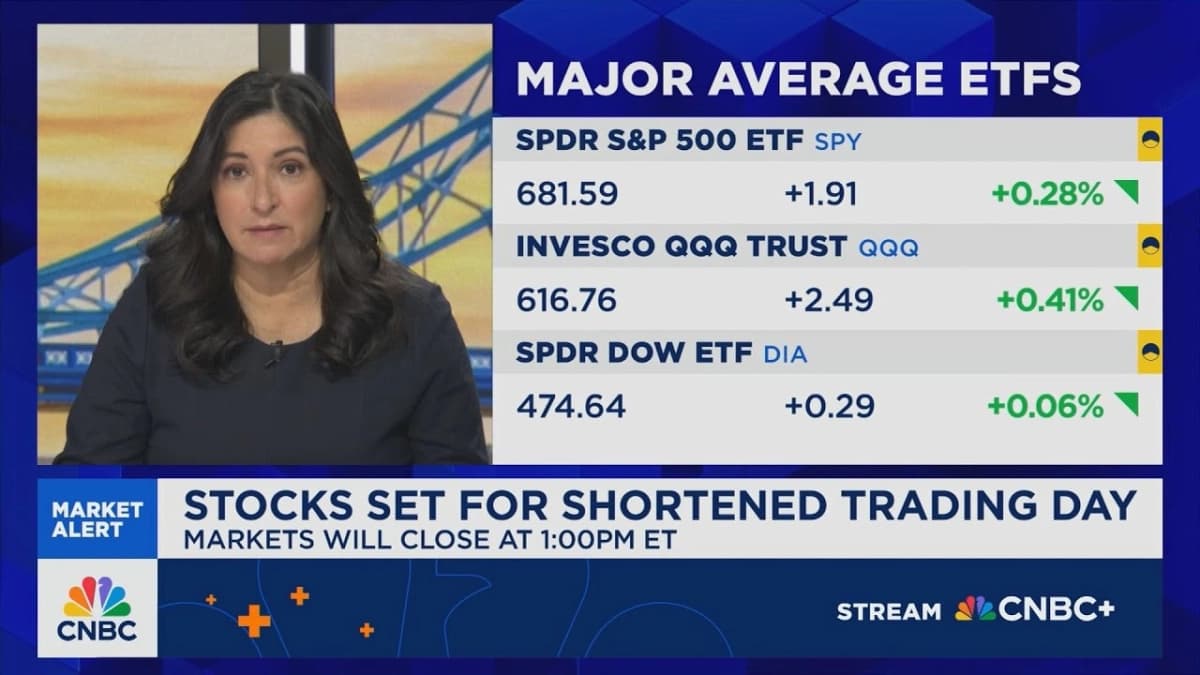
The trajectory of artificial intelligence capital expenditure is poised to be a significant driver for market performance through 2026, a central theme explored in a recent CNBC discussion. Gina Sanchez, CEO of Chantico Global and chief market strategist at Lido Advisors, engaged with a CNBC anchor to dissect the market roadmap for 2026, deliberating whether AI investment or shifts in monetary policy would be the primary catalyst for stock gains. Their conversation offered a nuanced perspective for founders, venture capitalists, and AI professionals navigating the evolving economic landscape.
Sanchez laid out her firm’s core assumption for the coming years, stating plainly, "Our 2026 market roadmap does assume that we continue to see significant capex spending into the infrastructure of AI." This capital infusion is not merely a transient trend but a sustained commitment expected to bolster the "picks and shovels" companies within the AI ecosystem. Firms like Nvidia, Microsoft, and Alphabet are positioned as key beneficiaries, underpinning the continued growth of the AI infrastructure. The sheer scale of this investment, with major tech players committing billions, suggests a foundational shift rather than a speculative bubble, indicating that the core technology providers remain compelling long-term plays despite their current valuations.
While the "Magnificent Seven" dominated market gains in 2025, Sanchez anticipates a broader market participation in 2026. This shift is critical for a healthier, more diversified market performance. The concentration of gains in a handful of mega-cap tech stocks has been a point of concern for many analysts, but the expectation of a "broadening out" suggests a more inclusive growth environment.
This broader market engagement, however, is contingent upon a crucial external factor: the re-opening of the IPO and M&A markets. Sanchez emphasized, "One of those two things needs to happen. We don't have to have both, but we need one of them." The dormancy in these markets has stifled liquidity and growth opportunities for smaller, innovative companies, which are often the engines of new economic cycles. A resurgence in IPOs and M&A activity would unlock capital, stimulate competition, and allow a wider array of companies, including small-cap firms that have been "in the mud" for several years, to gain traction and contribute to overall market buoyancy.
The catalyst for unlocking these dormant markets, according to Sanchez, is a shift in monetary policy. Specifically, she points to "an expectation of rate cuts in 2026" as essential for spurring broader market sentiment and enabling M&A and IPO activity. The current high-interest rate environment has made borrowing more expensive, dampening the appetite for new public offerings and large-scale acquisitions. A dovish pivot by the Federal Reserve, supported by economic data, would lower the cost of capital, making it more attractive for companies to go public, for larger entities to acquire smaller innovators, and for venture capital to find more viable exit strategies. This is a critical insight for VCs and founders, as the availability of capital and exit opportunities directly impacts the startup ecosystem's vitality.
Despite the prevailing economic headwinds that might justify rate cuts, Sanchez maintains an optimistic outlook on corporate earnings. She expects earnings to "continue to be quite good" in 2026, suggesting that companies, particularly those benefiting from AI infrastructure build-out, possess inherent strength that transcends some broader economic concerns. This resilience in earnings, coupled with potential rate cuts, could create a fertile ground for investment. The market strategist highlighted that many companies within the broader tech sector, including Microsoft, Google, and Meta, are "very, very reasonably priced" when considering the ongoing significant investments in AI. This underscores an opportunity for strategic investment in established players that are actively shaping the future of AI.
Related Reading
- Epoch AI Unveils Frontier Data Centers Hub: Mapping AI's Monumental Infrastructure
- AI's Insatiable Power Hunger Redefines Data Center Infrastructure
- AI Shifts from Build-Out to Utilization: A New Investment Landscape
However, Sanchez cautioned against a blanket approach, advising investors to be "very picky" about their choices. While some large tech firms offer value, others, like Palantir, may not be as favorably priced. This discernment is vital for founders and investors seeking to capitalize on the AI trend without succumbing to overvalued assets. The real estate sector was also identified as an "interesting space" where rate cuts could alleviate current frustrations, potentially offering another avenue for investment as market conditions normalize.
Ultimately, the 2026 market outlook is a complex interplay of sustained AI capital expenditure, the re-invigoration of IPO and M&A markets, and the anticipated easing of monetary policy. These factors, if they align as predicted, could usher in a period of broader market participation and robust earnings, moving beyond the concentrated gains of recent years.