

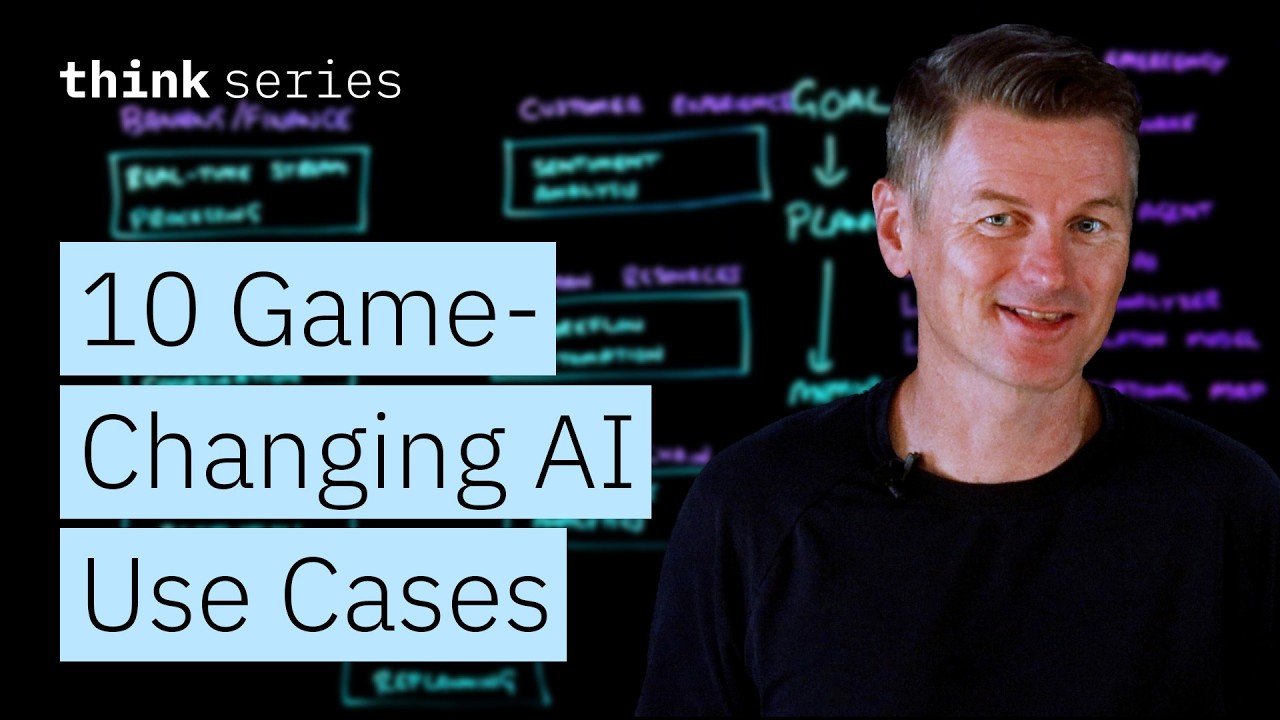
"AI agents can reason, plan, and act autonomously to achieve complex goals," states Martin Keen, a Master Inventor at IBM. Unlike traditional chatbots that merely respond to single prompts, AI agents maintain state, dissect intricate tasks into manageable sub-tasks, execute them sequentially or in parallel, and dynamically adjust their strategies based on intermediate outcomes. Keen's presentation illuminated the practical, real-world benefits of these advanced AI systems, focusing on three primary use cases: Internet of Things (IoT) applications, Retrieval Augmented Generation (RAG) for content creation, and multi-agent workflows in disaster response.
In the agricultural sector, AI agents integrated with IoT devices promise to significantly boost crop yield and minimize waste. The process begins with a clear goal, such as "maximize crop yield." An AI planner, leveraging external tools like weather APIs and soil sensor data, combined with historical and contextual information stored in its memory, devises an optimal irrigation strategy. This plan is then passed to an executor, which generates an actionable sequence, for instance, instructing IoT controllers to initiate irrigation for a specific duration. This entire cycle is iterative, constantly refining its decisions based on changing sensor data and learning from past crop growth outcomes, leading to increasingly resource-efficient farming.
The realm of content creation also benefits immensely from agentic AI, particularly through Retrieval Augmented Generation (RAG). For a goal like "write a blog post on solar energy for students," the AI planner employs a web search tool to unearth current statistics, case studies, and research papers. This retrieved information is then chunked, embedded, and stored in a vector database, forming the agent's specialized memory for the task. The executor drafts the content, drawing not just on its foundational large language model, but critically, on the fresh, relevant facts pulled from its vector database. This iterative process allows the agent to critique its own writing, asking questions like "Is this section well-supported by the data?" or "Does the tone match the brief?" and subsequently refining the output until it meets the specified criteria.
Perhaps the most compelling application lies in multi-agent systems for disaster response, where every second is critical. Here, a "coordination agent" orchestrates several specialist agents, each handling a distinct data stream. For example, one agent might analyze satellite imagery for collapsed buildings, another scans social media for distress calls, and a third runs simulation models to forecast damage. All these specialized agents feed intelligence into a shared situational map, their collective memory, allowing for a comprehensive, real-time understanding of the unfolding crisis. The executor then recommends immediate actions, which the action component swiftly coordinates, dispatching fire trucks, routing ambulances, and sending evacuation alerts. This parallel processing capability allows for an unprecedented level of real-time situational awareness and coordinated action, far beyond human capacity.
Beyond these detailed examples, AI agents are revolutionizing other sectors. In banking and finance, they enable real-time stream processing for fraud detection. Customer experience agents leverage sentiment analysis to tailor responses, while healthcare systems employ multi-agent coordination for managing lab results and prescriptions. Human resources benefit from workflow automation, IT operations from automated remediation, and supply chains from predictive analytics. Even transportation is transformed through dynamic replanning of routes based on changing conditions.