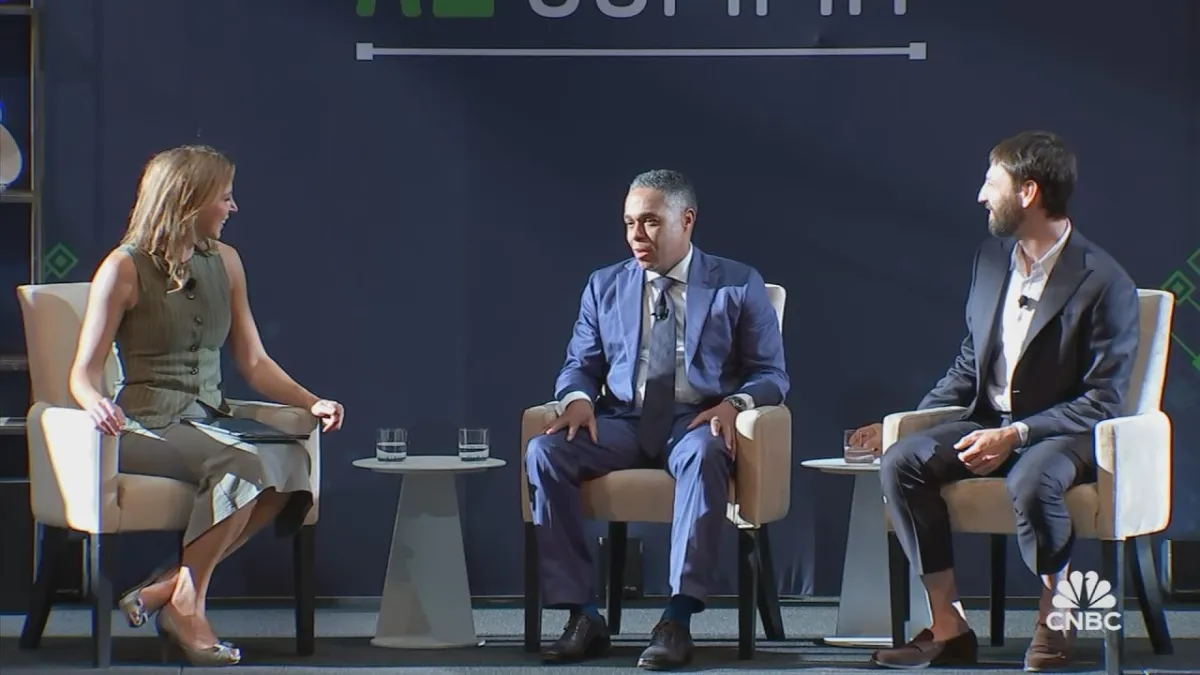
The future of healthcare, profoundly impacted by artificial intelligence, hinges not merely on technological advancement but on the readiness of its human practitioners. This pivotal insight drove Steve Beard, CEO of Adtalem Global Education, to unveil a significant partnership at the recent CNBC AI Summit. Speaking with a panel, Beard detailed Adtalem's collaboration with Google to develop the first comprehensive set of AI credentials designed specifically for clinicians, aiming to integrate cutting-edge AI tools into healthcare practice and education.
Beard articulated a pressing challenge within the healthcare sector: rampant burnout and career dissatisfaction among clinicians. He stated unequivocally that "everything we know from the surveys of clinicians today is that the number one driver of burnout and career dissatisfaction is the administrative burdens associated with practice." This administrative overload diverts valuable time and energy away from direct patient care, diminishing the very purpose that draws individuals to these demanding professions.
Adtalem's strategic response, forged with Google, directly targets this systemic issue by focusing on workforce readiness. Beard emphasized that while AI technology is evolving at a rapid pace, "the critical contingency that has to be solved for is workforce readiness. How do we get clinicians ready to adopt these technologies in ways that allow the investments to deliver the returns that delivery systems are looking for?" The initiative seeks to bridge the gap between technological innovation and practical application, ensuring healthcare professionals are equipped to leverage AI effectively.
The partnership will leverage Google Cloud to create a series of certifications. These credentials will encompass both general AI fluency and domain-specific tools tailored for various healthcare roles, including nurses, doctors, and imaging technicians. The initial certifications are slated for availability in 2026, marking a concerted effort to prepare future and current clinicians for an AI-integrated environment. Adtalem's objective is to ensure that graduates are "day one ready" to utilize these advanced tools upon entering the workforce, transforming both the efficiency and appeal of healthcare careers.
A key concern raised by the interviewer, reflecting broader anxieties, was the potential for AI to render certain healthcare jobs obsolete, dissuading students from entering the field. Beard acknowledged that "every major tech innovation comes with some labor dislocations," but firmly asserted that AI's role in healthcare is fundamentally complementary. He argued that "AI is a fantastic complement... and we should be encouraging the adoption of these tools because what they can do for the experience that we all have in US healthcare."
This perspective underscores a critical insight: AI in healthcare is not a replacement for human expertise but an augmentation. It is designed to alleviate the mundane, repetitive tasks that contribute to burnout, thereby freeing clinicians to focus on more complex decision-making, empathetic patient interaction, and the human elements of care that machines cannot replicate. The goal is to enhance, not diminish, the human touch.
Related Reading
- Healthcare AI: Capacity Restorer, Not Job Destroyer
- CEOs Brace for AI-Driven Job Transformation Amid Mild Economic Slowdown
Indeed, Beard highlighted that "the human element in healthcare, particularly in the way it drives trust between the clinician and the patient, is something that can't really be replicated by the machines." He cited Adtalem's partnership with Hippocratic AI, where voice-based agents handle non-diagnostic issues. While patients appreciate the efficiency of these AI interactions, their confidence ultimately stems from the knowledge that human nurses and physicians oversee these conversations, ensuring compliance and quality. This trust factor remains paramount and distinctly human.
By integrating AI education directly into healthcare curricula, Adtalem and Google aim to redefine professional satisfaction. Clinicians, unburdened by excessive administrative tasks, will have the opportunity "to do more of what they joined this profession to do in the outset, which is be at the bedside caring for patients." This strategic investment in AI literacy and specialized tools promises to not only improve patient outcomes but also to revitalize the appeal of healthcare professions, ensuring a robust and skilled workforce for the future.