

Why Amazon AGI Lab Says AI Agents Don't Understand You

Danielle Perszyk from the Amazon AGI Lab explains why current AI agents do not truly understand human users, highlighting the limitations of statistical models.

8 min read
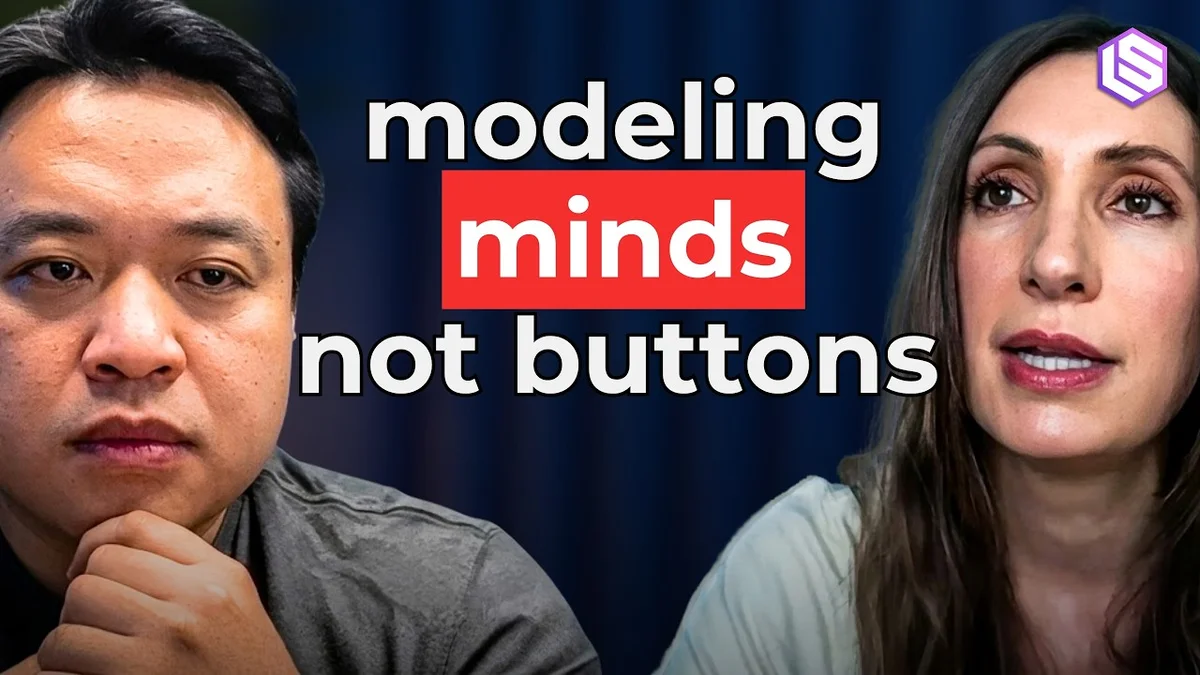
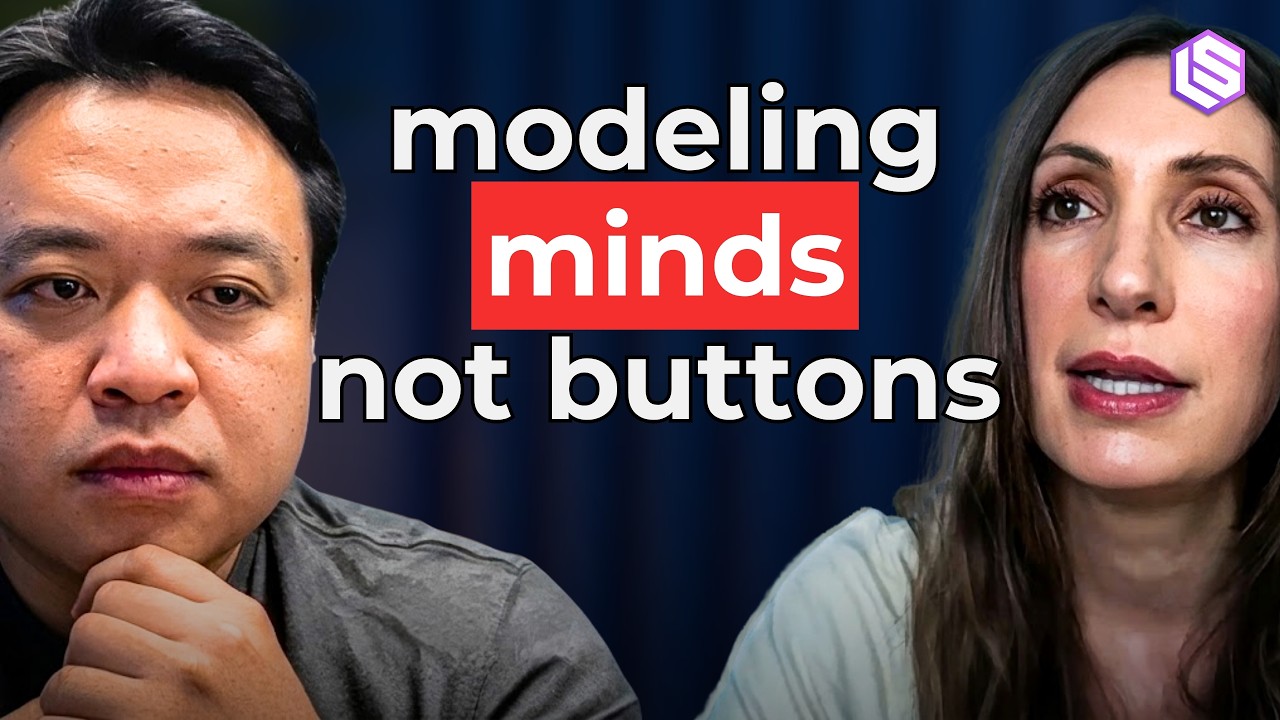
Danielle Perszyk from Amazon AGI Lab speaking about AI agent understanding
Latent Space

Visual TL;DR. Danielle Perszyk explains why AI Agents Don't Understand. AI Agents Don't Understand due to Statistical Model Limits. Statistical Model Limits creates Gap in Understanding. Gap in Understanding requires Deeper Comprehension Path. Deeper Comprehension Path informs Implications for AI. Danielle Perszyk provides AGI Lab Insights. AGI Lab Insights influences Implications for AI.

  1. Danielle Perszyk: researcher at Amazon AGI Lab, advancing human-like AI intelligence
  2. AI Agents Don't Understand: current AI agents lack true comprehension of human users
  3. Statistical Model Limits: sophisticated pattern recognition not genuine human-like comprehension
  4. Gap in Understanding: fundamental challenge between pattern recognition and true comprehension
  5. Deeper Comprehension Path: moving beyond current limitations to achieve genuine human understanding
  6. Implications for AI: crucial insights for developing conversational agents and autonomous systems
  7. AGI Lab Insights: Perszyk's arguments highlight core challenges in artificial general intelligence
Visual TL;DR
Visual TL;DR, startuphub.ai Danielle Perszyk explains why AI Agents Don't Understand. AI Agents Don't Understand due to Statistical Model Limits explains why due to Danielle Perszyk AI Agents Don't Understand Statistical Model Limits Implications for AI From startuphub.ai · The publishers behind this format
Visual TL;DR, startuphub.ai Danielle Perszyk explains why AI Agents Don't Understand. AI Agents Don't Understand due to Statistical Model Limits explains why due to Danielle Perszyk AI Agents Don'tUnderstand Statistical ModelLimits Implications forAI From startuphub.ai · The publishers behind this format
Visual TL;DR, startuphub.ai Danielle Perszyk explains why AI Agents Don't Understand. AI Agents Don't Understand due to Statistical Model Limits explains why due to Danielle Perszyk researcher at Amazon AGI Lab, advancinghuman-like AI intelligence AI Agents Don't Understand current AI agents lack true comprehensionof human users Statistical Model Limits sophisticated pattern recognition notgenuine human-like comprehension Implications for AI crucial insights for developingconversational agents and autonomoussystems From startuphub.ai · The publishers behind this format
Visual TL;DR, startuphub.ai Danielle Perszyk explains why AI Agents Don't Understand. AI Agents Don't Understand due to Statistical Model Limits explains why due to Danielle Perszyk researcher atAmazon AGI Lab,advancing… AI Agents Don'tUnderstand current AI agentslack truecomprehension of… Statistical ModelLimits sophisticatedpattern recognitionnot genuine… Implications forAI crucial insightsfor developingconversational… From startuphub.ai · The publishers behind this format
Visual TL;DR, startuphub.ai Danielle Perszyk explains why AI Agents Don't Understand. AI Agents Don't Understand due to Statistical Model Limits. Statistical Model Limits creates Gap in Understanding. Gap in Understanding requires Deeper Comprehension Path. Deeper Comprehension Path informs Implications for AI. Danielle Perszyk provides AGI Lab Insights. AGI Lab Insights influences Implications for AI explains why due to creates requires informs provides influences Danielle Perszyk researcher at Amazon AGI Lab, advancinghuman-like AI intelligence AI Agents Don't Understand current AI agents lack true comprehensionof human users Statistical Model Limits sophisticated pattern recognition notgenuine human-like comprehension Gap in Understanding fundamental challenge between patternrecognition and true comprehension Deeper Comprehension Path moving beyond current limitations toachieve genuine human understanding Implications for AI crucial insights for developingconversational agents and autonomoussystems AGI Lab Insights Perszyk's arguments highlight corechallenges in artificial generalintelligence From startuphub.ai · The publishers behind this format
Visual TL;DR, startuphub.ai Danielle Perszyk explains why AI Agents Don't Understand. AI Agents Don't Understand due to Statistical Model Limits. Statistical Model Limits creates Gap in Understanding. Gap in Understanding requires Deeper Comprehension Path. Deeper Comprehension Path informs Implications for AI. Danielle Perszyk provides AGI Lab Insights. AGI Lab Insights influences Implications for AI explains why due to creates requires informs provides influences Danielle Perszyk researcher atAmazon AGI Lab,advancing… AI Agents Don'tUnderstand current AI agentslack truecomprehension of… Statistical ModelLimits sophisticatedpattern recognitionnot genuine… Gap inUnderstanding fundamentalchallenge betweenpattern recognition… DeeperComprehension… moving beyondcurrent limitationsto achieve genuine… Implications forAI crucial insightsfor developingconversational… AGI Lab Insights Perszyk's argumentshighlight corechallenges in… From startuphub.ai · The publishers behind this format

In a recent video, Danielle Perszyk from the Amazon (NASDAQ:AMZN) AGI Lab presented a compelling argument on why AI agents, despite their advancements, still fall short of truly understanding human users. Her insights highlight a fundamental challenge in artificial intelligence: the gap between sophisticated pattern recognition and genuine comprehension. This discussion is crucial for anyone following the development of AI, particularly as conversational agents and autonomous systems become more integrated into our daily lives.

Why Amazon AGI Lab Says AI Agents Don't Understand You - Latent Space
Why Amazon AGI Lab Says AI Agents Don't Understand You — from Latent Space

Who Is Danielle Perszyk

Danielle Perszyk is a researcher at the Amazon AGI Lab, a division within Amazon dedicated to advancing the state of artificial general intelligence. Her work focuses on the theoretical and practical aspects of creating AI systems that can exhibit human-like intelligence, including understanding and reasoning. Her perspective offers a unique blend of academic rigor and practical industry experience, making her observations on AI's current limitations particularly relevant.

The Core Problem: Lack of True Understanding

Perszyk's central thesis is that today's AI agents, while remarkably capable in many areas, do not actually 'understand' in the way humans do. They are highly effective at statistical pattern matching and generating coherent responses based on vast datasets, but this capability does not equate to genuine comprehension of user intent or the underlying world model.

She explained, "AI agents are very good at predicting the next word, or the next action, based on what they've seen before. But that's not understanding." This distinction is critical. An agent might flawlessly complete a sentence or follow a command, yet it lacks the common-sense reasoning and contextual awareness that a human would bring to the same task. This limitation becomes apparent when agents encounter novel situations or subtle nuances in human language that deviate from their training data.

The Limits of Statistical Models

The current generation of AI models, particularly large language models, are built on statistical relationships. They learn to associate words and concepts, inferring meaning from context without ever truly grasping the 'why' behind those associations. Perszyk illustrated this point, stating that an agent might know that 'cat' and 'meow' are related, but it doesn't understand what a cat is or why it meows.

This reliance on statistical correlation means agents often struggle with:

  • Ambiguity: Human language is inherently ambiguous, with words and phrases often having multiple meanings depending on context. Agents frequently fail to disambiguate without explicit cues.
  • Implicit Knowledge: Humans operate with a vast amount of unstated, common-sense knowledge about the world. Agents lack this implicit understanding, leading to errors in situations that seem obvious to a person.
  • Novelty: When faced with scenarios outside their training distribution, agents can produce nonsensical or incorrect responses, highlighting their lack of generalized reasoning.

"They don't have a model of the world, or of you, the user, that goes beyond the surface-level patterns," Perszyk emphasized. This means that while an agent can simulate understanding, its internal representation of reality is fundamentally different and far less rich than a human's.

The Path to Deeper Comprehension

For AI agents to truly 'understand,' Perszyk suggested a shift beyond mere statistical pattern recognition. The goal should be to enable agents to build robust, dynamic models of the world and of individual users. This would involve:

  • Contextual Reasoning: Developing agents that can infer and maintain context over extended interactions, rather than treating each turn as a fresh start.
  • Common-Sense Knowledge Integration: Equipping agents with a foundational understanding of physics, social dynamics, and everyday facts, similar to how children learn about the world.
  • Intent Modeling: Moving beyond simple command recognition to deeply understand the user's underlying goals, motivations, and emotional state.

The work at the Amazon AGI Lab, as implied by Perszyk's discussion, is focused on these deeper challenges. It's about moving from systems that merely respond to systems that truly grasp the complexities of human communication and the world around them. This transition is not just an academic pursuit; it has profound implications for the utility and trustworthiness of future AI applications.
Implications for AI Development

Perszyk's insights serve as a critical reminder for AI developers and researchers. While impressive benchmarks are achieved with current methods, true AGI requires a more profound approach to understanding. Simply scaling up existing models may not be enough to bridge this gap.

The challenge lies in integrating different forms of intelligence: symbolic reasoning, statistical learning, and perhaps even embodied experiences. Only then can AI agents move from being sophisticated tools that mimic understanding to entities that genuinely comprehend and interact with the world on a deeper, more human-like level.

© 2026 StartupHub.ai. All rights reserved. Do not enter, scrape, copy, reproduce, or republish this article in whole or in part. Use as input to AI training, fine-tuning, retrieval-augmented generation, or any machine-learning system is prohibited without written license. Substantially-similar derivative works will be pursued to the fullest extent of applicable copyright, database, and computer-misuse laws. See our terms.