

Sam Altman Wins as Jury Sides With OpenAI Mission

A jury has dismissed Elon Musk's lawsuit against OpenAI, ruling he sued too late. This decision validates OpenAI's for-profit mission and removes a major legal obstacle.

6 min read
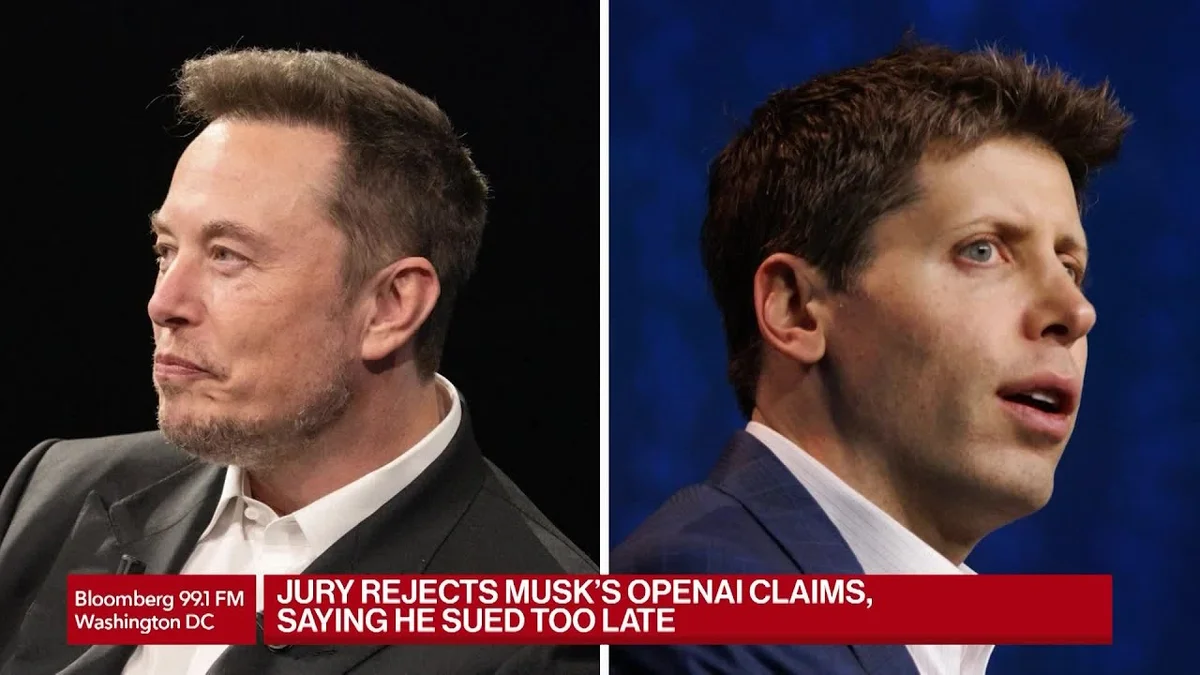
Split screen showing Elon Musk on the left and Sam Altman on the right.
Image credit: TechJournalist.com· Bloomberg Technology
Visual TL;DR
OpenAI's for-profit missionContext
strategic pivot towards commercialization and advanced AI development
From the article 5 mentionsA jury has dismissed Musk's claims that OpenAI violated its original mission by pursuing a for-profit model, ruling that Musk filed his lawsuit too late.
Musk sues OpenAIDriver
alleged breach of charitable trust by for-profit shift
From the article 6 mentionsSam Altman and OpenAI have emerged victorious in the legal battle brought forth by Elon Musk.
Jury's decisionCore
Musk filed lawsuit too late, statute of limitations
From the article 9 mentionsHowever, the jury's swift decision hinged on the statute of limitations, determining that Musk was aware of OpenAI's evolving business model for years and failed to act within the legally prescribed timeframe.
Lawsuit dismissedOutcome
From the article 4 mentionsA jury has dismissed Musk's claims that OpenAI violated its original mission by pursuing a for-profit model, ruling that Musk filed his lawsuit too late.
OpenAI mission validatedEffect
for-profit model and current trajectory are legally affirmed
From the article 3 mentionsHe sought to compel OpenAI to revert to its original non-profit mission.
Sam Altman prevailsCore
leader of OpenAI secures victory in legal dispute
From the articleSam Altman and OpenAI have emerged victorious in the legal battle brought forth by Elon Musk.
De-risked futureEffect
removes major legal obstacle for OpenAI's continued operations
From the article"This is this is really great news for the future of open AI," Schettenhelm stated.
Contents(3)

Sam Altman and OpenAI have emerged victorious in the legal battle brought forth by Elon Musk. A jury has dismissed Musk's claims that OpenAI violated its original mission by pursuing a for-profit model, ruling that Musk filed his lawsuit too late. This verdict significantly de-risks the company's current trajectory and validates its strategic pivot.

Musk's Claims and the Jury's Decision

Elon Musk, a co-founder of OpenAI, had alleged that the organization breached its charitable trust by shifting towards a for-profit structure. He sought to compel OpenAI to revert to its original non-profit mission. However, the jury's swift decision hinged on the statute of limitations, determining that Musk was aware of OpenAI's evolving business model for years and failed to act within the legally prescribed timeframe.

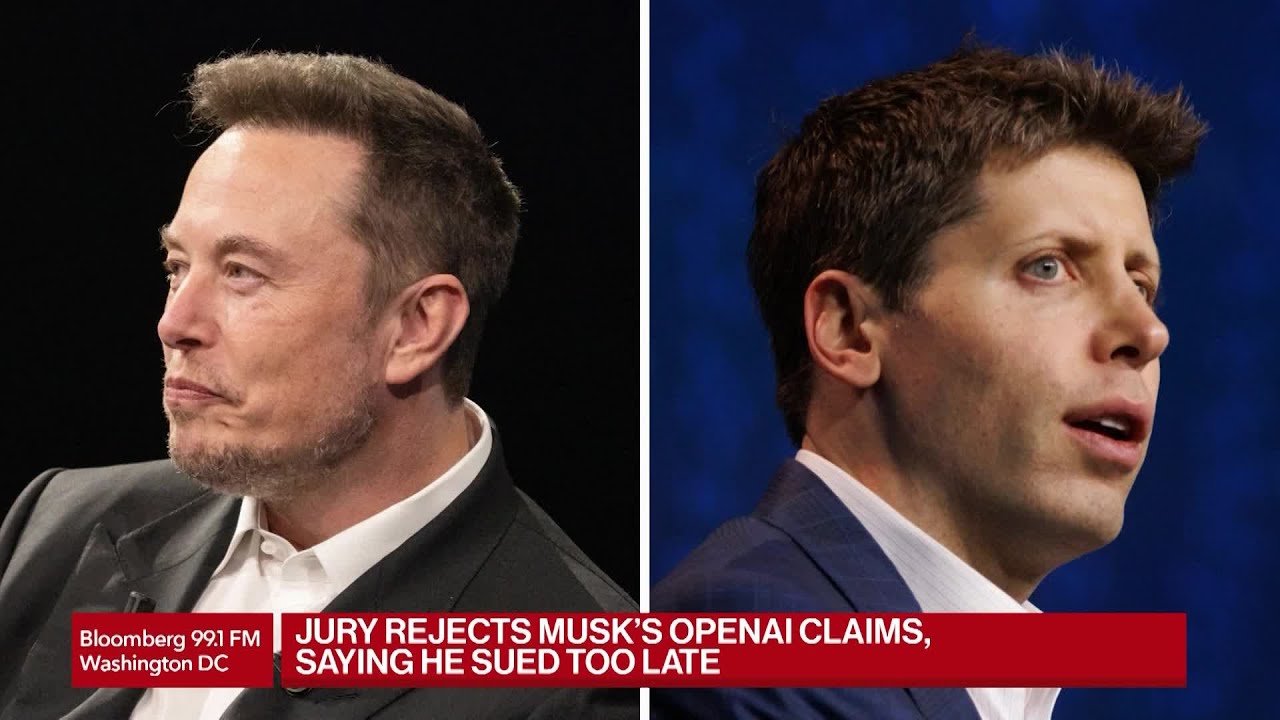
The full discussion can be found on Bloomberg Technology's YouTube channel.

Sam Altman Prevails in Trial vs. Elon Musk Over the OpenAI Mission - Bloomberg Technology
Sam Altman Prevails in Trial vs. Elon Musk Over the OpenAI Mission, from Bloomberg Technology

Matthew Schettenhelm, a Media Litigation Analyst at Bloomberg Intelligence, explained the significance of this ruling. "This is this is really great news for the future of open AI," Schettenhelm stated. "This lawsuit potentially threatened to hang over the company's head. ... Elon Musk was seeking court-issued limitations on the company's ability to pursue its for-profit mission and really to be limited and hamstrung by its original charitable roots."

The jury's verdict, delivered quickly after closing arguments, means that Musk's claims were dismissed without even needing to delve into the merits of whether OpenAI had indeed violated its original mission. "The jury came back with this decision very quickly," Schettenhelm noted. "They said on the statute of limitations, did Musk sue too late? Yes. He knew of this earlier and effectively could have sued earlier and and because he sued too late, the whole case gets dismissed."

Implications for OpenAI's Future

This legal victory provides crucial clarity and stability for OpenAI as it continues its aggressive development in the artificial intelligence space. The ruling effectively removes the threat of being forced back to a non-profit structure, allowing the company to continue its commercial endeavors, including its partnership with Microsoft. Schettenhelm highlighted that this outcome "reduces that risk. It eliminates that shadow potentially hanging over the company."

While Musk could potentially appeal the decision, Schettenhelm suggested that overturning a jury verdict is a challenging prospect for appellate courts. "Appeals courts have a really hard time second guessing a jury decision," he commented. The ruling also implies that state attorney generals, who typically oversee charitable trusts, would likely find it difficult to challenge OpenAI's current operational model given the jury's findings.

The Statute of Limitations in Tech Disputes

The core of the jury's decision, the statute of limitations, underscores a critical legal principle in business disputes. "You can't just sit on these things and then once you want to go after someone, bring it up many years down the road," Schettenhelm explained. This ruling emphasizes the importance of timely action when parties believe their rights have been infringed upon, particularly in fast-moving sectors like artificial intelligence where business models can evolve rapidly.

The case also brought to light the unique nature of the dispute, as such matters are often handled by state attorney generals rather than private litigants. "Typically suits like this would be brought by those states attorney's general, and they they didn't have a problem with it," Schettenhelm observed. "It was only Musk bringing what he claimed was a breach of charitable trust claim after his contract claim sort of fell away." The jury's verdict effectively sides with the current operational framework of OpenAI, signaling a significant win for its leadership and strategy.

© 2026 StartupHub.ai. All rights reserved. Do not enter, scrape, copy, reproduce, or republish this article in whole or in part. Use as input to AI training, fine-tuning, retrieval-augmented generation, or any machine-learning system is prohibited without written license. Substantially-similar derivative works will be pursued to the fullest extent of applicable copyright, database, and computer-misuse laws. See our terms.