

Sam Altman's OpenAI Alumni Now Lead Companies Worth $1 Trillion

Former OpenAI executives now lead companies worth over $1 trillion combined. Here is how Sam Altman's alumni network became his biggest rivals in the 2026 AI landscape.

7 min read
Sam Altman, OpenAI alumni network rivals, 2026
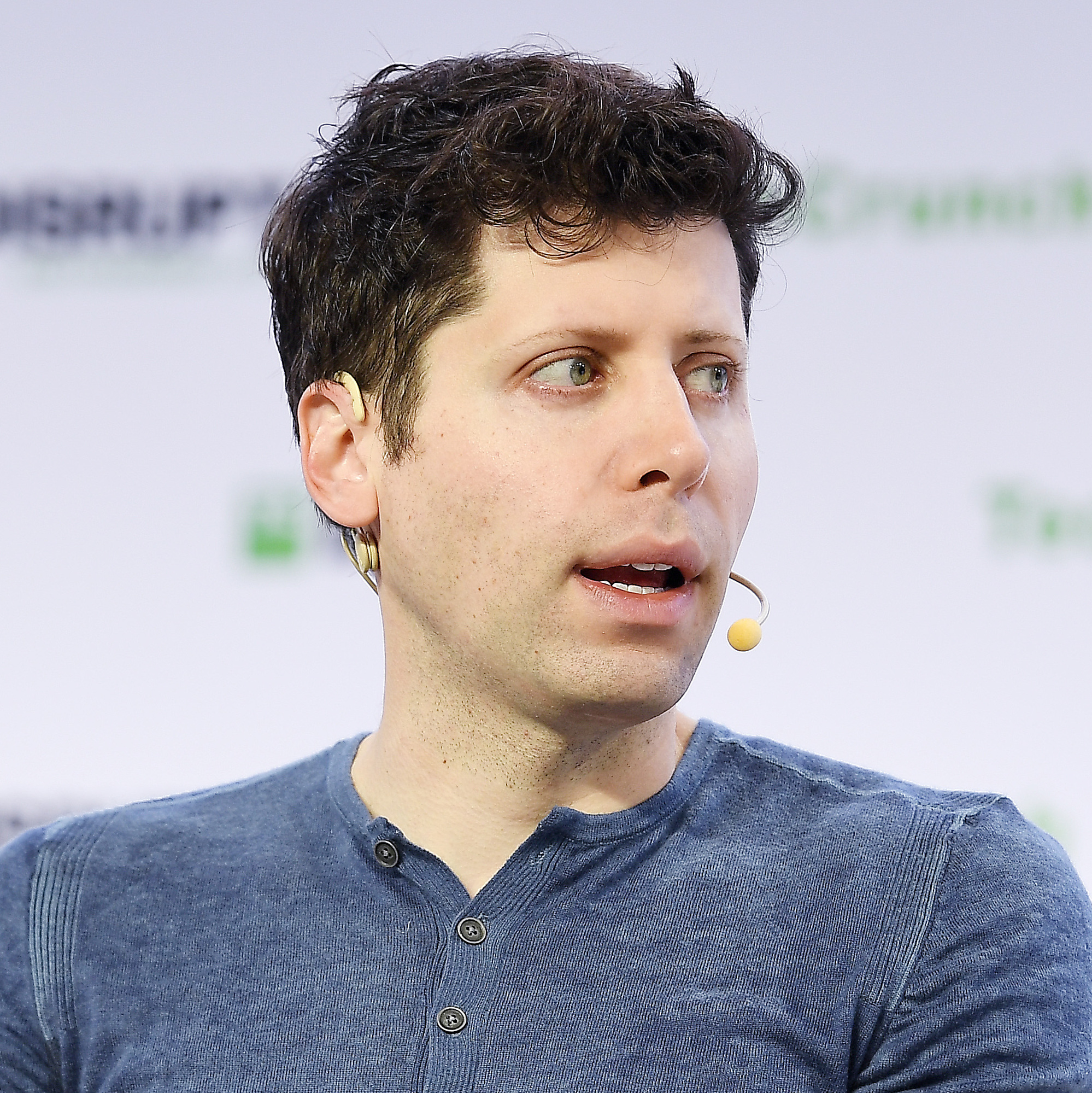
Sam Altman, CEO of OpenAI, at a technology conference.· Photo by TechCrunch, via Wikimedia Commons (CC BY 2.0)

Three companies founded by Sam Altman's former OpenAI colleagues carry a combined valuation exceeding $1 trillion, based on the most recent disclosed funding rounds: Anthropic reached $965 billion in May 2026 per Bloomberg, Safe Superintelligence closed at $32 billion in April 2025 per TechCrunch, and Thinking Machines Lab sits at $12 billion. Across those three companies, StartupHub.ai data shows combined fundraising since January 2025 exceeds $70 billion, a concentration of venture capital with no parallel in AI history.

The Departures That Built an Industry

OpenAI's founding team was unusually dense with research talent. In May 2021, Dario Amodei, then OpenAI's VP of Research, left and brought nine colleagues, including his sister Daniela Amodei, Tom Brown, and Jared Kaplan. They incorporated Anthropic with a safety-focused mandate and a governance structure they argued would be more resistant to commercial pressure than OpenAI's then-new for-profit subsidiary model. The company's annual revenue run rate surpassed $9 billion by the end of 2025, according to Bloomberg, making Anthropic the fastest-scaling AI lab outside of OpenAI itself at that stage of development.

The second wave began in 2024. In May, Ilya Sutskever, the co-founder and chief scientist whose research underpinned GPT-3 and GPT-4, resigned. Sutskever had publicly supported the November 2023 board vote to remove Altman, a position he later walked back; his departure marked the end of OpenAI's founding research leadership. Within weeks, he co-founded Safe Superintelligence with the stated goal of building safe superintelligent AI without commercial timeline pressure. In August 2024, John Schulman, one of OpenAI's six original co-founders and the researcher whose work on reinforcement learning from human feedback became central to ChatGPT's development, left to join Anthropic. Jan Leike, who had led OpenAI's superalignment team, departed the same month and also joined Anthropic. Mira Murati, OpenAI's chief technology officer, resigned in September 2024 and founded Thinking Machines Lab, which she brought out of stealth in February 2025.

TechCrunch counted 18 startups founded by OpenAI alumni as of February 2026, spanning foundation model development, robotics, and education. Andrej Karpathy, who led OpenAI's research division before leaving in July 2023, has been building Eureka Labs, an AI-native education company.

Three Labs, Three Distinct Bets

The alumni have not built interchangeable products. Each departure represents a distinct thesis about what AI development should prioritize, and the three largest resulting companies reflect that divergence clearly.

Anthropic has built the most commercially viable safety research organization in the industry. Its Constitutional AI framework, published as a peer-reviewed paper, trains models using AI-generated feedback to reduce harmful outputs, a methodology that has been widely cited and replicated. Revenue above $9 billion annually funds both frontier model development and ongoing safety research. In May 2026, Bloomberg reported that Anthropic's $65 billion funding round valued the company at $965 billion, eclipsing OpenAI's valuation for the first time. The Claude model family now competes directly with GPT-4o across enterprise API contracts and consumer applications.

Safe Superintelligence has taken the opposite commercial posture. The company has published no research, shipped no product, and has given no public interviews describing its technical approach. What it has done is raise capital at scale: $1 billion in September 2024, a $2 billion follow-on at a $32 billion valuation in April 2025, and a $5 billion strategic investment from Nvidia in July 2026, which included access to Nvidia's forthcoming Vera Rubin compute platform, per TechCrunch. SSI's total raises now exceed $7 billion for a company with no disclosed revenue and roughly 50 employees, making it one of the largest pre-revenue valuations in venture history. For context on that Nvidia deal, see our earlier piece on Sutskever's Nvidia investment.

Thinking Machines Lab, which StartupHub.ai tracks at a $12 billion valuation and 212 employees as of August 2026, has focused on enterprise customizability. Its first product is an API that fine-tunes large language models for specific enterprise workflows, targeting the gap between generic frontier models and the specialized systems large organizations actually deploy. This positions Murati's company differently from both the safety-maximalist approach of SSI and the broad consumer and enterprise footprint Anthropic is building. For the full breakdown of Murati's strategic position, see our recent analysis.

What the Alumni Network Means for OpenAI

The competitive implication for Altman is straightforward: OpenAI's most experienced former researchers are now running the companies competing for the same enterprise contracts, the same compute allocations, and ultimately the same share of AI's emerging economic value. Anthropic's near-trillion-dollar valuation surpassed OpenAI's own, and its revenue growth rate, from $4 billion ARR in mid-2025 to $9 billion by year-end, per Bloomberg, indicates that the Claude model family is gaining ground on GPT in commercial deployment. SSI's patient capital strategy bets that the next inflection point in AI capability will come from a team unconstrained by quarterly product milestones. Thinking Machines Lab is targeting the fastest-growing segment of the enterprise API market that OpenAI currently leads.

Altman's response has been to accelerate OpenAI's commercial arc. The company completed its for-profit restructuring in late 2024, eliminating the capped-profit structure that had complicated large institutional investment rounds. ChatGPT reached more than 300 million weekly active users in early 2025, the company disclosed publicly, and OpenAI has expanded its product surface from a chat interface to a suite of API products, voice interfaces, and recently its own hardware roadmap. The competitive dynamic is not one where OpenAI is losing; it is one where the alumni have built credible enough alternatives that the outcome is no longer certain.

The pattern also has historical resonance. PayPal's alumni network seeded YouTube, Yelp, LinkedIn, and Palantir, collectively generating more value than PayPal itself. The OpenAI diaspora, with Anthropic alone approaching a trillion-dollar valuation less than five years after its founding, is producing a similar generative effect in AI. The difference is that, unlike PayPal, OpenAI still exists and is competing directly against the companies its alumni built.

What It Means

Altman now competes against the team he assembled. Anthropic has more revenue than OpenAI had at the same stage of its commercial arc. SSI has more patient capital than almost any AI research organization in history. Thinking Machines Lab is targeting the enterprise segment OpenAI most wants to dominate. The alumni network is, at this point, not a Silicon Valley loyalty story, it is a structural feature of the 2026 AI competitive landscape, and one that Altman will have to outperform rather than outmaneuver.

© 2026 StartupHub.ai. All rights reserved. Do not enter, scrape, copy, reproduce, or republish this article in whole or in part. Use as input to AI training, fine-tuning, retrieval-augmented generation, or any machine-learning system is prohibited without written license. Substantially-similar derivative works will be pursued to the fullest extent of applicable copyright, database, and computer-misuse laws. See our terms.