

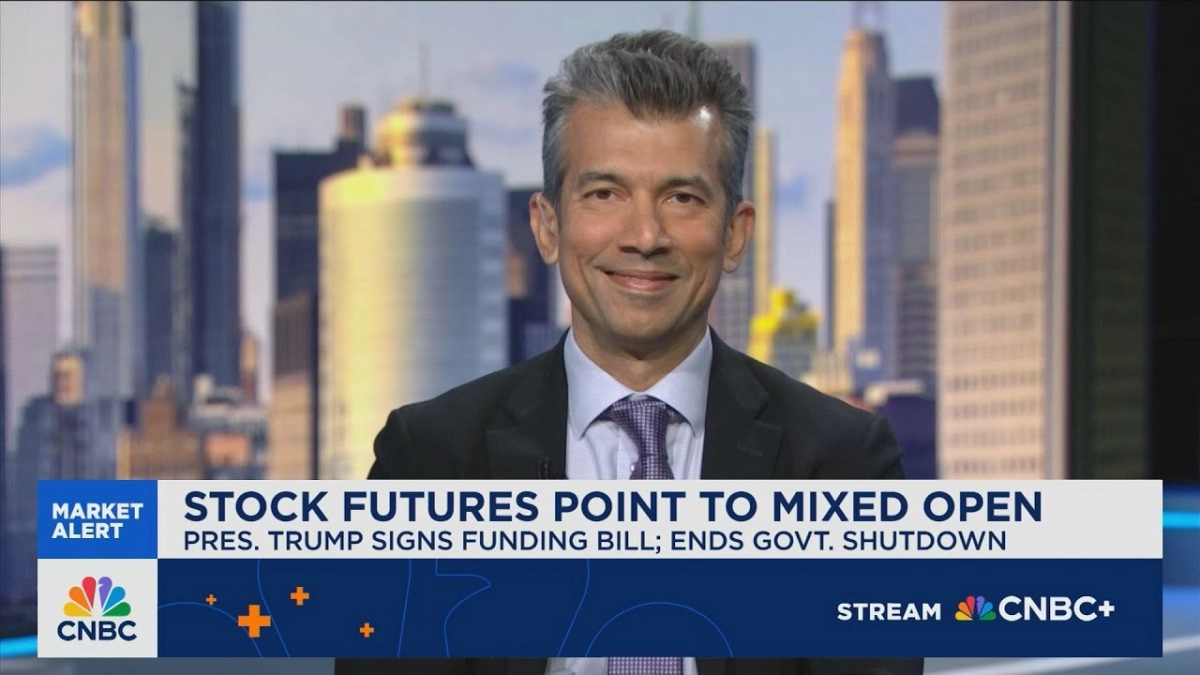
Aadil Zaman, Partner at Wall Street Alliance Group, articulated a compelling thesis on CNBC's Worldwide Exchange, suggesting a market pullback is inevitable, with a leadership shift from AI giants to AI enablers like Caterpillar as the demand for data center infrastructure surges. He posits that the market, having heavily rewarded companies at the forefront of AI development, is poised to pivot towards those providing the foundational infrastructure necessary for AI to flourish.
Zaman spoke with CNBC at an undisclosed event about the evolving market dynamics driven by artificial intelligence and its infrastructure needs. His core argument centers on a "handoff" occurring in market leadership, moving from the direct beneficiaries of AI innovation to the companies that build and maintain the physical and digital frameworks that support it. This shift is driven by the burgeoning demand for data centers, which are the literal engines of AI.
"We are in the school of thought that this market is positioned for a pullback," Zaman stated, forecasting a potential 10-15% correction. He elaborated, "It's not a question of if, it's a question of when." This sentiment suggests a broader market recalibration rather than a fundamental collapse, with leadership expected to transition.
A key insight from Zaman's analysis is the recognition that the current market has disproportionately rewarded the "AI winners"—companies like Nvidia, Microsoft, and Alphabet—which are at the cutting edge of AI development. While these companies have seen significant gains, Zaman argues that the next wave of growth will come from the "AI enablers." These are the entities constructing the physical and operational backbone for AI, including data centers, energy infrastructure, and the specialized equipment required for their maintenance and expansion.
Zaman's "Word of the Day" was "Handoff," encapsulating this strategic market rotation. He explained, "Handoff is the word of the day. So we believe that the leadership change in the market is going to be a handoff from AI winners to AI enablers." This transition is not merely speculative; it's a logical progression as the underlying infrastructure demands of advanced AI become increasingly apparent and critical.
The demand for data centers is experiencing an unprecedented surge, largely fueled by the computational needs of artificial intelligence. This exponential growth necessitates robust infrastructure, a domain where traditional industrial players are finding new relevance. Zaman highlighted Caterpillar as a prime example of such an enabler, noting, "We like Caterpillar. We've been buying it for our clients."
The rationale behind favoring Caterpillar is its pivotal role in building and maintaining the essential infrastructure for AI. "If you look at the business, it seems like they're transitioning from a traditional construction equipment company to more of an AI infrastructure supplier," Zaman observed. This transformation is multifaceted; Caterpillar is not only involved in the construction of data centers but also in providing equipment for their ongoing operation and maintenance.
"We are expecting the data center capacity to nearly triple by 2030," Zaman projected, underscoring the immense scale of the infrastructure build-out required. This growth trajectory directly benefits companies like Caterpillar, which can supply the heavy machinery, power generation solutions, and other critical components needed for these massive projects. Furthermore, the operational demands of these facilities, such as cooling and power, also fall within Caterpillar's expertise.
Beyond direct data center construction, Zaman pointed out the broader industrial applications that support the AI ecosystem. "And their equipment is also used in maintaining and operating their data centers," he added. This dual role positions Caterpillar as a comprehensive solution provider in the AI infrastructure space. The company's recent earnings reports have reflected this positive momentum, with Zaman noting, "they hit it out of the park."
While the market has focused on the AI software and hardware innovators, Zaman emphasizes that the underlying physical infrastructure is equally, if not more, critical for the long-term scalability of AI. This perspective shifts the investment narrative from the dazzling applications of AI to the foundational elements that make them possible. The demand for data centers is projected to triple by 2030, a staggering figure that signals a substantial opportunity for companies adept at building and sustaining such massive undertakings.
Zaman also highlighted other investment avenues that align with this theme of AI enablement. He mentioned an interest in the SPDR S&P Industrial Select Sector Fund (XLI), noting that many of its components are involved in the AI ecosystem. This ETF provides broad exposure to industrial companies, many of which are contributing to the infrastructure build-out for AI.
Related Reading
- Google Cloud’s AI Storage Strategy: Optimizing Performance and Cost
- Anthropic announces $50B nationwide AI infrastructure buildout
- Google Cloud Unveils Blueprint for Reliable, Scalable AI Inference
"We do like the Spider Industrial ETF XLI, which gives you broad exposure there," Zaman recommended. "And a lot of the components in XLI are companies that are investing in the AI ecosystem." This diversification strategy aims to capture the growth associated with AI infrastructure across various industrial sectors. The underlying thesis remains consistent: identifying companies that provide the essential building blocks for the AI revolution.
Ultimately, Zaman's analysis suggests a market that is maturing in its understanding of AI's needs. The initial fervor around AI development is giving way to a more pragmatic focus on the tangible infrastructure required for its widespread implementation. Companies like Caterpillar, traditionally associated with heavy industry, are now emerging as critical players in the burgeoning field of AI infrastructure, presenting a compelling investment thesis for those looking beyond the immediate AI innovators.



