


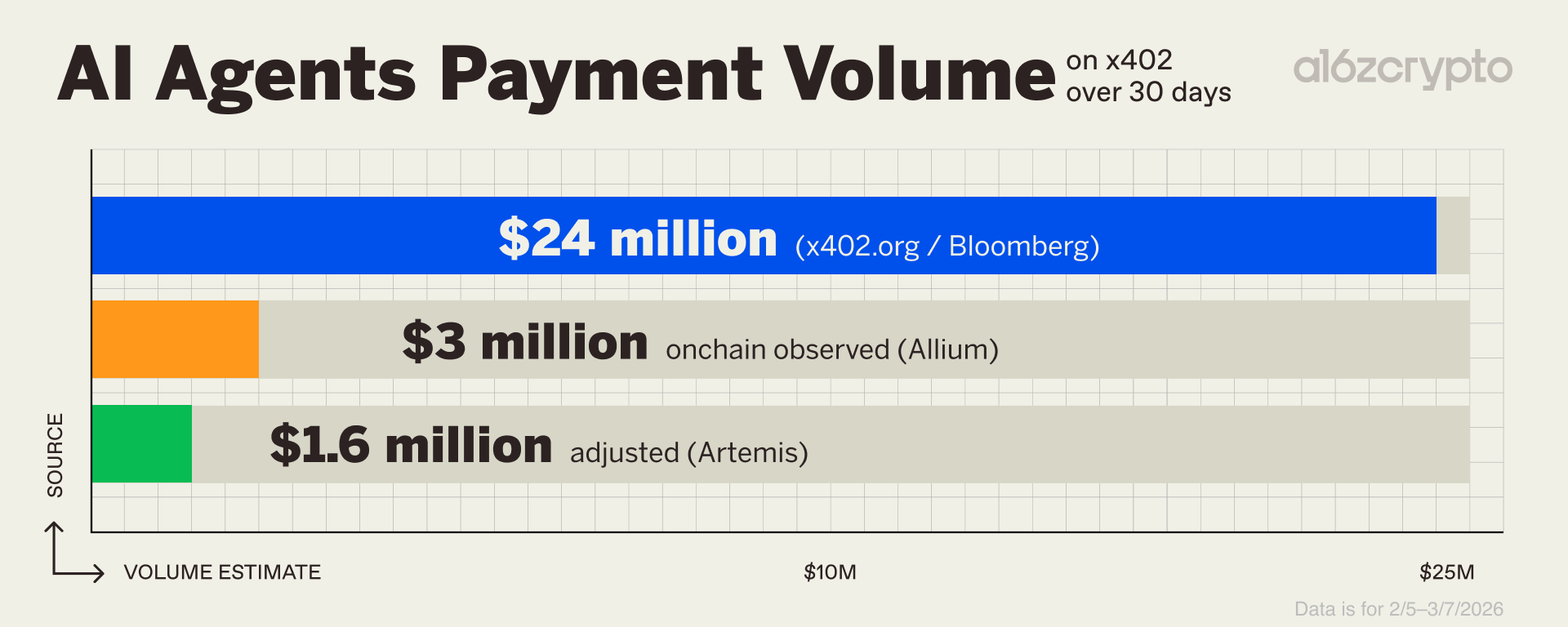
AI agents are beginning to transact, but the true scale of their spending remains opaque. Initial reports, such as a Bloomberg claim of $24 million in payments over 30 days citing x402.org data, are being challenged by on-chain analytics. Allium Labs data suggests a figure closer to $3 million for the same period, a number that shrinks further when wash trades are excluded.
This discrepancy highlights the nascent stage of measurement infrastructure for agentic commerce. The gap between reported and verified volumes underscores the difficulty in accurately tracking automated transactions.
The primary use case for these early transactions appears to be developer tools. Services like Firecrawl (web scraping) and Browserbase (browser sessions) offer pay-per-query models, allowing agents to access functionalities without subscriptions. Freepik also utilizes this model for image generation.
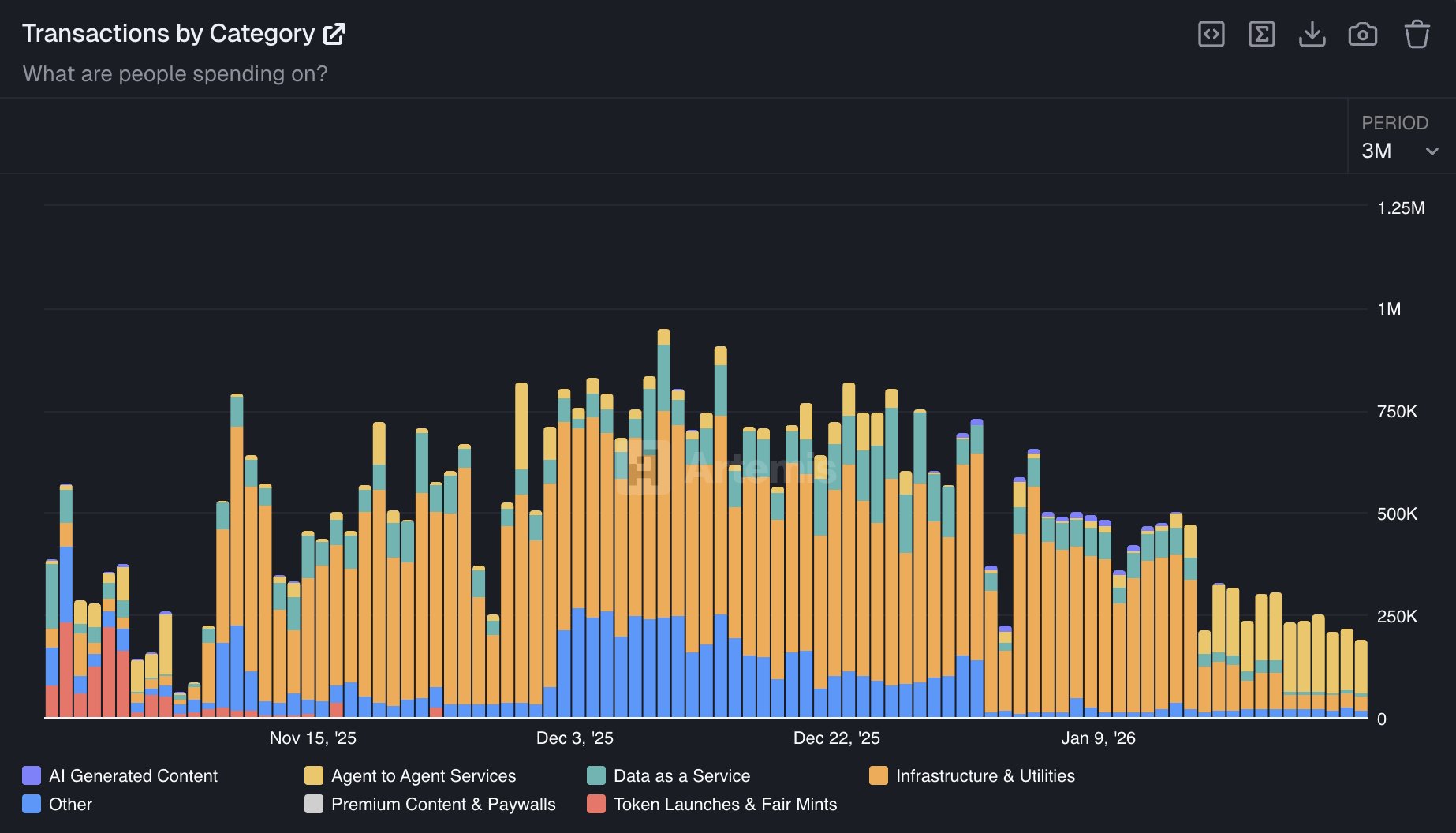
This pay-per-query model extends beyond developer utilities. Merit Systems’ StableEnrich product aggregates data from various sources, accessible via a single x402 endpoint. Sales teams leverage this for their AI agents, who automatically pay for lead data, demonstrating that the underlying payment rail is secondary to the service provided.
The core issue lies in distinguishing genuine economic activity from manipulated data. Artemis Analytics analyst Onchain Lu developed a wash trading filter for x402 volume, identifying wallets engaged in self-transaction or fund cycling. Applying this filter to the same 30-day period reduces the adjusted volume to approximately $1.6 million.