

WorkOS on Scaling Skills for the AI Era

Nick Nisi and Zack Proser of WorkOS discuss how organizations can adapt to AI by focusing on skills-based hiring and internal mobility.

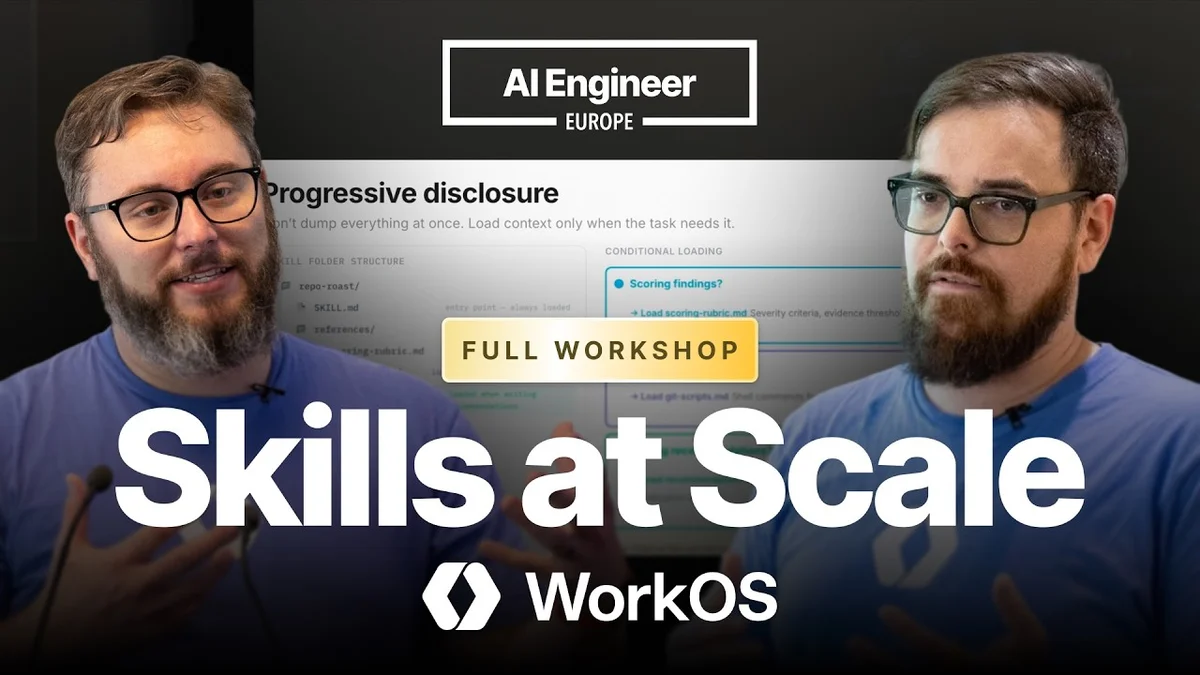
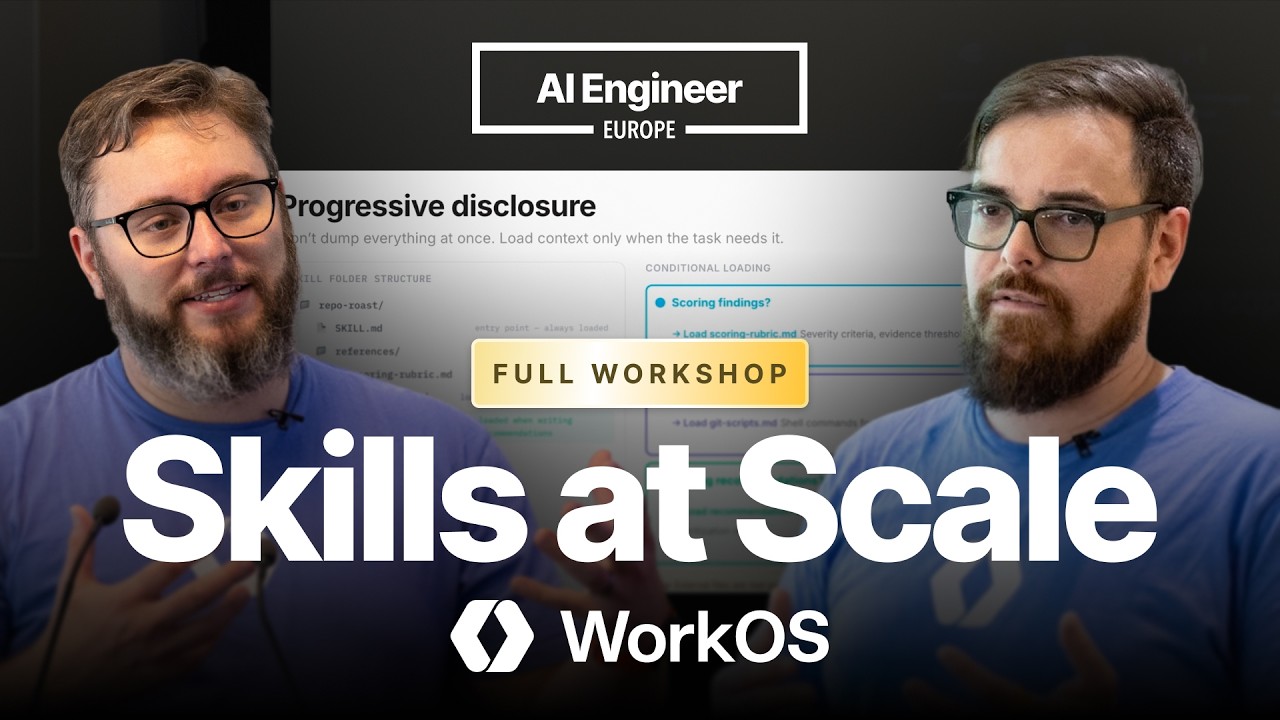
Nick Nisi and Zack Proser of WorkOS speaking on 'Skills at Scale'
Image credit: WorkOS· AI Engineer

The accelerating pace of artificial intelligence is fundamentally reshaping the skills required in the modern workforce. Companies are facing a growing challenge: how to equip their employees with the capabilities needed to thrive alongside AI, not be displaced by it. Nick Nisi and Zack Proser of WorkOS recently discussed this critical issue, emphasizing the need for a proactive, skills-centric approach to talent management in the age of AI.
WorkOS on Scaling Skills for the AI Era - AI Engineer
WorkOS on Scaling Skills for the AI Era — from AI Engineer

Their conversation, titled "Skills at Scale," highlighted the immediate and future implications of AI on job roles and the imperative for organizations to invest in their people. The core message is clear: simply hiring for existing skills is no longer sufficient. Businesses must build a culture and infrastructure that supports continuous learning and adaptability.

The AI Imperative for Workforce Development

Nisi and Proser underscored that AI is not a distant threat but a present reality that is already altering job functions. This transformation necessitates a strategic shift in how companies view and manage their talent. Instead of focusing solely on job titles, the emphasis must move towards the underlying skills that employees possess and can develop. This is particularly relevant as AI tools become more integrated into daily workflows, automating routine tasks and augmenting human capabilities.

Related startups

The WorkOS duo stressed that organizations that fail to address this skills gap risk falling behind. Employees who are not upskilling may find their current roles diminishing in relevance, while companies will struggle to find the talent needed for the new types of roles that AI creates. This creates a dual challenge of potential workforce displacement and critical talent shortages.

Skills-Based Hiring and Internal Mobility

A significant portion of the discussion revolved around the practical strategies for navigating this evolving skill requirement. Nisi and Proser advocated strongly for skills-based hiring and internal mobility as key solutions. By prioritizing skills over traditional credentials or experience in specific roles, companies can unlock a wider pool of talent.

This approach allows for the identification of individuals who may not have the exact experience for a role but possess the transferable skills and the aptitude to learn. Furthermore, fostering internal mobility ensures that existing employees have clear pathways for career growth within the organization. When employees see opportunities to develop new skills and move into more advanced or AI-adjacent roles, their engagement and retention rates naturally increase.

The speakers pointed out that this internal development is often more cost-effective and less time-consuming than external recruitment for highly specialized roles. It also leverages the existing institutional knowledge and culture that employees have already internalized.

WorkOS: Facilitating Skills Transformation

WorkOS positions itself as a platform designed to help companies manage this complex transition. The company's tools aim to provide a clear, data-driven understanding of the skills present within an organization. This involves mapping out existing skill sets, identifying critical gaps, and then facilitating the development and acquisition of new skills.

By providing a centralized system for skill inventory and development, WorkOS enables HR and talent management teams to make more informed decisions. This includes identifying employees who are prime candidates for upskilling into AI-related roles, creating personalized learning paths, and ensuring that training initiatives are aligned with strategic business objectives. The platform helps to demystify the process of skill development and make it an integral part of the employee lifecycle.

The conversation implied that building a future-ready workforce is not just an HR initiative but a strategic imperative for business survival and growth in the AI era. The ability to scale skills effectively will be a defining characteristic of successful companies in the coming years.

© 2026 StartupHub.ai. All rights reserved. Do not enter, scrape, copy, reproduce, or republish this article in whole or in part. Use as input to AI training, fine-tuning, retrieval-augmented generation, or any machine-learning system is prohibited without written license. Substantially-similar derivative works will be pursued to the fullest extent of applicable copyright, database, and computer-misuse laws. See our terms.