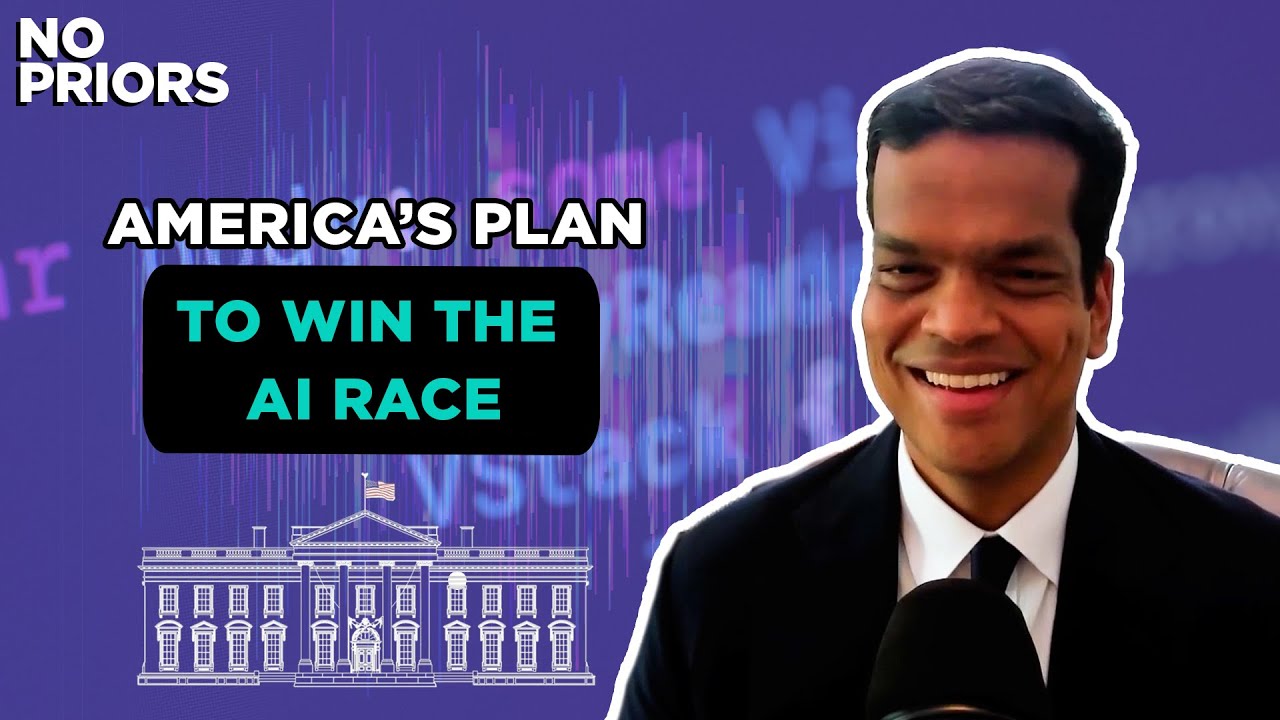
The American AI Action Plan, a recently unveiled national strategy, aims to secure the United States' leadership in artificial intelligence. This critical document and the broader implications of the global AI race were the central focus of a recent interview with Sriram Krishnan, Senior White House Policy Advisor on Artificial Intelligence, by Elad Gil and Sarah Guo on the No Priors podcast. Krishnan, a former tech executive and venture capitalist from Andreessen Horowitz, articulated the administration's proactive stance on this transformative technology.
Krishnan’s transition from Silicon Valley to government underscores a growing recognition of AI's geopolitical significance. He revealed that his move was partly motivated by a perceived gap in understanding within official circles. "A lot of people who are in very senior roles in governments in the United States back then... didn't know what they were talking about when it came to AI," he stated, highlighting a critical need for industry expertise in policy-making.

The urgency of the "AI race" is a recurring theme. Krishnan pointed to the emergence of the Chinese DeepSeek model as a pivotal moment, serving as a "starting gun" that clarified the United States' precarious position. Despite popular belief, he contended that the U.S. holds "a very, very small lead" in AI, necessitating immediate and decisive action. This assessment directly informs the plan’s overarching objective: "America should dominate and win on AI."
The strategy for achieving this dominance rests on three key pillars. First is the imperative to "build, baby, build" infrastructure. This involves not only constructing vast data centers but also streamlining permitting processes and securing reliable energy sources to power the immense computational demands of advanced AI models. This foundational effort is seen as essential to sustaining and accelerating innovation.
The second pillar emphasizes fostering innovation within the U.S. tech ecosystem, particularly supporting startups and promoting open-source development. Krishnan stressed the importance of creating an environment where American companies can "build applications and models... as fast as they can." This approach contrasts sharply with perceived attempts to centralize control over AI development, which he argues stifles the very innovation that has historically driven Silicon Valley's success. He championed open source as a domain where the U.S. "needs to win," recognizing its role in democratizing access and accelerating progress.
Finally, the strategy aims to ensure that American AI models and standards become the global norm. This involves active international partnerships and ensuring that U.S.-developed AI technology is adopted worldwide. Krishnan views AI models as powerful cultural exports, and maintaining American leadership in their development is crucial for projecting U.S. values and influence globally.