

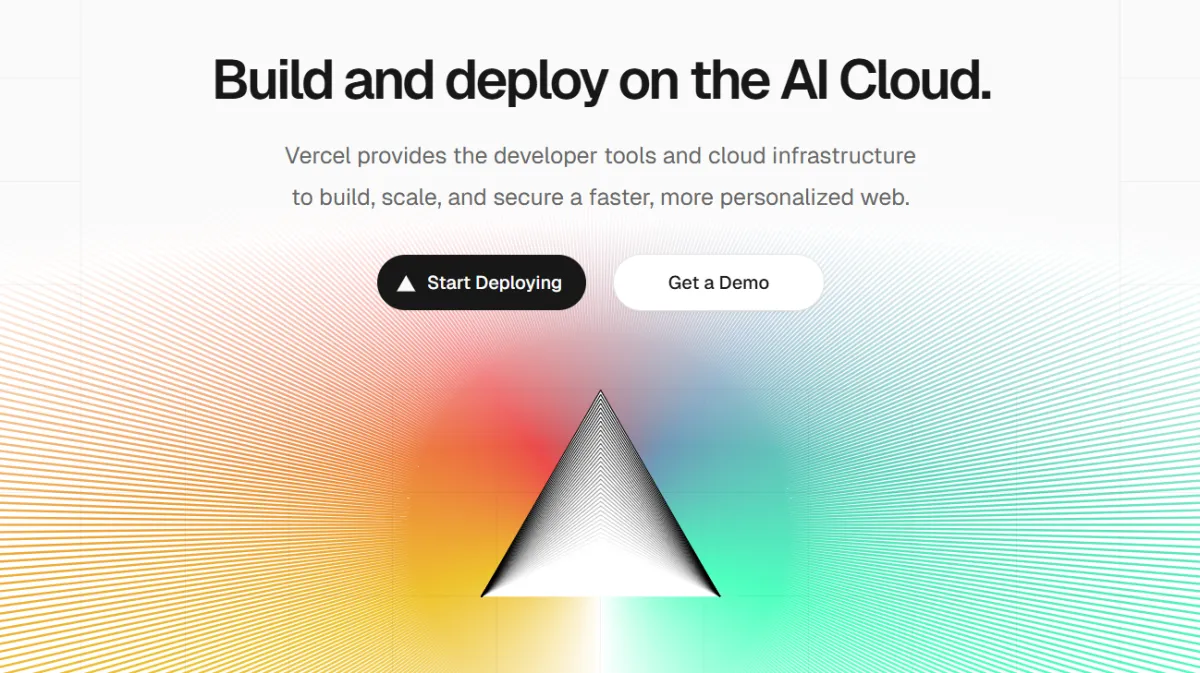
Vercel, the cloud platform that has become a darling of the developer community, just secured a massive $300 million in a Series F funding round, catapulting its valuation to a staggering $9.3 billion. The oversubscribed round, co-led by Accel and Singapore’s sovereign wealth fund GIC, with new money from heavyweights like BlackRock and Khosla Ventures, is a clear bet that the next generation of the web will be built on AI, and deployed on Vercel.
This is a signal of where the smart money believes the infrastructure wars are headed. Vercel, which provides the plumbing for developers to build and deploy websites with blistering speed, has successfully positioned itself as the essential toolkit for the AI era. Its customer list reads like a who's who of the AI boom, including OpenAI and Anthropic, alongside established giants like PayPal and Nike.
The company's growth metrics are fueling the hype. Vercel said its user base doubled over the past year with an 82% jump in revenue. This aligns with a post from CFO Marten Abrahamsen three months ago, who stated the company had crossed $200 million in annual recurring revenue, doubling that figure in just 15 months. The new capital is earmarked to double down on this strategy: expanding its AI Cloud services, bolstering security, and pouring resources into its AI development agent, v0, which already boasts over 3.5 million users. The company is also teasing v0 Mobile for an October launch, promising to let developers build apps using voice and camera inputs.
The competitive cloud battlefield
Vercel’s ascent doesn’t come without a fight. The company operates in a fiercely competitive space, battling on multiple fronts. Its most direct rival is Netlify, which pioneered a similar developer-centric deployment model. But Vercel’s trump card has always been its ownership and deep integration of Next.js, the dominant React framework, creating a tightly-knit ecosystem that’s difficult for competitors to match.
Beyond Netlify, Vercel is carving out its niche against the public cloud titans, AWS, Google Cloud, and Microsoft Azure. While these hyperscalers offer endless services, they often come with a complexity that Vercel abstracts away. Developers choose Vercel for its "zero-configuration" simplicity, trading granular control for a dramatically accelerated workflow. This focus on developer experience is its core defense. Meanwhile, emerging platforms like Render and Railway are nipping at its heels, aiming to blend Vercel's ease of use with more comprehensive backend and database hosting.