

US Hyperscalers to Spend $700B on Capex by 2026

John Mowrey of NFJ Investment Group reveals US hyperscalers plan over $700B in Capex by 2026, driven by AI demand, doubling previous revenue-to-spending ratios.

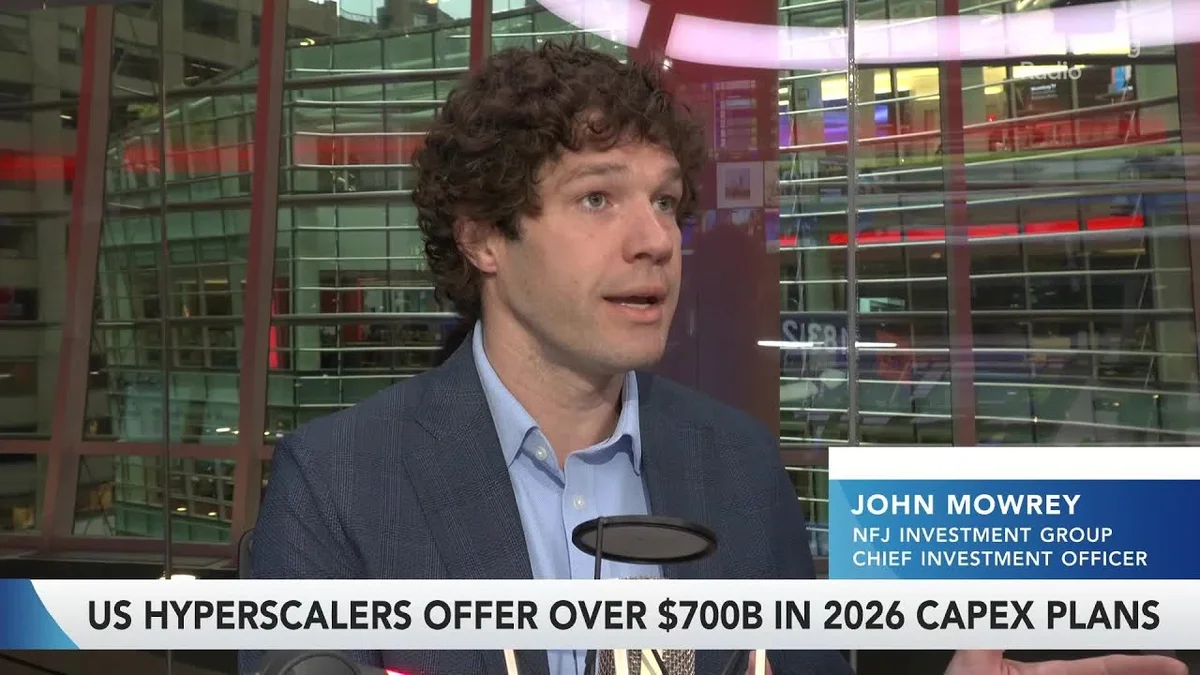
John Mowrey speaking on Bloomberg Radio about US hyperscaler capital expenditures.
Image credit: Bloomberg Radio· Bloomberg Podcast

In a significant revelation during a Bloomberg Radio segment, John Mowrey, Chief Investment Officer at NFJ Investment Group, detailed the substantial capital expenditure plans of US hyperscalers. Mowrey highlighted that these tech giants are poised to invest over $700 billion in capital expenditures by 2026. This announcement comes at a time when the artificial intelligence boom is driving unprecedented demand for computing power and infrastructure.

Mowrey explained that this level of spending is a significant increase from previous years. He noted that pre-AI capital expenditures for these companies typically represented 10-15% of their revenue. Now, this figure has doubled, with some companies potentially allocating 30% of their revenue to capital expenditures. This marks the largest capital expenditure cycle seen in modern history, comparable to the railway build-out in the 1800s.

The AI-Driven Investment Surge

The primary driver behind this massive investment is the rapidly expanding need for artificial intelligence capabilities. Hyperscalers are investing heavily in data centers, servers, and specialized hardware like GPUs to train and deploy AI models. Mowrey emphasized that this is not just about incremental upgrades; it's a fundamental shift in how these companies operate and allocate resources.

Related startups

The full discussion can be found on Bloomberg Podcast's YouTube channel.
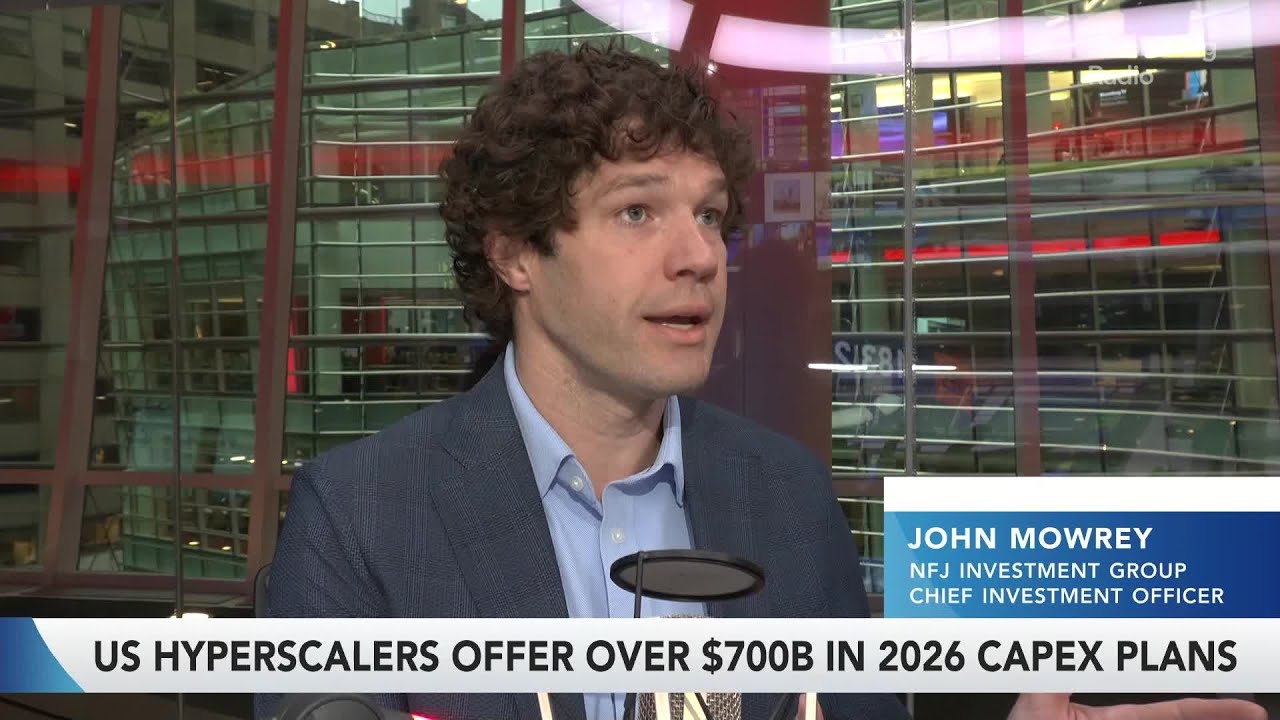
AI Buildout Driving 'Largest CapEx Cycle in Modern History,' Says John Mowrey - Bloomberg Podcast
AI Buildout Driving 'Largest CapEx Cycle in Modern History,' Says John Mowrey — from Bloomberg Podcast

Mowrey stated, "You have massive American companies that are for the first time ever really putting their balance sheets to work in growth form and they're spending money. It's going to trickle into financials." This indicates a strategic pivot towards aggressive growth fueled by AI. The scale of this investment suggests a long-term commitment to AI infrastructure development.

Capex as a Percentage of Revenue

Mowrey provided context by comparing current spending to historical trends. He noted that while companies like NVIDIA are seeing significant stock growth, their valuations might still be considered relatively cheap compared to other tech stocks in the current market. He believes that investors should focus on companies with strong balance sheets and solid growth prospects, even if they appear expensive on traditional metrics.

"When I look at Nvidia today, that's reflecting the excitement around AI. I think what we need to consider is that the multiples are still, I think, relatively cheap compared to some of the other tech names," Mowrey commented. He further elaborated that the capital expenditure as a percentage of revenue for these hyperscalers has doubled, reaching 30% in some cases. This represents the largest Capex cycle in modern history, signaling a significant shift in investment strategy.

Broader Economic Impact

The implications of this spending extend beyond the tech sector. Mowrey suggested that this investment would likely have a ripple effect across various industries, including manufacturing, construction, and energy. The demand for raw materials, specialized labor, and energy to power these new data centers will create significant economic activity.

Mowrey also touched upon the market's perception of these investments. He noted that while the market is aware of the spending, the full impact on company valuations and the broader economy is yet to be fully realized. "It's a new risk premium that's being put in place for oil because it's too tempting to start ramping production," he said, referring to the oil market. He suggested that while the hyperscalers might not be overly concerned with interest rates, the overall economic environment will still be influenced by these massive capital outlays.

Investment Strategy Considerations

Mowrey advised investors to be discerning in their approach. He suggested focusing on companies with strong financial health and clear pathways to profitability, rather than chasing speculative growth. He highlighted that while AI is a major growth driver, fundamental analysis remains crucial for long-term investment success.

He concluded by saying, "I think what we need to really consider is that the market is very much, you know, trying to figure out what these multiples are when it comes to earnings. So, if you look at, say, the estimated P/E forward for, say, Nvidia, it's going to be very high, but that's just an exchange for Main Street. Main Street works for Wall Street." This suggests a disconnect between market sentiment and fundamental value, creating opportunities for savvy investors.

© 2026 StartupHub.ai. All rights reserved. Do not enter, scrape, copy, reproduce, or republish this article in whole or in part. Use as input to AI training, fine-tuning, retrieval-augmented generation, or any machine-learning system is prohibited without written license. Substantially-similar derivative works will be pursued to the fullest extent of applicable copyright, database, and computer-misuse laws. See our terms.