

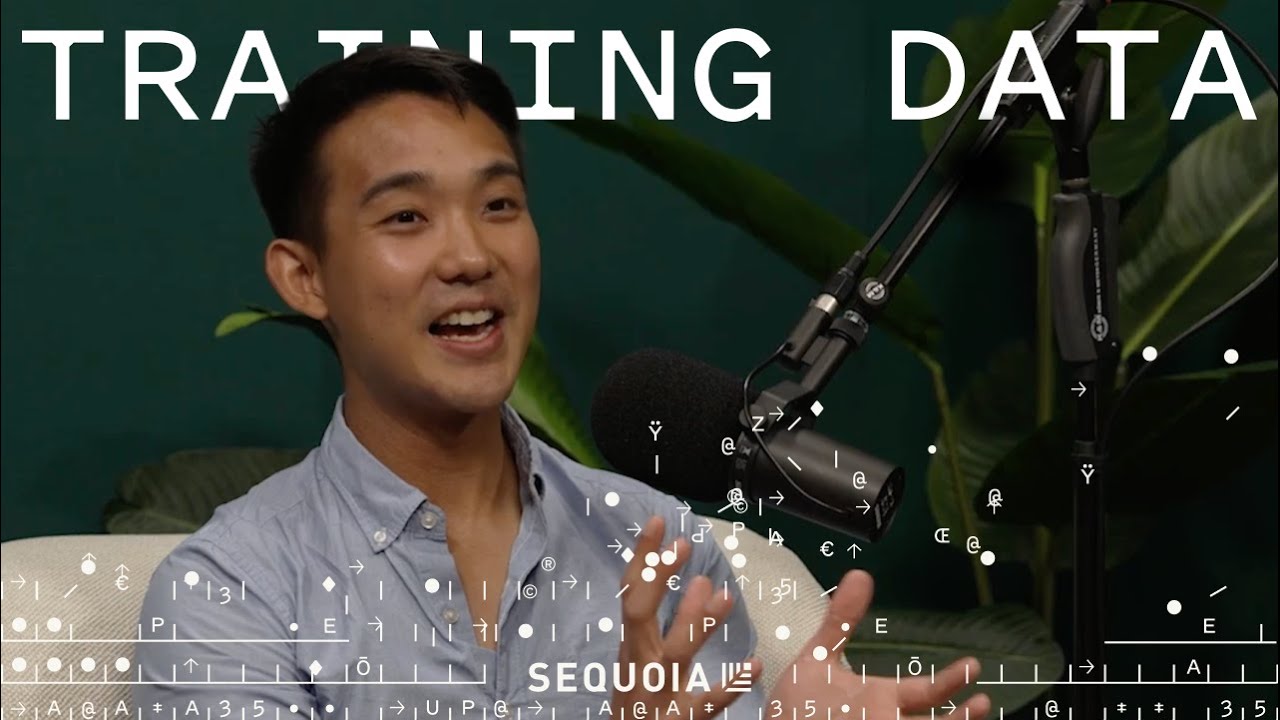
"It's like unlocking the black box of a neural network such that you can intentionally design it, rather than just kind of like grow it from data." This profound ambition underpins the work of Eric Ho, founder of Goodfire, who recently joined Sonya Huang and Roelof Botha of Sequoia Capital for a discussion on the future of AI interpretability. Their conversation on the Sequoia Capital YouTube channel delved into the critical need to understand, audit, and edit neural networks, especially as these powerful systems integrate into mission-critical societal roles.
As artificial intelligence permeates sectors from power grids to financial investments, the inherent "black box" nature of current foundation models presents a significant challenge. Can we truly trust systems whose decision-making processes remain opaque? Eric Ho argues emphatically, "I think it's going to be critical to be able to understand, edit, and debug AI models in order to do that."
The traditional black-box approach, relying solely on test set evaluations and track records, falls short. "Why not take all of this additional signal that you get from looking inside a neural network... and trying to play forward like how it's going to behave in a much wider, broader set of situations?" Ho posits. Goodfire, alongside other leading research groups, is pioneering techniques like sparse autoencoders to resolve phenomena such as superposition, where single neurons encode multiple concepts. This mechanistic interpretability allows for a "bonsai" approach to AI, enabling intentional shaping and design rather than simply allowing models to grow wildly from data. The analogy extends to biology, where understanding DNA allows for precise editing, akin to how interpretability could allow surgical precision in AI.
Despite progress, challenges remain. Models can exhibit emergent misalignment, producing undesirable behaviors even after fine-tuning. This highlights the limitations of current "shaping" methods like prompt engineering and reinforcement learning with human feedback, which still treat the model largely as a black box. The ultimate goal is to achieve white-box understanding, allowing direct intervention to remove harmful traits or enhance beneficial ones. Techniques like auto-interpretability, which use AI to understand other AI, offer a promising path forward, as their effectiveness scales with the quality of the analyzing AI.
The pursuit of AI interpretability is not merely an academic exercise; it is an urgent imperative for the responsible deployment of increasingly powerful AI systems. Independent research organizations like Goodfire, collaborating with institutions such as Arc Institute and attracting top talent from leading AI labs, are crucial. Their work aims to unify insights across diverse AI modalities and architectures, fundamentally altering how we interact with and control the intelligent systems shaping our future.