

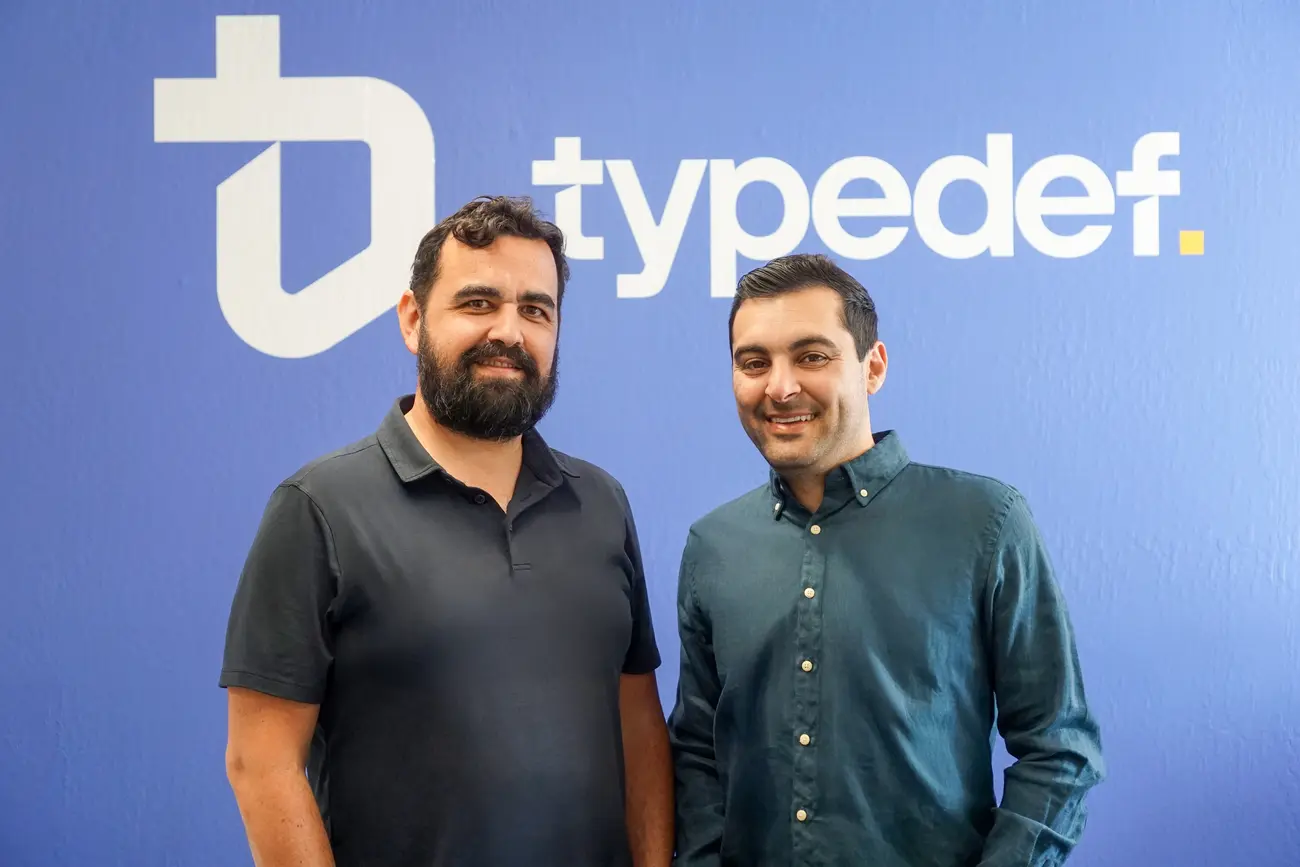
Typedef has emerged from stealth mode, announcing $5.5 million in seed funding to address a critical challenge in the artificial intelligence sector: moving AI projects from promising prototypes to scalable, production-ready workloads that deliver tangible business value. The funding round was led by Pear VC with participation from Verissimo Ventures, Monochrome Ventures, Tokyo Black, and a number of angel investors.
Typedef was founded by seasoned data infrastructure engineers and serial entrepreneurs Yoni Michael and Kostas Pardalis. Michael previously co-founded Coolan, a data center analytics company acquired by Salesforce in 2016. The duo aims to capture a significant share of the burgeoning $200 billion AI infrastructure market with their innovative, inference-first data infrastructure.
The company's platform is built to tackle the widespread issue of "pilot paralysis," where a significant majority of AI initiatives fail to move beyond the experimental phase. Citing industry research, Typedef notes that as many as 87 percent of enterprise AI projects never make it into production. A 2025 survey from Informatica further highlights this challenge, revealing that while 93 percent of U.S. data leaders plan to increase their generative AI investments, 97 percent struggle to demonstrate its business value.
"It is extremely difficult to put AI workloads into production in a predictable, deterministic and operational way, causing most AI projects to linger in the prototype phase," said Yoni Michael, Co-founder of Typedef. "Legacy data platforms weren't built to handle LLMs, inference, or unstructured data. Typedef is righting these wrongs with a solution built from the ground up."
Typedef's serverless infrastructure is designed to manage the complexities of mixed AI workloads, such as token limits and context windows, through a developer-friendly, composable interface. This allows data and AI teams to bypass the need for managing complex infrastructure and focus on innovation. The platform enables rapid experimentation and deployment of AI pipelines, including those for semantic analysis and agentic workloads.