

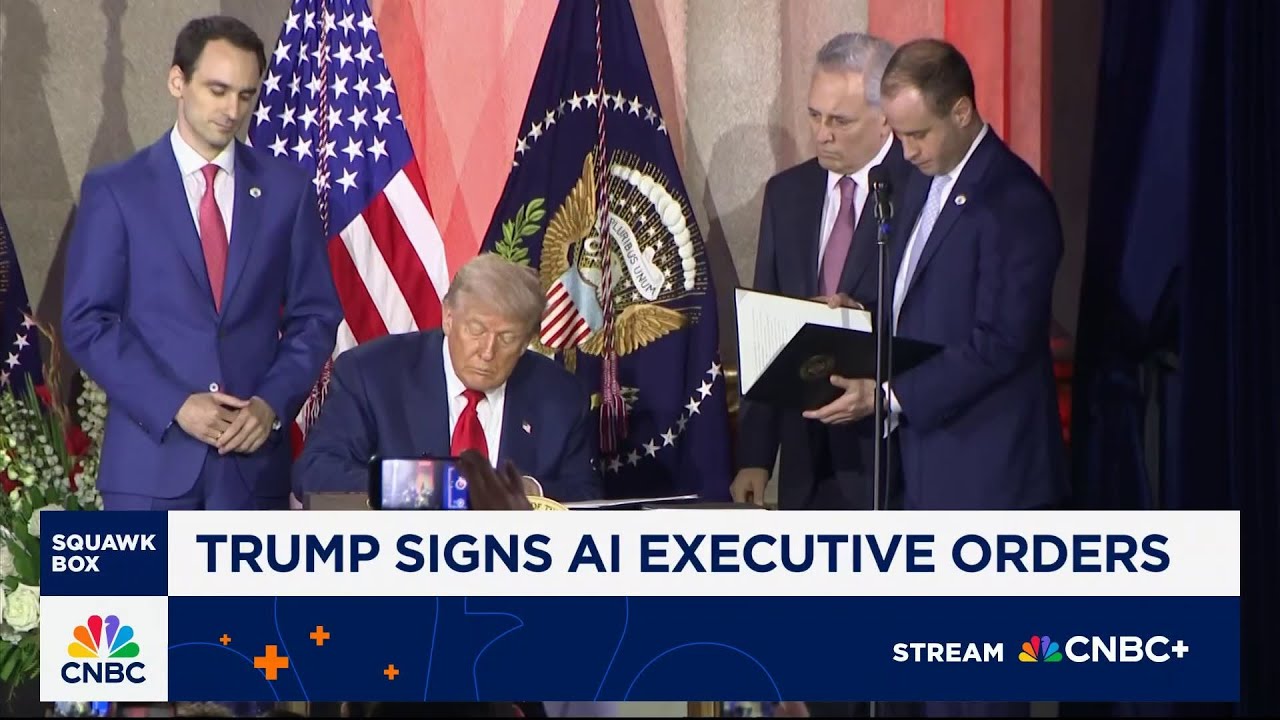
President Trump’s recent signing of three executive orders on artificial intelligence, as reported by CNBC’s Eamon Javers on Squawk Box, signals a distinct, and at times politically charged, approach to fostering American leadership in AI. Javers, CNBC Business News Senior Washington Correspondent, spoke with Becky Quick about the orders, which aim to accelerate AI development by streamlining regulations, expanding tech exports, and notably, addressing what the administration terms "woke" influences in AI.
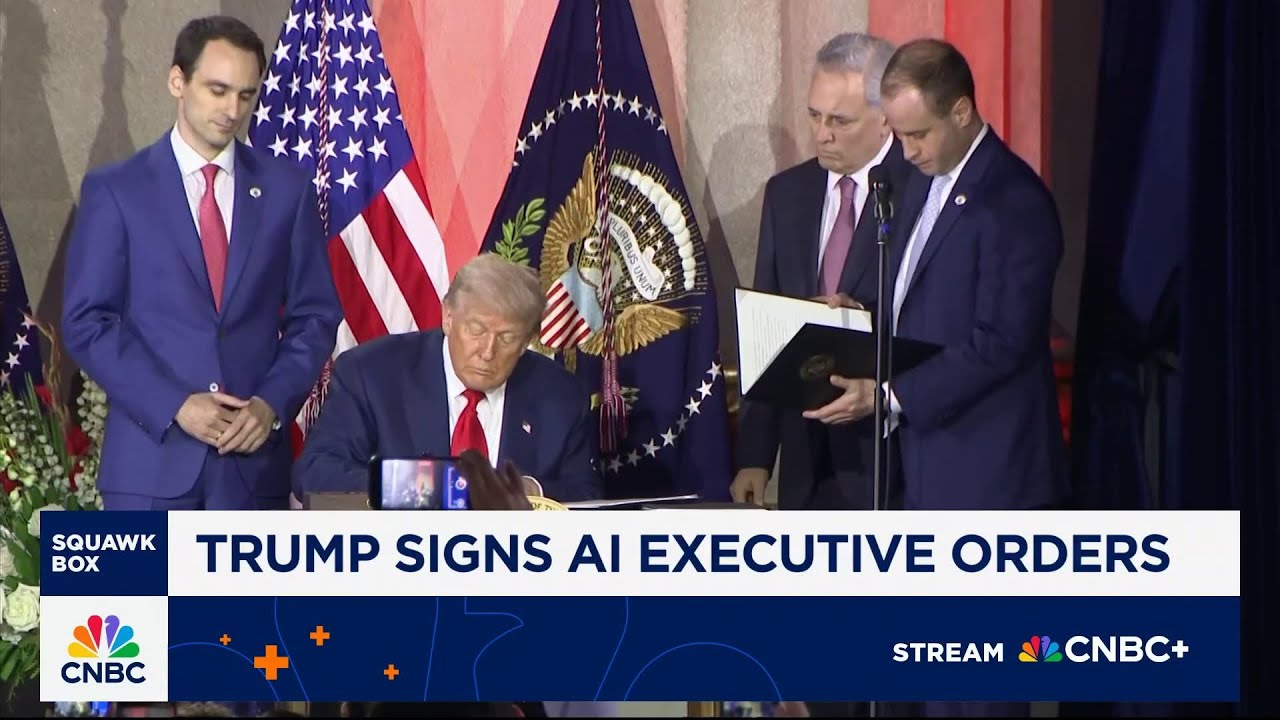
The core intent behind these executive actions is to solidify the United States' global lead in artificial intelligence. White House officials conveyed to Javers that the orders are designed to expedite the permitting process for AI projects, explicitly targeting regulatory hurdles, particularly environmental concerns related to the construction of new data centers and the necessary power infrastructure. This focus on deregulation suggests a clear prioritization of rapid expansion over existing environmental review processes, a move likely to be welcomed by large tech firms and infrastructure developers.
A significant, and perhaps more controversial, aspect of the executive orders centers on the elimination of perceived "top-down ideological bias" in AI systems. When pressed by Javers on who would define such bias, White House officials indicated their primary concern was "eliminating diversity, equity, and inclusion values from AI." This directive introduces a political and cultural dimension to AI procurement, potentially shaping the development and deployment of government-contracted AI in ways that align with specific ideological frameworks. For AI professionals and founders, this raises questions about the parameters of acceptable AI development and the potential for a bifurcated market based on compliance with these new ideological guidelines.
Another critical area addressed is intellectual property. Trump explicitly stated, "We have to allow AI to use that pool of knowledge without going through the complexity of contract negotiations." This position directly confronts ongoing copyright lawsuits from media organizations and authors, who argue that AI firms are ingesting their copyrighted work without compensation. The administration appears to side squarely with the AI industry, viewing the vast public domain of information as a collective "world's knowledge" that AI should freely leverage for advancement, potentially setting a precedent that could dramatically reshape copyright law in the digital age.
The federal government, as a substantial purchaser of technology, intends to use its procurement power to enforce these new terms, including guidelines around ideologically unbiased AI. This strategic leverage could significantly influence how AI is developed and deployed within the public sector, and by extension, within the broader commercial ecosystem seeking government contracts.