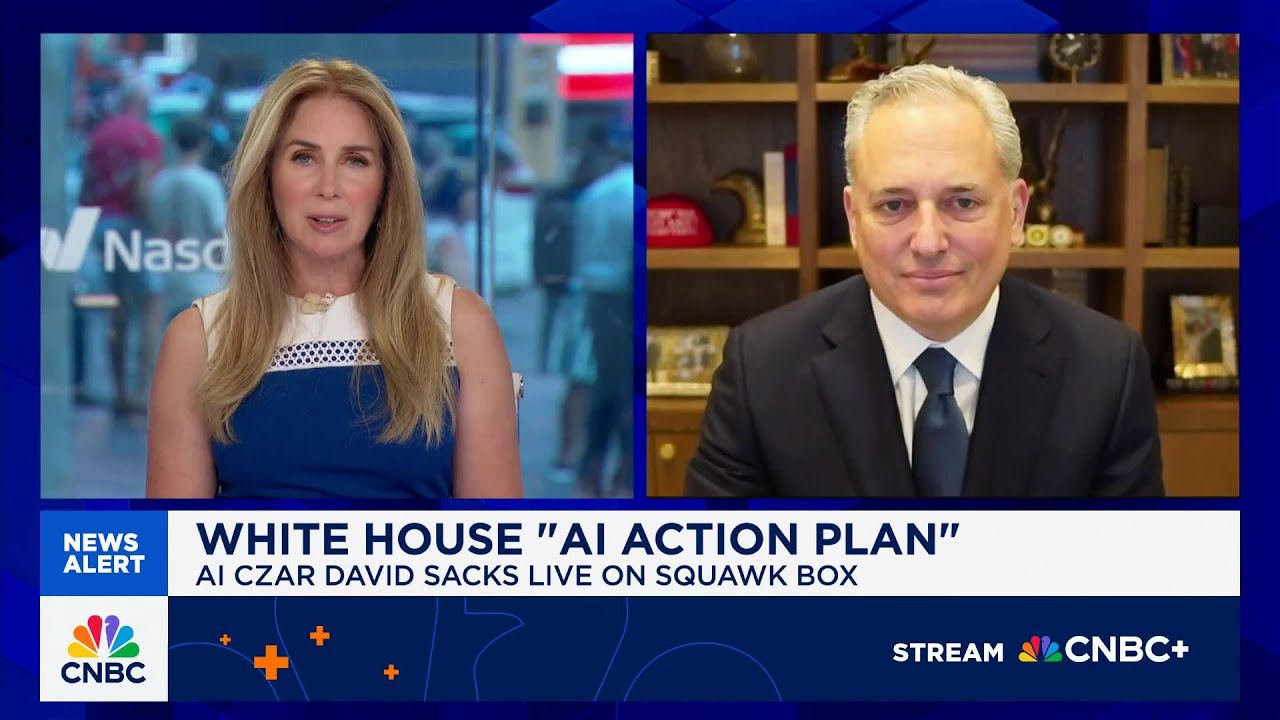
The global AI arms race represents a pivotal moment, even surpassing the significance of the space race, according to White House AI and Crypto Czar David Sacks. Speaking on CNBC's 'Squawk Box', Sacks elaborated on President Trump's recently signed executive orders, outlining a comprehensive 'AI action plan' aimed at securing American leadership in this transformative technology.
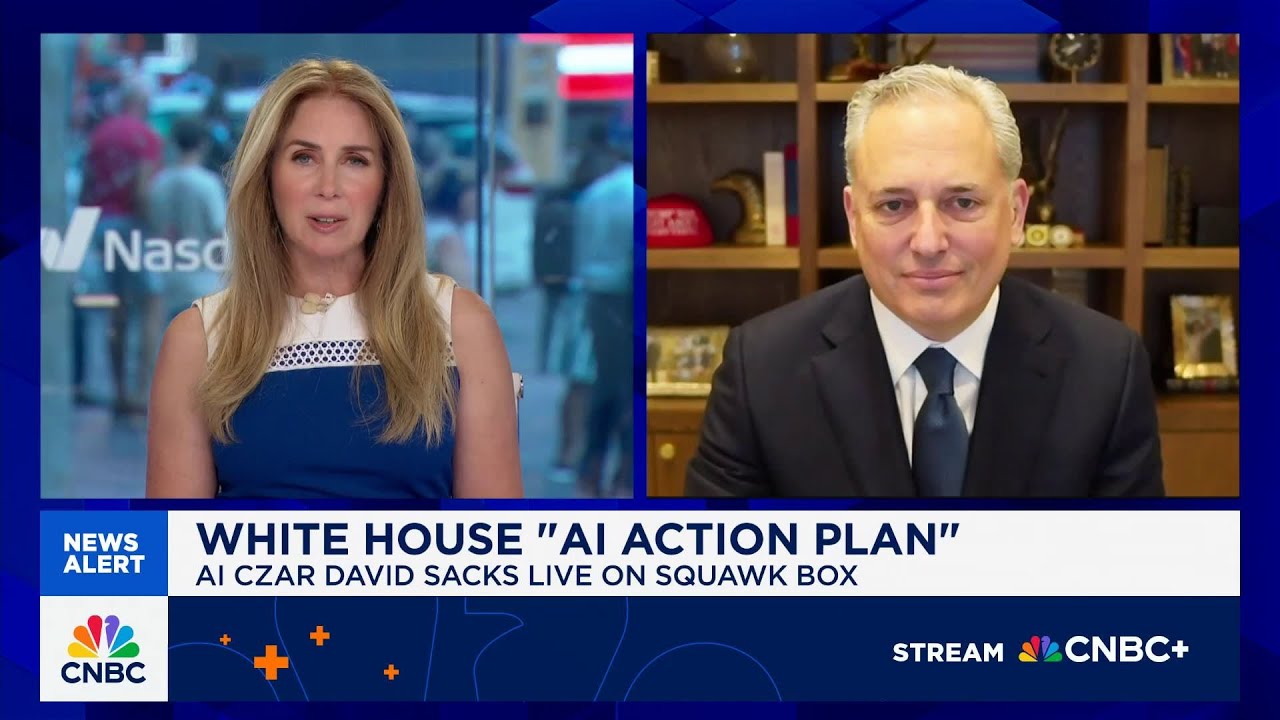
Sacks starkly posited that the AI race is "even more important than the space race, because it's going to determine who reshapes the global economy and who the superpowers of the 21st century are going to be." He articulated a clear vision: if the U.S. maintains its lead, it will remain the most powerful nation; otherwise, it risks falling behind competitors like China. While acknowledging China's progress in AI models, Sacks asserted that the U.S. holds a lead, particularly in foundational layers like chip design and manufacturing, citing Nvidia's multi-year advantage over Chinese counterparts like SMIC.
A critical pillar of this strategy involves unleashing American energy. The immense power demands of new AI data centers necessitate a significant build-out of infrastructure. Sacks emphasized that the private sector is already investing hundreds of billions in this, but government must remove obstacles. President Trump's executive order aims to accelerate federal permitting for data centers, reducing approval timelines "from years to weeks or months." This push extends to all energy sources, natural gas, nuclear, and "big, beautiful coal", underscoring the administration's "all of the above approach" to energy dominance as a prerequisite for AI dominance.
Beyond domestic infrastructure, Sacks stressed the importance of promoting American AI exports. The goal is for "the whole world using the American tech stack," consolidating around a U.S. standard. He warned that if the U.S. doesn't provide this standard, "Huawei surely will." The administration's philosophy favors fostering a competitive environment rather than anointing specific winners. Sacks argued against over-regulation, especially from states and international bodies, which could "hobble our AI companies and our innovation." He emphasized the need for "sensible" regulation, not none, to avoid creating a confusing "patchwork" of rules that could impede progress.
Regarding copyright, Sacks clarified the administration's stance: AI models cannot copy or plagiarize copyrighted outputs. However, the ingestion of data for training purposes falls under a "fair use" definition, a position currently being litigated in courts. He noted the impracticality of requiring licensing deals for every piece of data, especially given that China will not adhere to such restrictions. Sacks maintained that the current competition in AI models is robust, and Nvidia's market leadership is a result of its visionary foresight in GPUs, not a lack of market competition.