

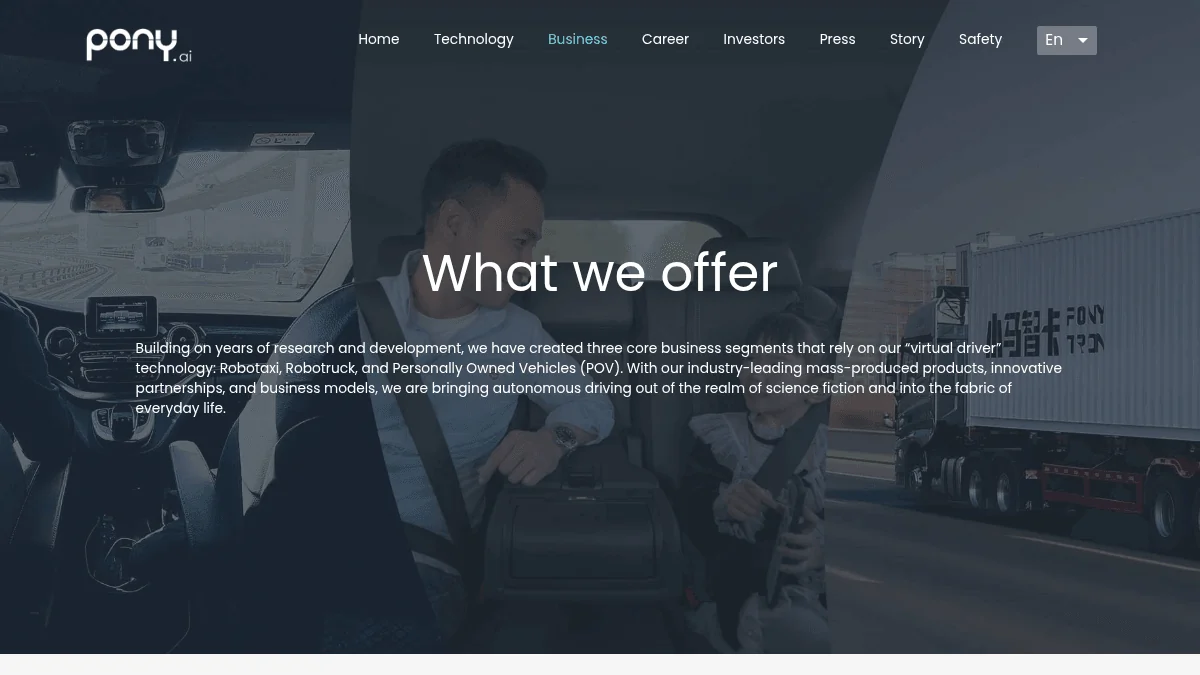
Recent reports indicate that Travis Kalanick, co-founder of Uber, is organizing a bid to acquire the U.S. operations of autonomous vehicle (AV) company Pony.ai. The reports suggest that Uber is in discussions to financially back the deal, signaling a potential partnership between Kalanick and the company he formerly led. This development comes as the AV sector enters a new phase characterized by strategic consolidation and geopolitical considerations.
Strategic Context: A Shifting AV Landscape
The autonomous vehicle industry is transitioning from a primary focus on technological development to a period of strategic integration and commercialization. Pony.ai, a company with significant operations in both China and the U.S., has reportedly faced regulatory scrutiny due to increasing tech-related tensions between the two countries. A spin-off of its U.S. division, which holds valuable intellectual property and testing permits, presents a unique investment opportunity. Such a move would allow investors to acquire advanced AV technology while navigating concerns related to foreign ownership.
For Uber, which sold its internal AV research division to Aurora in 2020, this potential deal marks a strategic shift. After the sale, Uber adopted a platform-neutral approach, integrating technology from partners like Waymo. However, direct involvement with Pony.ai's U.S. assets could offer Uber a more significant stake in the estimated $1.5 trillion autonomous mobility market and serve as a strategic hedge against competitors.
Beyond Ride-Hailing: The Logistics Vision
Kalanick's interest in autonomous vehicles appears to extend beyond passenger transport. As the current CEO of CloudKitchens, he is developing a logistics network for on-demand urban services. Autonomous vehicles could form a critical component of this network, handling not only last-mile food delivery but also middle-mile logistics, such as transporting goods between central kitchens and distribution points.
Pony.ai's technology aligns with this goal. The company's seventh-generation AV system, which it announced in 2025, was developed for mass production with a reported 70% reduction in hardware costs. Its modular design is adaptable for both robotaxis and freight vehicles, making it suitable for a range of mobility and logistics applications.