

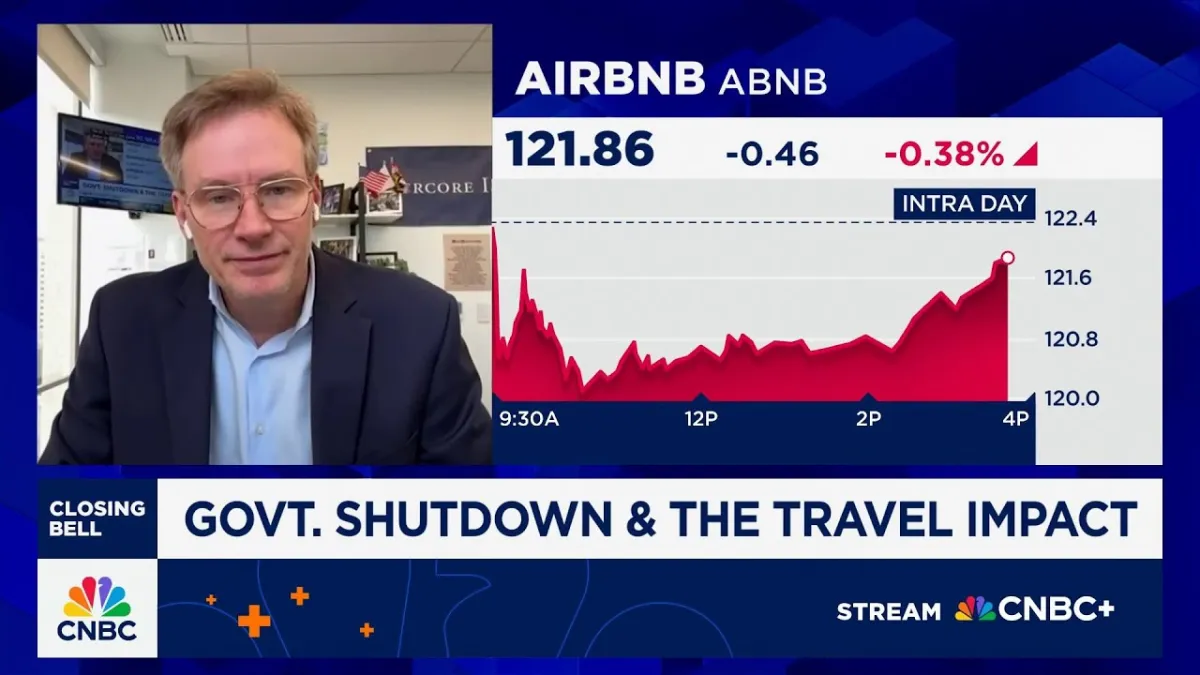
"AI is both an existential threat and an opportunity," a sentiment attributed to Airbnb CEO Brian Chesky, encapsulates the profound shift occurring within the travel sector. This duality formed a central tenet of the discussion between Evercore ISI Head of Internet Research, Mark Mahaney, and CNBC's Contessa Brewer on "Closing Bell." While the immediate backdrop of their conversation touched upon the impact of a government shutdown on travel, the deeper, more enduring narrative revolved around how online travel agencies (OTAs) like Expedia, Booking Holdings, and Airbnb are leveraging artificial intelligence to either secure their future or risk obsolescence.
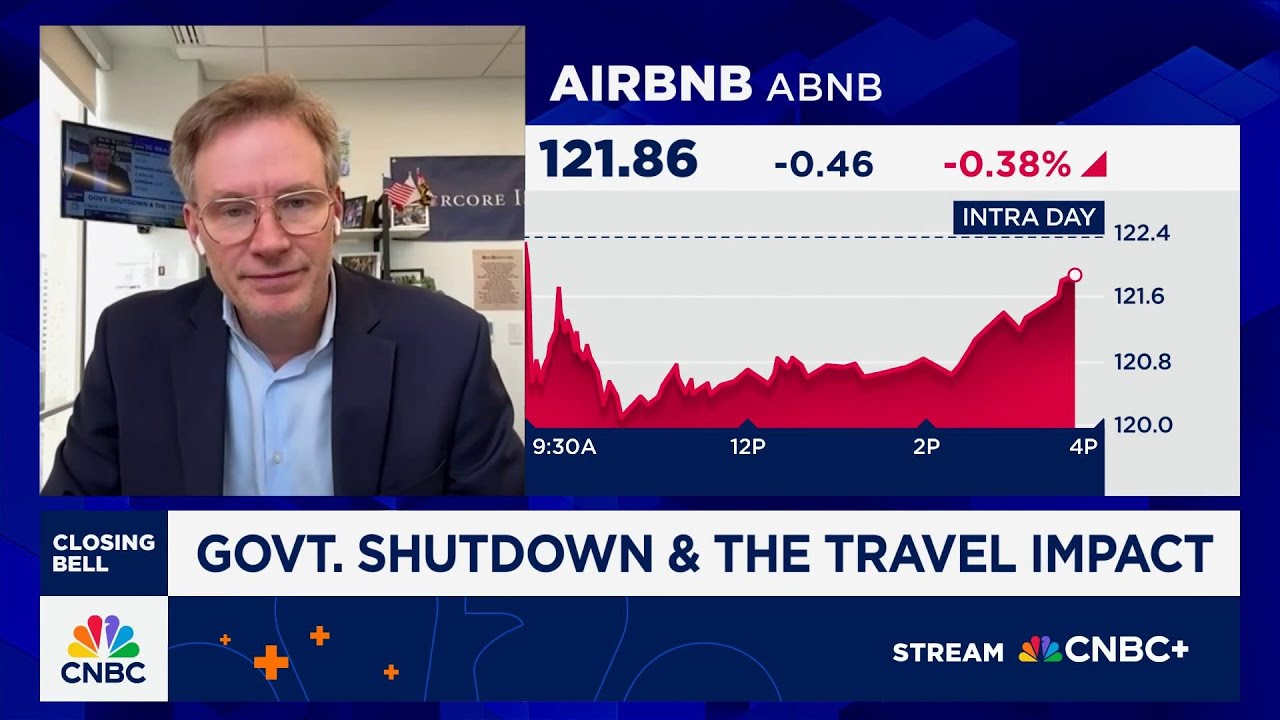
The initial segment of the interview addressed the tangible, albeit temporary, economic headwinds facing the U.S. travel industry due to a government shutdown, with potential losses estimated at a billion dollars a week. Brewer highlighted that companies with significant international exposure, such as Booking Holdings (with 85% of its bookings outside the U.S.), were better hedged against domestic downturns. Conversely, Expedia and Airbnb, with over 50% of their bookings in the U.S., would feel a more direct impact. However, this short-term volatility quickly gave way to a more strategic discourse: the long-term competitive advantage conferred by AI.
Mahaney firmly believes that "if these companies use AI to make that service better for their customers, I think they'll actually end up being big winners." This underscores a critical insight: AI isn't merely a technological upgrade but a fundamental differentiator for customer experience and operational efficiency. The travel planning process, as Mahaney noted, is an "information-intensive transaction," with consumers often dedicating "three, five hours a year planning their summer vacations" to ensure flights, hotels, and rental cars are perfectly aligned. This complexity presents a "wonderful play here for AI."
Expedia's CEO, Ariane Gorin, mentioned in a prior conversation with Brewer, dismisses the notion that generative AI like ChatGPT could render OTAs obsolete. Instead, Expedia is actively deploying its own AI, dubbed "Romy," to personalize customer interactions and enhance service delivery. This proactive stance reflects a second core insight: market leaders are not waiting to be disrupted; they are integrating AI internally to refine their offerings. Airbnb, too, is developing an internal AI engine, drawing on its vast dataset of "gold standard customer interactions" to provide hyper-personalized recommendations that resonate with individual travelers, moving beyond generic marketing.
This strategic pivot by major players suggests a future where the travel industry will experience a significant "bifurcation," as Mahaney predicted, based on the effective deployment of AI. Those who successfully harness AI to manage the immense data flows, predict consumer preferences, and streamline complex booking logistics will thrive. Conversely, companies unable or unwilling to invest in and integrate these advanced capabilities risk being left behind. Mahaney specifically lauded Expedia's Romy, stating it was "most ready for prime time" among the AI travel agents he had evaluated. This readiness, combined with Expedia's "darn cheap" valuation and new management, positions it as a top pick for Evercore ISI, suggesting that smart AI integration is directly influencing investor confidence and market performance.