


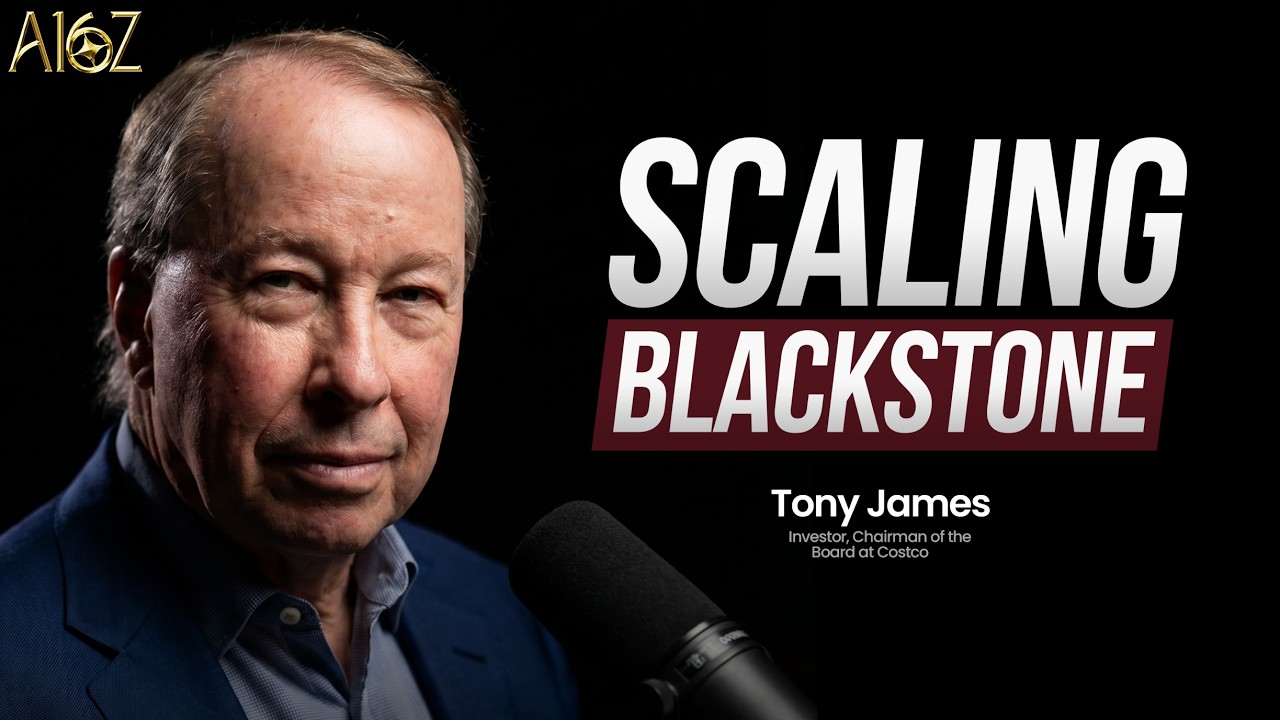
Tony James, investor, and Chairman of the Board at Costco Wholesale, shared insights on building successful companies during his appearance on The a16z Show. James, who has been instrumental in the growth of numerous iconic brands, including Starbucks and Blackstone, discussed the early stages of entrepreneurship and the critical factors that contribute to long-term success.
Identifying Opportunities and Early Signals
James began by drawing parallels between the growth of successful companies and an S-curve, noting that nascent ventures often start small and see exponential growth as they gain traction. He stressed the importance of identifying early signals that indicate a company's potential, suggesting that these signs are often subtle and not immediately obvious.
He elaborated on this point by stating, "By the time they are obvious, it's priced in." This sentiment underscores the value of foresight and the ability to recognize opportunities before they become mainstream.
The Power of Focus and Execution
When asked about the key ingredients for building a successful career, James highlighted the need for unwavering focus and flawless execution. He emphasized that success hinges on meticulously managing details and maintaining a long-term perspective, a philosophy he attributes to many of the leaders he has encountered throughout his career.
"Focus, focus, focus. Flawless execution of details. Build for the long term," James advised, encapsulating a core principle for sustained achievement.
From Startup to Scale: The Blackstone Journey
James recounted his experience in the investment world, particularly his early days at DJL, which he joined in 1975. He described the firm at the time as a small, unstructured entity, a stark contrast to the global powerhouse it would become. He mentioned that at the time, they had not completed a financing or merger in two years, a period that ultimately proved to be a catalyst for strategic growth.
He recalled, "I like the people, I like the unstructured nature of it. I decided that I'd give it a shot."
This period of uncertainty and strategic pivoting allowed the firm to evolve, eventually leading to significant growth and success. James highlighted a key turning point in 1980 when KKR executed a leveraged buyout for HDA Industries, which he described as a pivotal moment that demonstrated the potential of private equity and the strategic advantage of their approach.
The Importance of Identifying and Capitalizing on Trends
James emphasized that success often comes from identifying nascent trends and capitalizing on them before they become widely recognized. He cited the rise of private equity in the 1980s as an example, a sector that was relatively underdeveloped yet offered immense potential for growth and innovation.
He noted, "We were second in high yield and we were more of a client than a threat to the banks." This allowed them to gain valuable experience and build relationships, setting the stage for future successes.
Lessons from Long-Term Success
Reflecting on his long tenure as Chairman of the Board at Costco Wholesale, James shared his admiration for the company's consistent focus on customer value and operational excellence. He highlighted that Costco's success is not solely due to its business model but also its deeply ingrained culture that prioritizes customer satisfaction and employee well-being.
James also shared an anecdote about recruiting a key executive, stating, "I've never had a boss who, you know, I would say, had a great nose for the business." This sentiment suggests that while strategic vision is important, the ability to identify and nurture talent is equally crucial for long-term success.
He concluded by emphasizing the importance of continuous learning and adaptability in the ever-evolving business world, a principle that has guided his own illustrious career.
