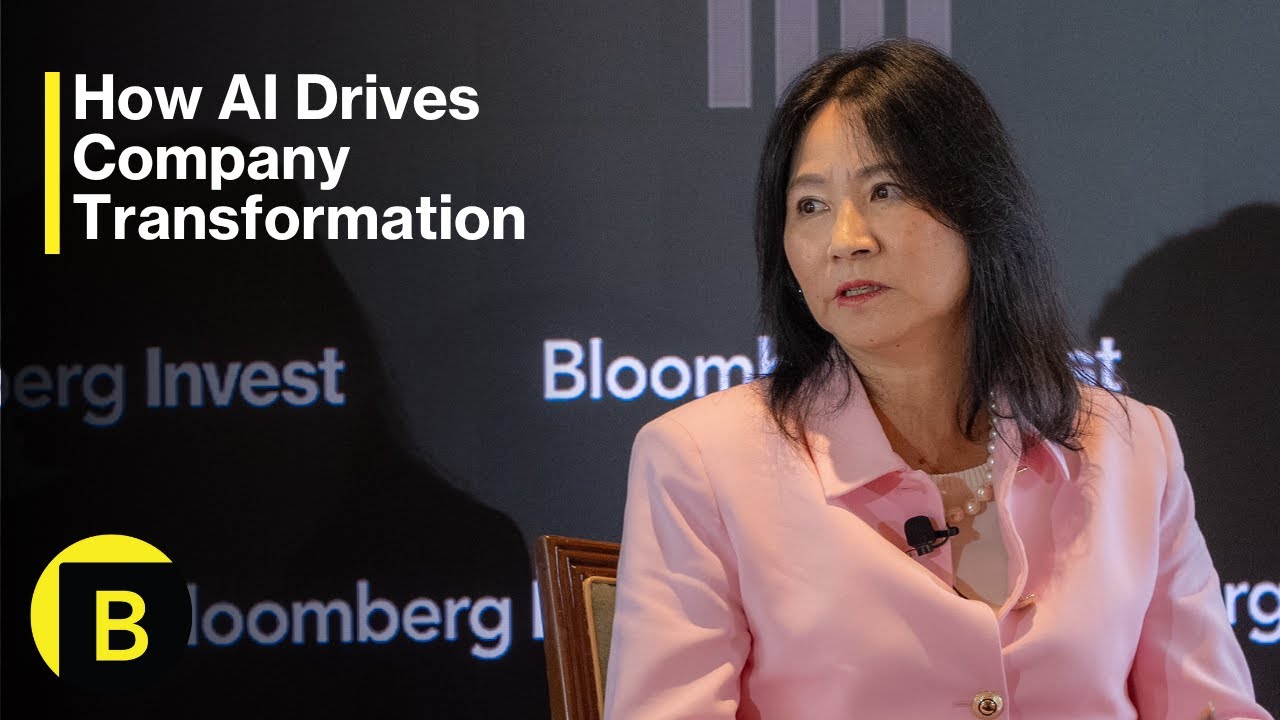
"The future of business isn't just about adopting AI; it's about fundamentally reimagining processes, people, and technology," asserts Connie Leung, Senior Director, Regional Industry Leader at Microsoft. This sentiment, echoing through the recent Bloomberg Invest panel, underscores a pivotal shift in how industry leaders perceive and harness artificial intelligence.
At the event, Bloomberg's Sonali Basak moderated a discussion with Leung and Esther Wong, Founder & Chief Investment Officer at 3C AGI Partner, delving into how companies are strategically investing to ensure sustained growth in the age of AI.
Leung highlighted that technology has always been a driver of digital transformation, pointing to cloud computing's agility and cost-effectiveness as foundational. She added that while "data is the new currency" has been a decade-long mantra, generative AI now stands as the latest cutting-edge technology embraced by clients to boost efficiency and competitiveness. From the financial services sector to broader enterprise operations, AI is empowering employees, streamlining workflows, and modernizing core systems.
Esther Wong, from her vantage point as a venture capitalist, emphasized the often-overlooked "behind the scene" aspects of AI production. She revealed that building Asia's largest AI data center exposed numerous inefficiencies, particularly in compute production, what she terms an "AI factory."
This year, 2025, marks a historic inflection point: the majority of compute produced globally will be for "inferencing" (serving end-users) rather than "training" large models. "This is the year... that inferencing surpass training," Wong declared, underscoring a critical shift in AI's practical application. This necessitates radically more efficient methods of AI production. Wong even suggested the futuristic potential of "bio-computing," where brain cells could produce chips, demonstrating superior performance over silicon-based chips for certain tasks and significantly reducing the astronomical costs associated with traditional data centers.