

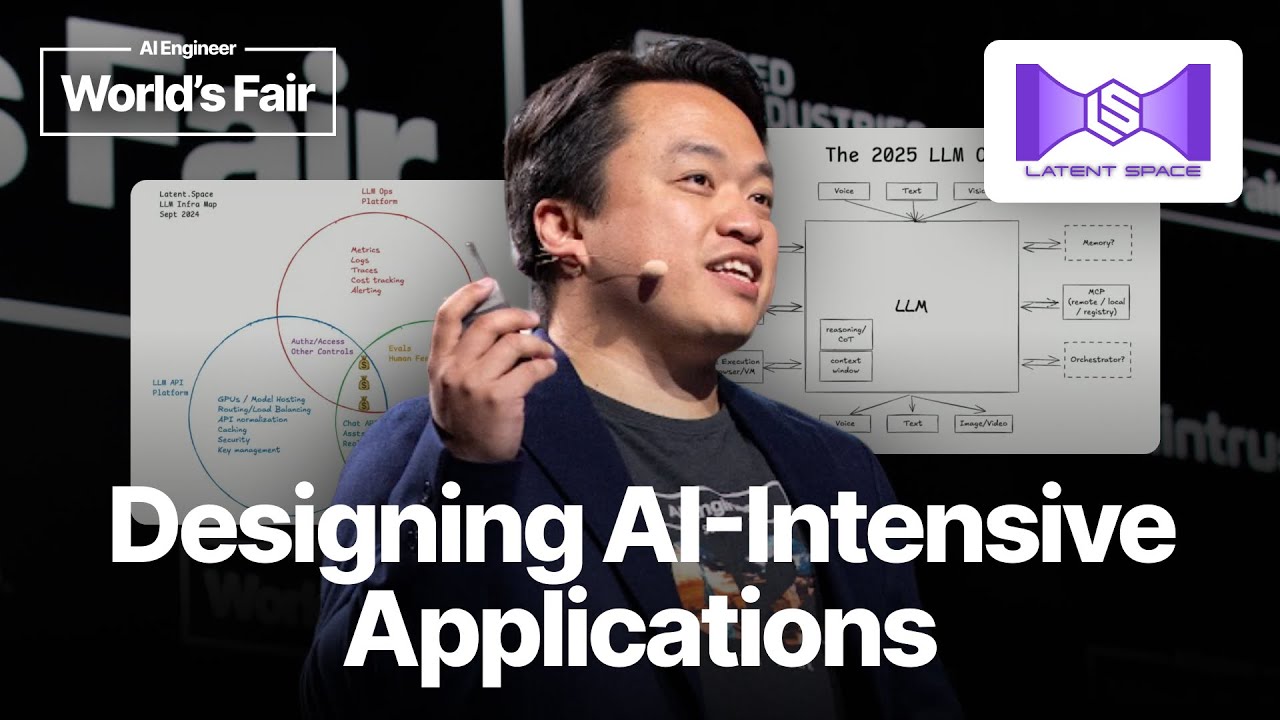
Swyx, a prominent voice in the AI engineering sphere, recently took the stage at the AI Engineer World's Fair in San Francisco to delineate the evolving landscape of AI-intensive applications. His address highlighted the sector's explosive growth and the critical need for foundational "standard models" to guide future development, drawing parallels to established engineering disciplines and even particle physics.
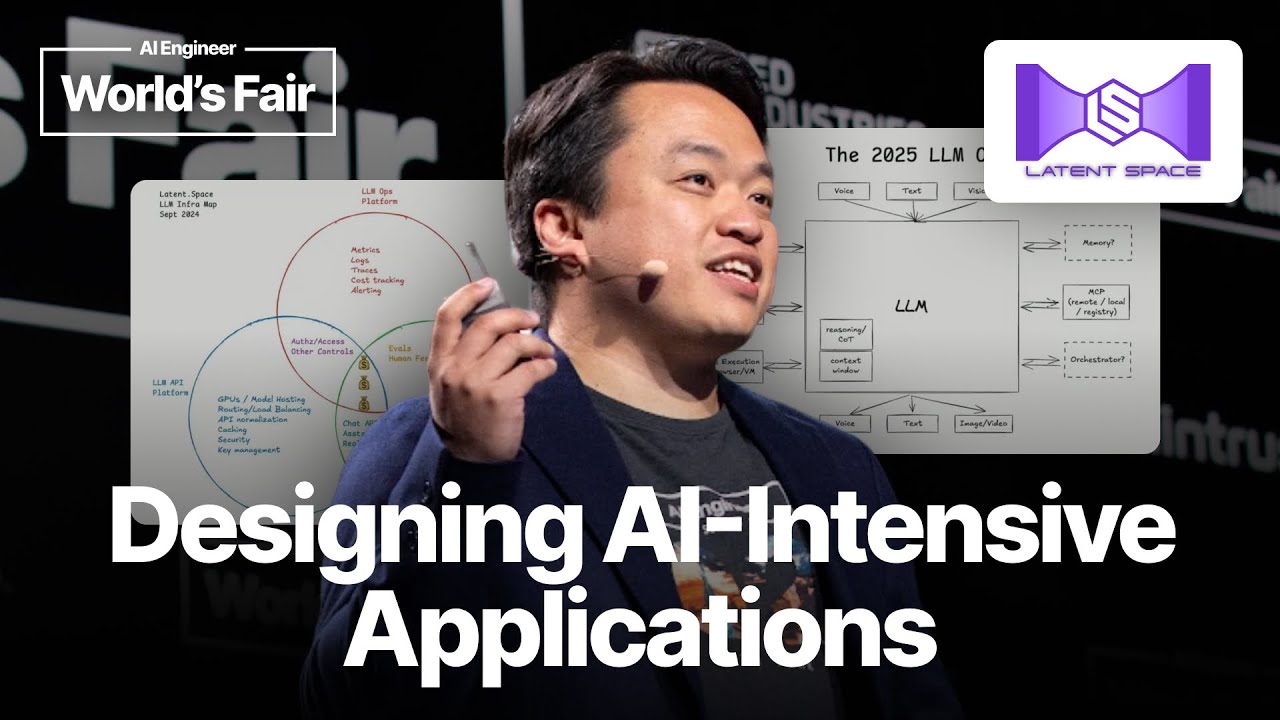
The conference itself served as a microcosm of this rapid expansion. Swyx humorously noted the massive influx of attendees, quantifiable as an "AIEWF Stress Level Index" surge due to last-minute registrations. This exponential growth reflects a field not just advancing, but fundamentally transforming, demanding a re-evaluation of its core principles and practices.
A central tenet of Swyx's presentation was the distinction between early AI applications and the emerging wave of "AI-intensive" systems. He observed a shift from a 1:1 user-input to LLM-call ratio, characteristic of tools like ChatGPT, to ratios as extreme as 1:100 seen in sophisticated applications like Deep Research or even 0:N in proactive, ambient agents. This signifies a profound leverage of AI, where a single human input can orchestrate myriad complex AI operations, dramatically increasing output value. As Swyx succinctly put it, "Doesn't matter how agentic - just increase ratio of human input : (valuable) AI output."
This escalating complexity necessitates a robust, universally understood framework. Swyx posited that AI engineering, much like other mature engineering fields with their established paradigms (e.g., ETL for data engineering, CRUD for backend development), requires its own "Standard Model." He argued that while initial AI tools were often "commodity, free for most," true value and revenue generation emerge when teams focus on the production phase: "when you start to make real money from your customers is when you start to do Evals, and you start to add in security, orchestration, and do real work." This underscores a critical transition from experimental prototypes to enterprise-grade, reliable AI systems.
To address this need, Swyx introduced SPADE, a proposed generic pseudocode model for building AI-intensive applications: Sync, Plan, Analyze, Deliver, and Evaluate. This framework integrates advanced AI engineering elements: Sync involves preprocessing data into a Knowledge Graph; Plan incorporates structured data extraction and tool calls; Analyze focuses on summarization and human-in-the-loop validation; Deliver emphasizes code generation and generative UI; and Evaluate utilizes LLM judges for continuous improvement. This systematic approach aims to provide a coherent methodology for developing applications that can execute thousands of AI calls to serve a specific purpose, pushing the boundaries of AI leverage without overcomplicating the underlying architecture.