

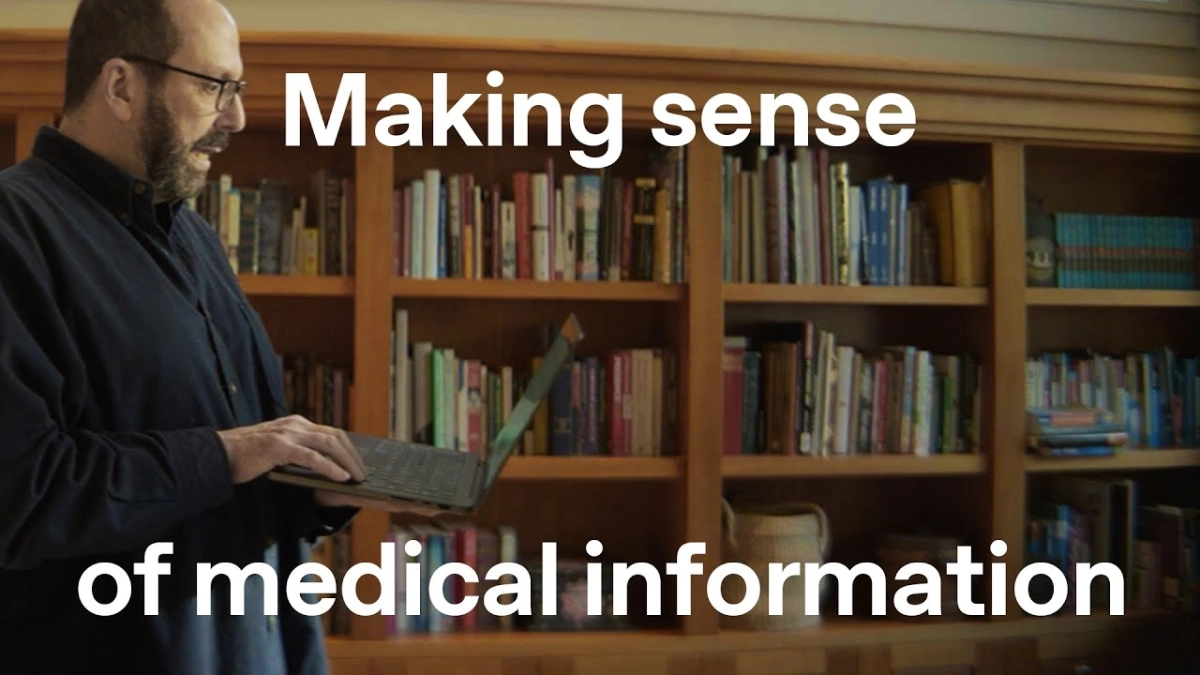
The most compelling applications of large language models often emerge not from abstract theory, but from high-stakes necessity. For Burt, an individual navigating life with two concurrent forms of cancer in Oregon, ChatGPT transformed from a generalized tool into a bespoke, critical intelligence layer for his personal health data. This is not a story about AI replacing clinicians, but about AI acting as a crucial interpreter, empowering the patient to bridge the cavernous gap between complex medical jargon and actionable, personal understanding.
Burt’s experience highlights a significant inflection point in the consumerization of healthcare data. Facing a daunting diagnosis, he quickly recognized that passive acceptance of medical reports was insufficient for his temperament. As a “get stuff done guy,” he needed to fully grasp his status. Burt articulated this need precisely: "It became really important to me to understand my CAT scan results before I talked to my doctor." He understood that true agency required epistemic access to his own clinical reality.
The core utility Burt found in the LLM was its ability to translate the dense, technical language of radiology reports and oncology notes into coherent narratives. This translation capability is the non-linear utility that LLMs bring to regulated sectors: they democratize knowledge by making highly specialized information legible to the layperson. By feeding his scan data into the model, Burt could prepare targeted questions, anticipate treatment pivots, and engage with his oncology team from a position of informed strength. He felt that if he understood the data, he would be "more of an active participant in my treatment."
Beyond simple translation, Burt leveraged the model for longitudinal data analysis and visualization—a task traditionally reserved for clinical informatics teams. He sought to track the efficacy of his protocols, asking ChatGPT, "Can you create a line graph for me and overlay my treatments?" This ability to dynamically map tumor growth against intervention timelines provided Burt and his family with immediate, visual feedback on his progress, turning disparate data points into a cohesive, strategic overview.
He even invented a metric to track his subjective well-being. This self-defined measure, which he called “Burtness,” gauged "how much of myself am I feeling." It’s an elegant example of how individuals, armed with data tools, are moving beyond standardized clinical metrics to define and track personalized health outcomes.
Burt’s partner emphasized this point, noting that what is "wonderful about ChatGPT is that it can be that cumulative source of information." For families and caregivers, the LLM acts as a centralized, perpetually available resource, synthesizing years of appointments, scans, and treatments into a coherent, navigable history, allowing the entire support structure to make "the best choices."
For founders and venture capitalists observing the health tech space, this use case is instructive. It signals a powerful market demand for tools that prioritize patient autonomy and data synthesis over pure diagnostic capability. The friction point in modern healthcare is often not the diagnosis itself, but the overwhelming complexity of the ensuing management plan. Solutions that integrate data visualization, longitudinal tracking, and natural language explanation are positioned to capture this emerging market of empowered patients. This is the future of patient engagement: providing the data and the interface necessary for high-stakes, real-time decision-making. The demand is shifting toward systems that treat the patient not as a recipient of care, but as the CEO of their own health journey.
Burt’s final observation underscores the broader societal impact of this technological shift, moving beyond just his personal case: "Empowered patients get better health outcomes." This mandate—that informed participation directly correlates with improved results—is the ultimate validation for developing sophisticated, accessible AI tools in the medical domain. It confirms that the greatest leverage for LLMs in healthcare may lie not in the sterile labs of drug discovery, but in the hands of the individual fighting for clarity and control.



