

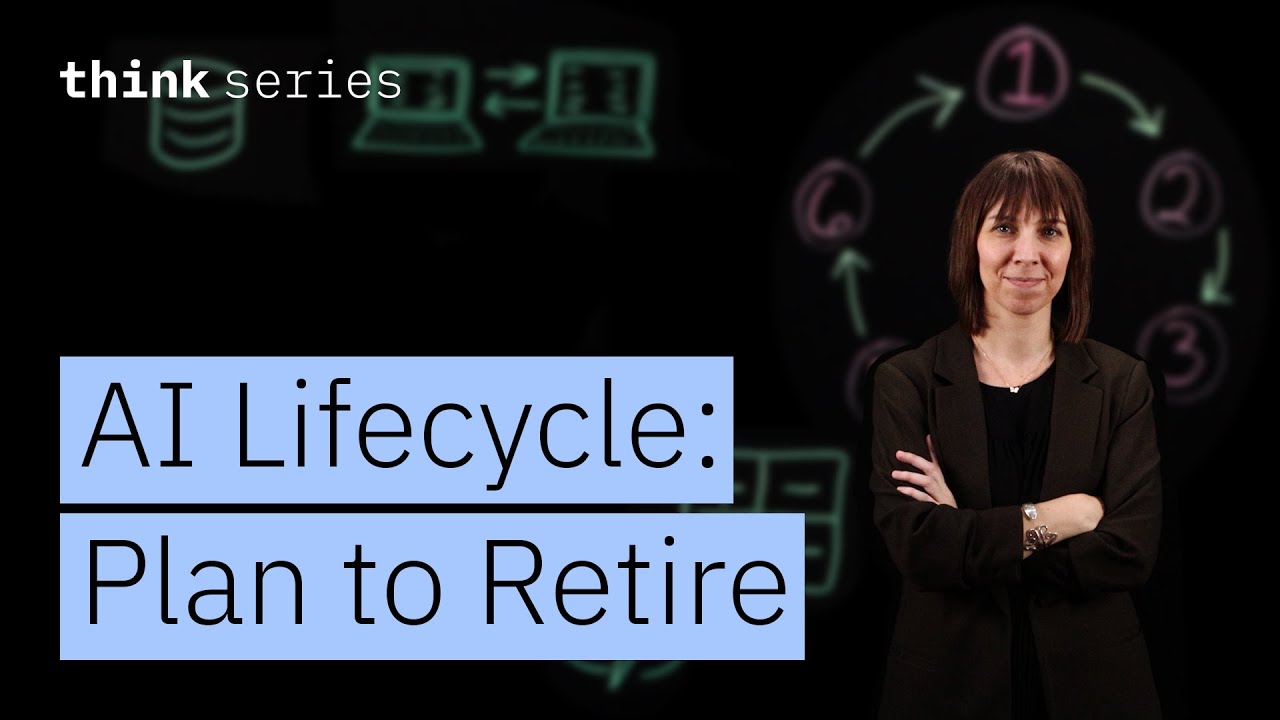
Building a successful AI model is not a single event but a continuous, disciplined cycle. It requires a structured approach that extends from the initial business problem all the way to the model's eventual retirement, ensuring performance, ethics, and trust are maintained throughout.
In a presentation for IBM's think series, Amanda Winkles, an AI/MLOps Technical Specialist, detailed the complete AI model lifecycle. She broke down the complex process into six distinct yet interconnected stages: planning, data preparation, development, validation, deployment, and ongoing maintenance. The framework provides a crucial roadmap for organizations seeking to move AI from experimental projects to reliable, enterprise-grade solutions.
The journey begins with a clear plan and a well-defined use case, but the foundation of any robust model is its data. As Winkles states, “Good AI starts with good data.” This involves more than just collecting vast quantities; it requires a commitment to sourcing diverse and representative datasets, cleansing them of personal information and inaccuracies, and actively checking for inherent bias. If a dataset is unbalanced, techniques like generating synthetic data can be used to fill the gaps, creating a more equitable and effective training environment. This meticulous data preparation is not a preliminary step but a foundational pillar for the model's entire existence.
Once a high-quality dataset is established, the development and validation stages begin. This involves selecting the right architecture, such as a Transformer model for text generation, and training it. However, the most critical part of this phase is rigorous evaluation. An AI governance review board should be established to validate the model against performance metrics, fairness, and regulatory requirements like the EU AI Act. Winkles emphasizes testing for edge cases and disparities, noting that if issues are found, teams must be prepared to "adjust the algorithm or augment our data with synthetically generated data" to correct them.
The deployment process must be repeatable, automated, and secure. This operational discipline ensures that a validated model can be reliably pushed into a production environment.