


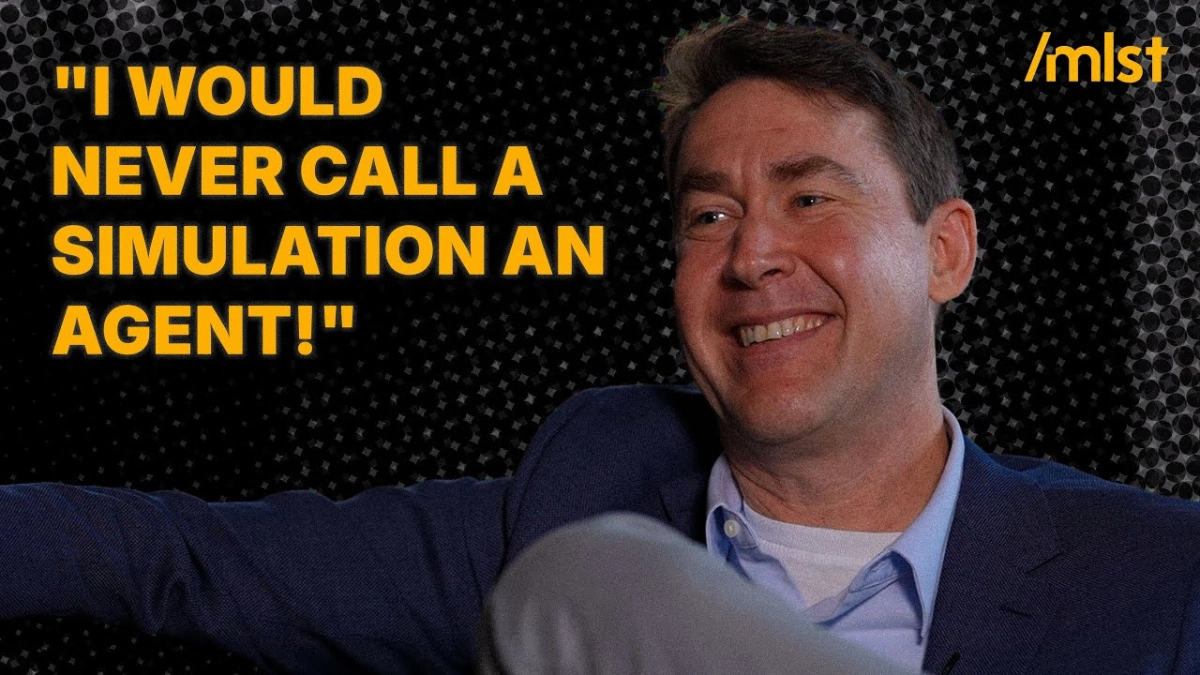
Dr. Jeff Beck, a computational neuroscientist focused on the mathematical and physical underpinnings of intelligence, recently challenged the conventional philosophical boundaries defining agency in artificial systems. Beck, speaking with the interviewer, dissected the foundational concepts of agency, intelligence, and the architectural shifts driving modern AI research, particularly focusing on predictive models, energy-based systems, and the risks of human cognitive decline in an automated future.
Beck argues that the structural distinction often drawn between an agent and a mere object is mathematically weak. When viewed through the lens of policy execution, where a system maps inputs to outputs, a rock responding to gravity is fundamentally no different from a complex algorithm. The true difference lies solely in complexity. Beck notes that from a purely mathematical standpoint, “there’s no structural difference between an agent and an object. It’s really just a question of degrees.” An agent is simply an object capable of extremely sophisticated computation, allowing for things like planning and counterfactual reasoning over vast timescales.