

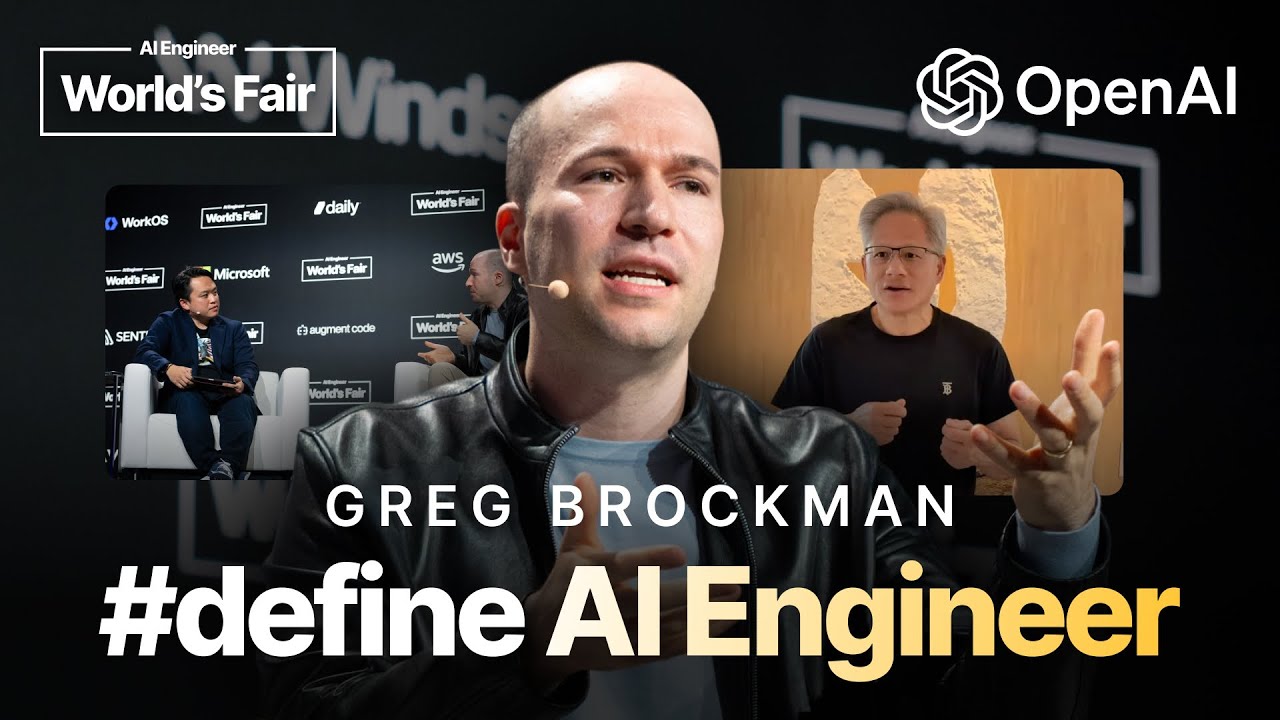
The modern AI engineer, as defined by OpenAI co-founder Greg Brockman, is fundamentally a "builder", someone capable of constructing the entire application stack, from the foundational models to the end-user experience. This perspective challenges traditional software engineering silos, advocating for a holistic understanding of the AI product lifecycle.

At the AI Engineer World's Fair in San Francisco, Greg Brockman offered a nuanced perspective on this rapidly evolving role, sharing insights from his journey at the forefront of artificial intelligence. He articulated that the AI engineer is not merely a machine learning researcher or a product manager, but a crucial hybrid bridging these disciplines.
Brockman emphasized the necessity of a comprehensive understanding, stating, "It's building the whole thing." This means an AI engineer must possess the versatility to navigate every layer of the technology stack, from selecting and fine-tuning models to designing the user interface and ensuring robust deployment. This vertical integration of skills is paramount for rapid iteration and effective problem-solving in a domain where the underlying technology evolves at an unprecedented pace.
The career trajectory of an AI engineer, Brockman suggested, is less about rigid specialization and more about continuous, hands-on learning. His own path, from co-founding Stripe to leading OpenAI's technical development, exemplifies a relentless focus on building and iterating at the frontier. He highlighted that the most impactful advancements often emerge from directly engaging with the technology and pushing its boundaries through practical application.
This iterative, builder-centric approach allows AI engineers to bridge the gap between abstract research and tangible product. They are uniquely positioned to translate cutting-edge model capabilities into real-world applications, understanding both the theoretical underpinnings and the practical challenges of deployment. This blend of scientific curiosity and engineering pragmatism defines the role.