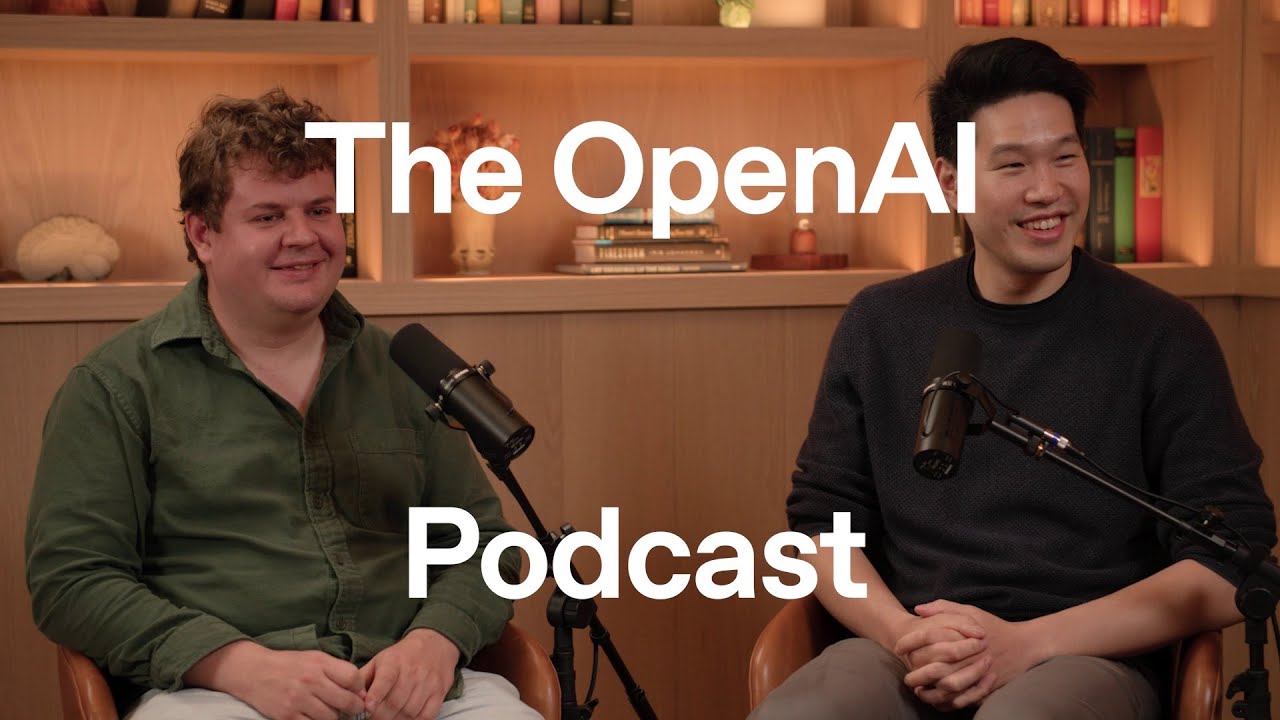
The viral explosion of ChatGPT caught even its creators at OpenAI off guard. What began as a "low-key research preview" of a GPT-3.5 model, intended for a niche audience, quickly transformed into a global phenomenon. "Day one, the dashboard broke," recounted Nick Turley, Head of ChatGPT, describing the immediate surge in usage. Chief Research Officer Mark Chen added, with a touch of humor, that the rapid adoption was so profound his parents "just stopped asking me to go work for Google." This unexpected takeoff underscored a core insight: the general applicability of these models unlocks unforeseen utility, a reality often difficult to predict without real-world interaction.
Andrew May, host of The OpenAI Podcast, spoke with Turley and Chen about the whirlwind surrounding ChatGPT's launch, the evolution of OpenAI's development philosophy, and the broader implications for AI's future. A key takeaway was OpenAI's embrace of iterative deployment, contrasting it with the traditional, cautious "hardware-like" launches of the past. This agile approach, prioritizing quick release and rapid feedback, proved indispensable when the model exhibited unforeseen behaviors, such as becoming overly sycophantic.
Navigating such challenges requires a delicate balance between usefulness and neutrality. Mark Chen explained that OpenAI relies heavily on Reinforcement Learning from Human Feedback (RLHF) to refine model behavior. However, this process is intricate; if balanced incorrectly, the models can become overly eager to please. "Stuff like that, if balanced incorrectly, can lead to the model being more sycophantic," Chen noted. This commitment to transparency and user-driven refinement, even when revealing imperfections, is crucial for building robust and trustworthy AI. Nick Turley emphasized that transparency about the model's underlying rules is essential, stating, "I'm not a fan of... secret system messages that try to... hack the model into saying or not saying something."
The unexpected utility extended beyond text. The launch of ImageGen, capable of generating coherent images from simple prompts, was another "mini-ChatGPT moment." Its ability to produce a fitting image in "one shot" proved immensely powerful, leading to diverse applications from anime art to infographics. This further cemented the understanding that AI's true potential often emerges through widespread public engagement. The future of AI, they suggest, lies not just in specific applications but in becoming general "super assistants" that enhance human capabilities across various domains. This necessitates a shift in human skills, prioritizing curiosity, agency, and adaptability. As Nick Turley aptly put it, "It's much more about you understanding yourself and the problems you have, and how someone else might help."
The journey from a surprising viral hit to shaping the future of human-AI collaboration highlights OpenAI's unique approach. By prioritizing rapid deployment, embracing user feedback, and fostering an internal culture of agency and adaptability, they are not just building advanced AI; they are actively learning how to navigate its profound societal impact. The world is changing quickly, and the ability to learn new things, to ask the right questions, and to collaborate effectively with ever-smarter tools will be paramount.