

"It's just as hard to build a small, inconsequential thing as it is to build a giant world-changing thing. You work the same amount of hours, so you might as well go for doing something important." This foundational philosophy, articulated by the wise, Ben Horowitz, encapsulates the driving ethos behind Andreessen Horowitz (a16z) and its remarkable evolution within the venture capital landscape.
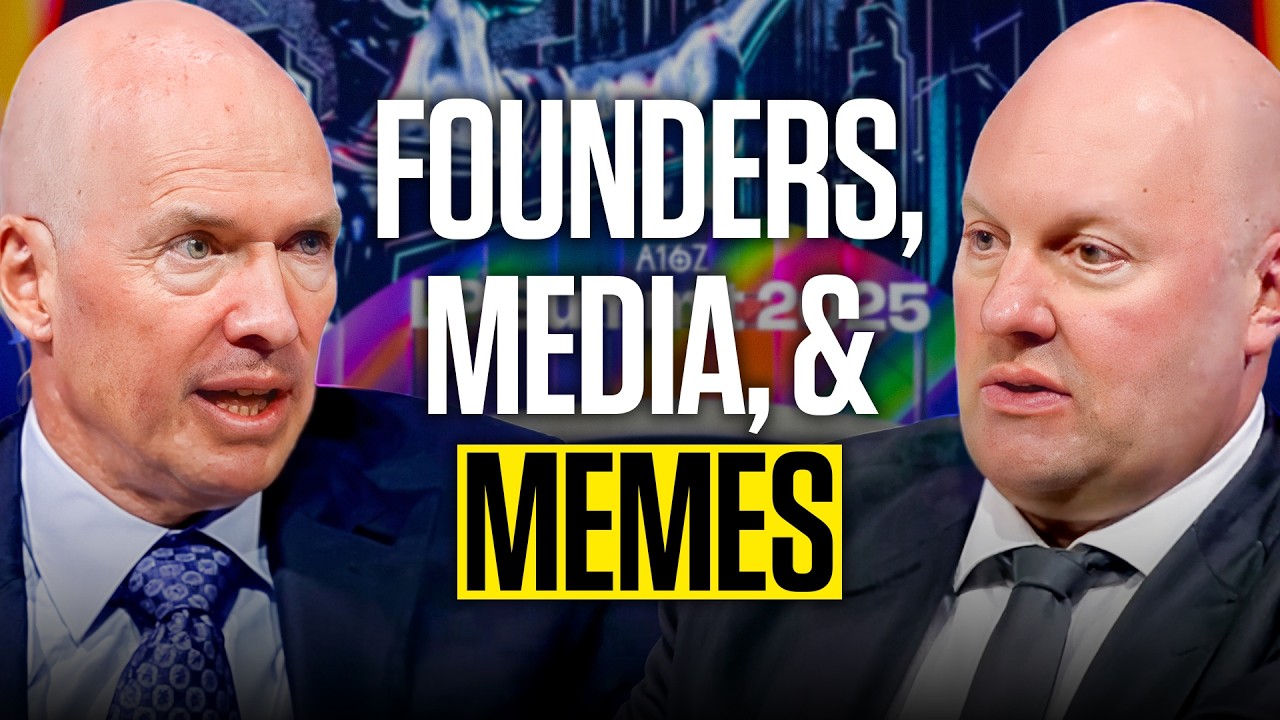
Speaking live at the 2025 a16z LP Summit, cofounders Marc Andreessen and Ben Horowitz, hosted by general partner Erik Torenberg, offered a candid look into the firm's strategic pivots, the shifting media environment, and their vision for future technological frontiers, particularly in AI and crypto.
The venture capital industry, according to Horowitz, has undergone more transformative change since a16z's inception in 2009 than in the preceding three decades. Their initial "Act 1" was a revolutionary approach: viewing venture capital through a product lens, not merely as a financial vehicle for limited partners, but as a comprehensive platform designed to empower founders. This meant building a robust network and providing operational support, fundamentally altering the traditional VC-entrepreneur dynamic, which Horowitz wryly noted often offered little beyond "a very smart person on your board" whose insights quickly ran dry.
As the digital revolution accelerated, fueled by Marc Andreessen's seminal "Software is Eating the World" thesis, a16z recognized the imperative to scale. No longer were there just a handful of potential billion-dollar companies; the landscape exploded with opportunities across various sectors, demanding a venture firm that could match this exponential growth. This necessitated continuous internal reorganization, a critical insight Horowitz emphasized: "There's no way to scale if you can't change roles, responsibilities, the way the firm is structured, how it works." Their unique, centralized control structure, unlike traditional shared-control partnerships, provided the agility to pivot. And agility to build specialized teams dedicated to emerging sectors like crypto and AI.
Beyond internal agility, a16z understood the profound shift in external communication. Marc Andreessen vividly described how "social media's become the dog and traditional media's become the tail," creating "meme-speed narratives" that dictate public discourse. In this hyper-accelerated environment, controlling one's narrative is paramount. This led to a critical strategic decision: building their own media channel, ensuring direct communication with founders, policymakers, and the broader tech ecosystem, bypassing traditional media gatekeepers often caught in the whirlwind of fleeting online controversies.