

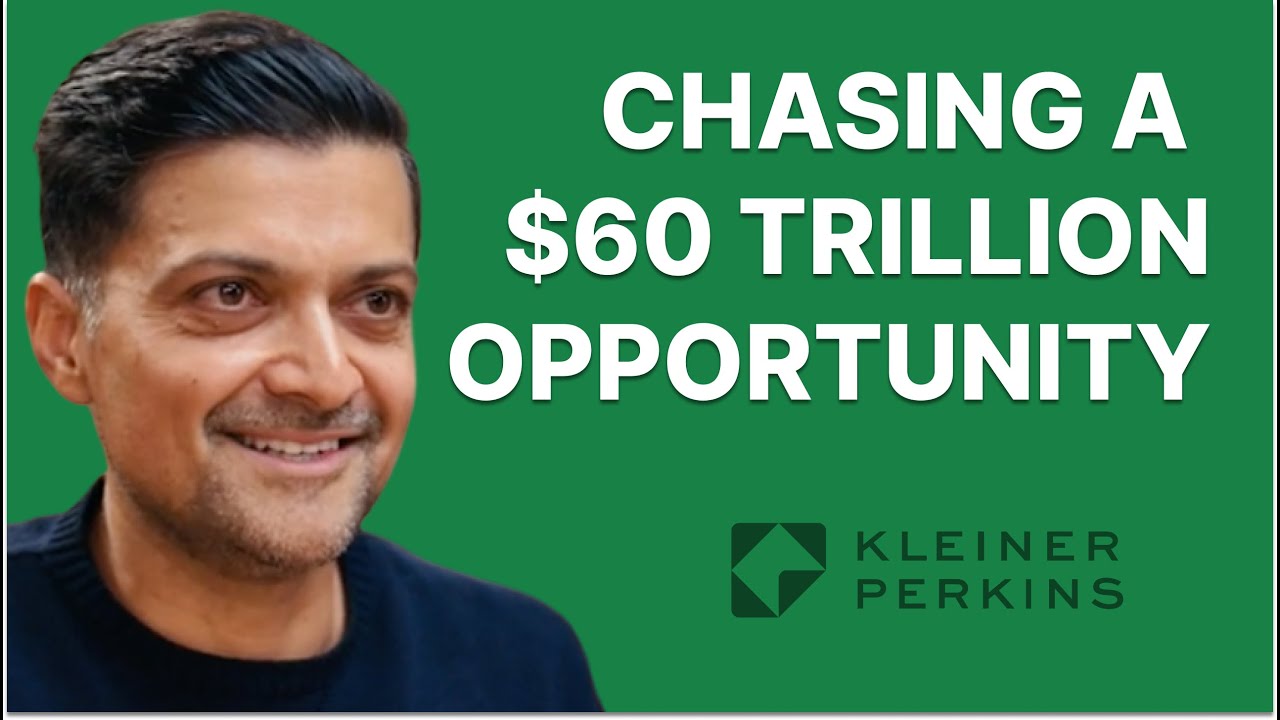
Artificial intelligence, according to Mamoon Hamid, Partner at Kleiner Perkins, represents "the super cycle of all super cycles," an opportunity so vast it could unlock $60 trillion in value by transforming human labor, which currently constitutes 60% of the world's GDP. This bold assertion frames the venture capital firm's strategic pivot, reflecting a deep understanding of technological evolution gained through decades of market observation.
Hamid, speaking with Jack Altman on the Uncapped podcast, provided a sweeping historical perspective on Silicon Valley's innovation cycles. Having arrived in 1997, he witnessed the dot-com boom, noting its "time of excess" and parties, contrasting it with today's AI landscape, which he describes as predominantly driven by "builders." He emphasized that historical "misses" were often a matter of timing, not flawed ideas; many concepts from the dot-com era, like online grocery, simply required the right market maturity to thrive years later.
His journey into venture capital was influenced by Kleiner Perkins' consistent ability to identify and back dominant companies across semiconductor, computer, software, and internet waves. He saw the shift from hardware-focused investments to software-as-a-service (SaaS) and cloud computing, a transition that was initially "not the consensus." This period, from roughly 2004-2010, saw the emergence of user-friendly web applications, paving the way for the mobile revolution.
Today, Kleiner Perkins is intently focused on AI, with Hamid marking "Day Zero" as his first encounter with ChatGPT in October 2022. The firm's strategy targets "copilots" designed to augment highly skilled, highly paid professionals like doctors, lawyers, and engineers. These AI tools aim to automate repetitive or less nuanced aspects of their work, freeing up human capital for more complex tasks. Further down the innovation curve, he envisions fully autonomous agents and robotics addressing physical labor, representing an even larger, albeit more distant, economic unlock.
This current investment thesis echoes Kleiner Perkins' historical approach: identifying fundamental technological shifts and backing the exceptional founders who are poised to capitalize on them. The firm's re-founding in 2017 emphasized a return to its roots as early-stage specialists, committed to partnering deeply with technical founders. This deliberate focus allows them to be the "first call" for entrepreneurs aiming to "make history," leveraging a legacy built on understanding market timing and the relentless pursuit of innovation.
