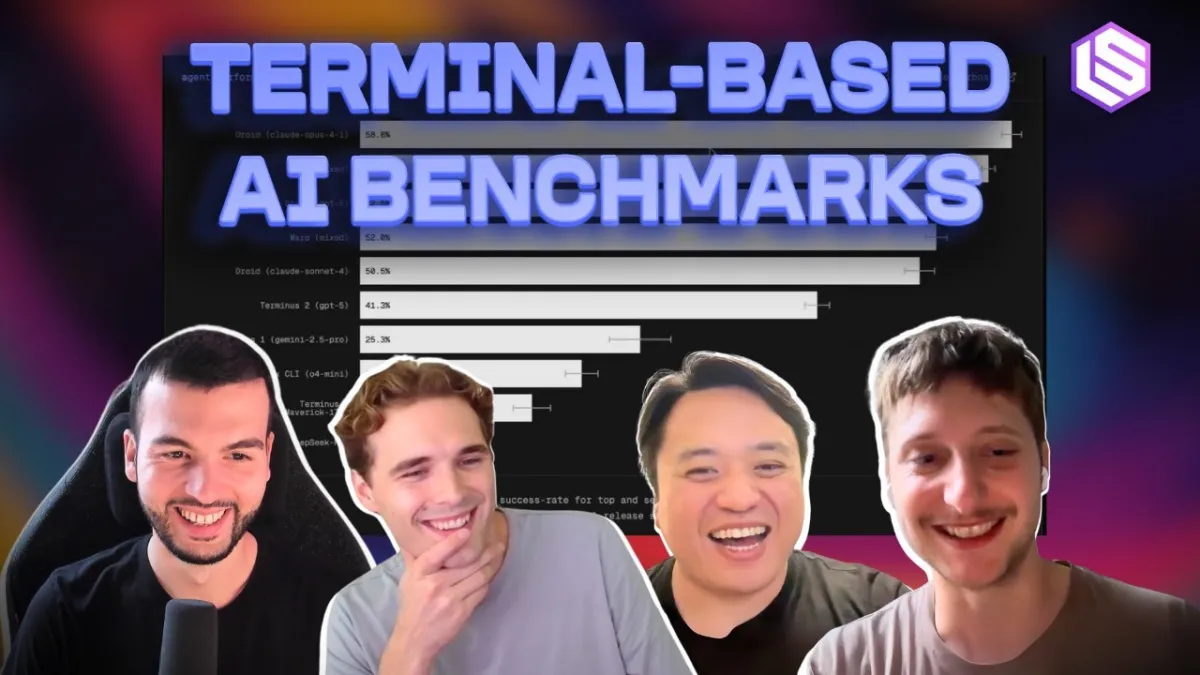
The rapid ascent of Terminal Bench from an independent project to an industry-standard benchmark within the burgeoning field of AI agents underscores a fundamental truth: robust evaluation is paramount for progress. Its creators, Alex Shaw and Mike Merrill, recently sat down with Alessio Fanelli and Swyx on the Latent Space podcast to unravel the story behind its unexpected success and its profound implications for the future of AI.
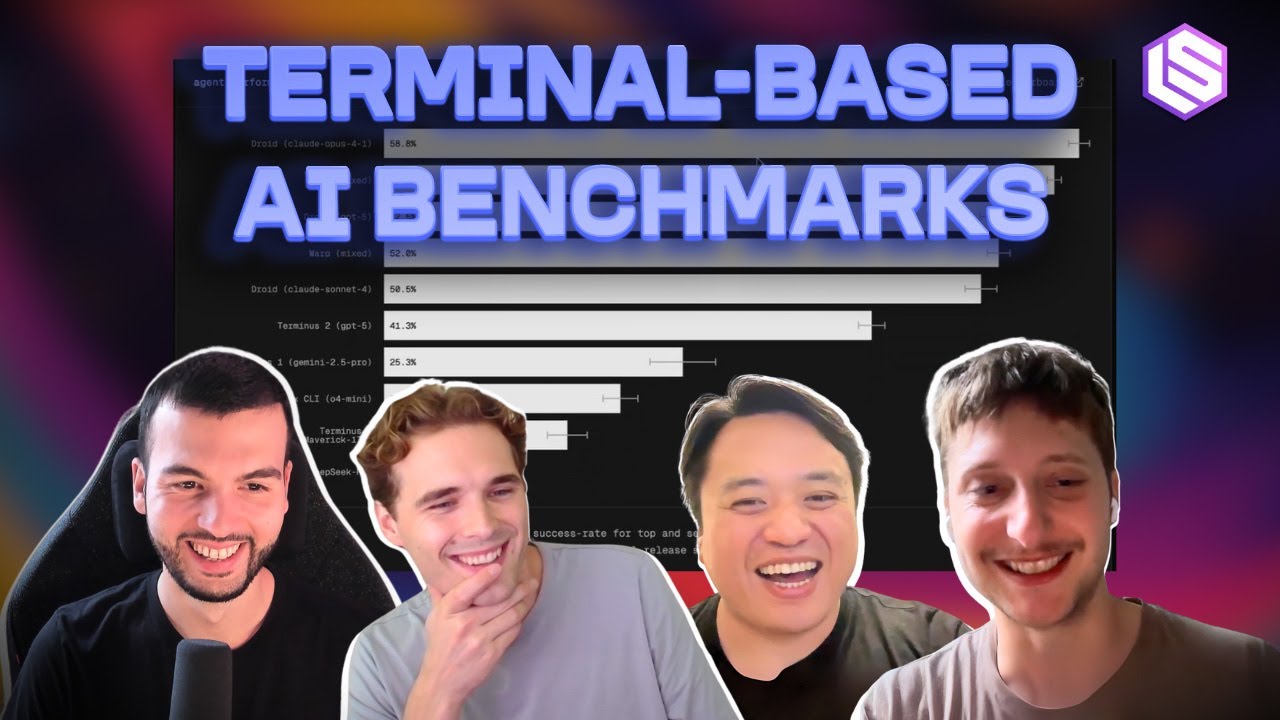
Alex Shaw, a former Google engineer now at Lot Institute, and Mike Merrill, a Stanford postdoc, spoke with Alessio Fanelli and Swyx on the Latent Space podcast about Terminal Bench, the coding agent benchmark they co-created. Their discussion illuminated the strategic choices and serendipitous events that propelled their tool to the forefront of AI agent evaluation.
Terminal Bench's journey to prominence was remarkably swift and organic. As Swyx noted, it "kind of honestly came out of nowhere." Its adoption by leading frontier labs like Anthropic and OpenAI happened without a grand announcement. A pivotal moment, as recounted by Mike Merrill, occurred during a call with Nicholas Carlini of Anthropic: "Nicholas stopped the call and said, ‘Hey, you guys might want to check this out’ and pulled up the model card where they called out Terminal Bench." This organic integration speaks volumes about the benchmark's immediate utility and resonance within the research community, demonstrating a market need that was acutely felt.
The core design philosophy of Terminal Bench hinges on a crucial insight: the terminal is the optimal interface for AI agents. Mike Merrill articulated this clearly, stating, "Text is just the modality that works best with these models." Unlike graphical user interfaces (GUIs), which are inherently designed for human perception and motor skills with their visual cues and intuitive clicks, the terminal offers a raw, powerful, text-based abstraction. This direct, command-line interaction allows AI models to reason and operate natively within their preferred modality, bypassing the complexities and ambiguities of visual interpretation. This directness reduces ambiguity and the need for complex visual processing layers, making it a more efficient and performant interface for AI. A task that might require "20-30 clicks" in a GUI can often be accomplished with a single, concise terminal command, highlighting the efficiency gains for machine agents.
A Terminal Bench task is meticulously structured, comprising an instruction, a contained environment (often a Docker container), and a test script to verify successful completion. These tasks are not limited to simple commands; they often involve "gnarly bash commands" and complex problem-solving. To ensure broad applicability and prevent benchmark overfitting, the creators prioritized diversity. They opened the project to the community early, fostering an environment where contributors could translate real-world problems into Terminal Bench tasks. The "Train FastText" task, for instance, contributed by Jeffrey Li, challenges agents to train a machine learning model under specific size and accuracy constraints, a very open-ended problem that mirrors practical data science challenges.