

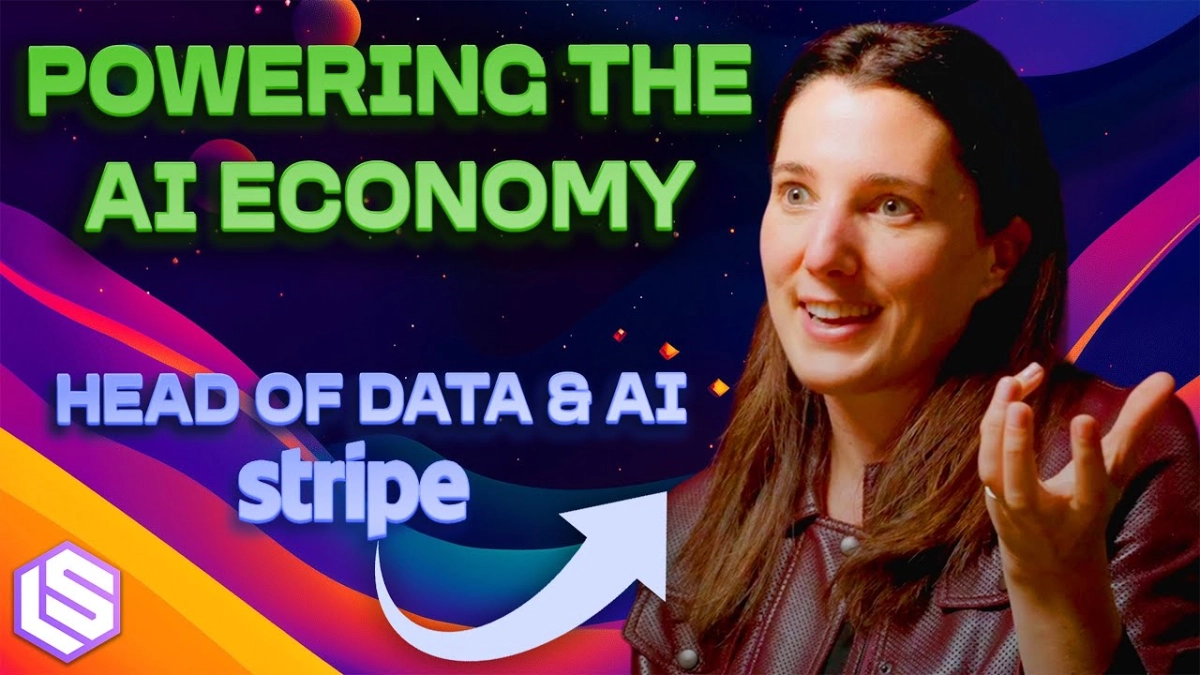
Stripe, under the leadership of Emily Glassberg Sands, Head of Data & AI, is not merely adapting to the artificial intelligence revolution; it is actively constructing the financial infrastructure upon which this burgeoning agent economy will operate. In a recent Latent Space podcast interview with hosts Shawn Wang and Alessio Fanelli, Sands articulated Stripe’s ambitious mission to provide the economic bedrock for AI, transforming how businesses transact and manage their finances in an increasingly autonomous digital landscape. This strategic pivot, grounded in a decade of machine learning expertise, positions Stripe as an indispensable partner for the next generation of AI-driven enterprises.
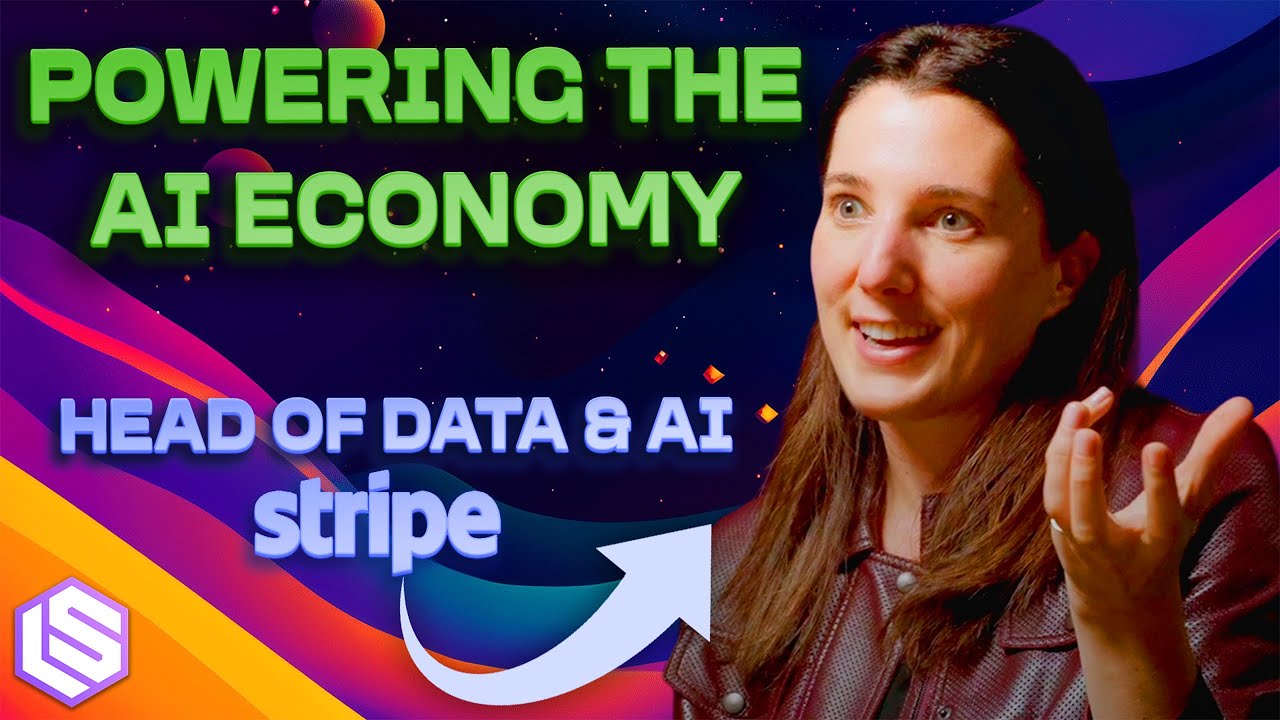
Emily Sands oversees Stripe's extensive data and AI initiatives, leveraging the vast transactional data the company processes, roughly 1.3% of global GDP, to build more intelligent financial products. Her team focuses on everything from foundational data platforms and ML infrastructure to applied AI solutions that enhance payment experiences, optimize checkouts, and combat fraud. A unique "experimental projects" team within her organization acts as an agile incubator, identifying and accelerating cross-Stripe opportunities that emerge from the rapid pace of technological change.
A primary example of Stripe's deep-seated AI capabilities is its domain-specific foundation model, which powers "payments embeddings" to detect sophisticated card-testing attacks. This advanced system, processing 50,000 transactions per minute with sub-100ms latency, has dramatically improved fraud detection rates for large users, escalating from approximately 59% to an impressive 97%. This demonstrates that even in an era dominated by large, general-purpose foundation models, specialized, high-performance AI remains critical for domain-specific challenges.
The rise of AI companies introduces novel fraud vectors, starkly different from those faced by traditional SaaS businesses. Sands highlights "friendly fraud," encompassing non-payment abuse, free trial exploitation, and refund manipulation, as an "existential threat" to AI startups. Unlike conventional software, where the marginal cost of a stolen service is often near zero, AI services incur significant, real-time compute costs (e.g., GPU usage). This shifts the economic calculus, making even seemingly minor abuses financially crippling. Stripe is actively extending its Radar fraud detection suite to specifically target these new challenges, demonstrating a proactive stance against emerging threats. To address the challenge of dynamic, usage-based costs, Stripe has launched "token billing," an API that allows businesses to track and price inference costs in real-time, ensuring that services are appropriately compensated as they are consumed.
Related Reading
- Microsoft's Profitable AI Play: A Strategic Masterclass
- AI's Second Inning: Decoding Big Tech's Investment Spree and Market Reactions
- AI Investment Cycle: Early Innings, Driven by Fundamentals
Central to Stripe's vision for the agent economy is the Agentic Commerce Protocol (ACP), a groundbreaking standard developed in collaboration with OpenAI. This protocol establishes a common language for businesses to expose their products and services to AI agents, enabling these agents to conduct transactions on behalf of consumers. Early adoption by major retailers like Walmart and Sam's Club signals a significant shift towards automated, agent-driven commerce. The ACP fundamentally redefines how financial infrastructure must function, requiring new approaches to checkout flows, fraud checks, and payment processing, all optimized for agent-to-business interactions. It moves beyond simple recommendations, allowing agents to execute purchases directly, potentially unlocking entirely new avenues of consumption by removing the traditional friction and time costs associated with human-driven purchasing decisions. This is not merely a substitution of existing commerce, but an expansion of the economic pie, particularly for high-income individuals whose time is often their most binding constraint.