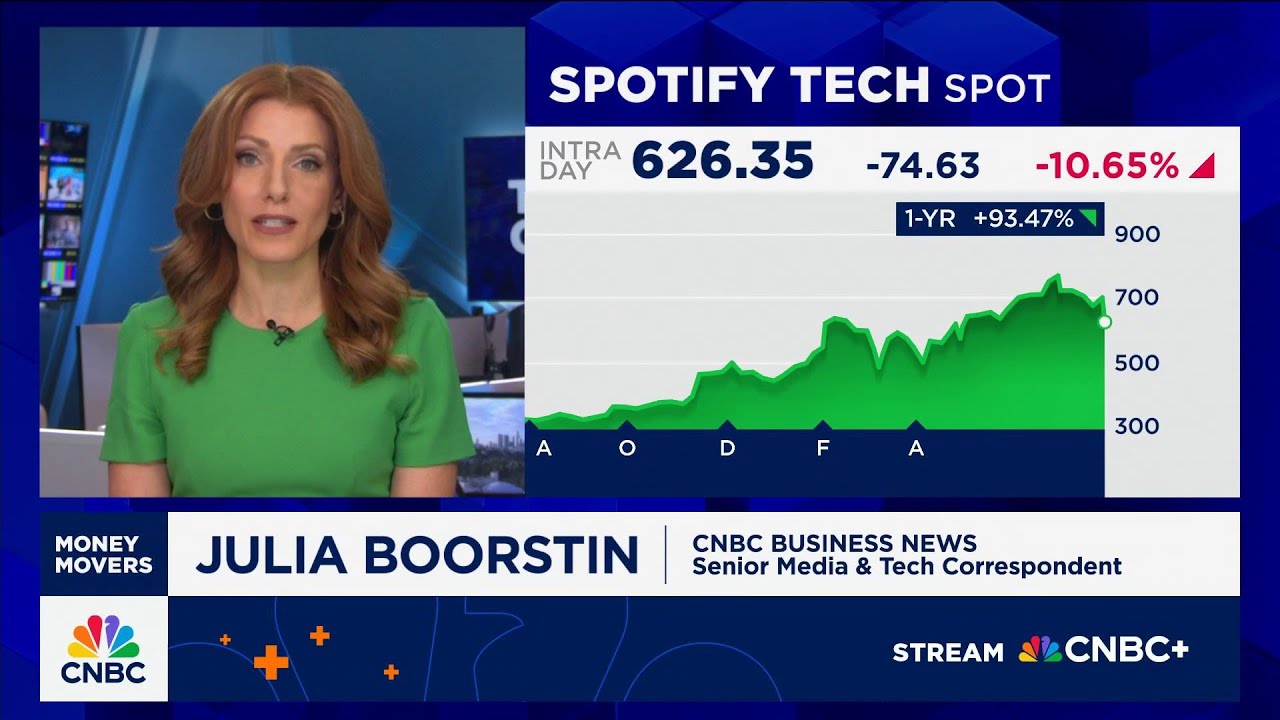
Artificial intelligence presents a stark dichotomy for Spotify, acting as both an essential catalyst for future growth and a looming threat to its foundational content ecosystem. This dual nature of AI’s impact on the streaming giant was a central theme as Julia Boorstin, CNBC Business News Senior Media & Tech Correspondent, discussed Spotify’s latest earnings on 'Money Movers'. The company's recent financial performance, marked by a reported loss and weaker guidance, underscores the urgency of its AI strategy, particularly in bolstering its advertising revenue.
Spotify’s Chief Business Officer highlighted the strategic imperative of AI, stating, "We are creating a stronger, more sustainable ads business by accelerating our automation efforts…" This reflects a broader industry trend where platforms like Meta and Alphabet have leveraged AI for enhanced ad creation, targeting, and measurement. For Spotify, integrating AI is not merely an efficiency play but a critical move to reverse declining ad revenues and secure a more robust financial footing.
Beyond advertising, AI is already demonstrably driving user engagement. Spotify's AI DJ and AI-generated playlists have seen significant uptake, with engagement for the AI DJ feature roughly doubling in the past year. These features, which personalize and curate content for users, are proving to be valuable new assets, fostering deeper interaction with the platform. This internal application of AI represents a clear opportunity for Spotify to solidify its user base and differentiate its offering.
However, the proliferation of AI-generated music introduces a profound threat to the traditional music industry, including major record labels and, by extension, music streamers like Spotify. The rise of AI artists, such as "The Velvet Sundown" with its 1.4 million monthly listeners on Spotify, highlights a burgeoning challenge. These AI creations, while not explicitly violating Spotify’s current policies, raise significant intellectual property concerns.
The Recording Industry Association of America (RIAA) has voiced strong opposition, with its CEO asserting, "...we will always defend real culture and human artists from a digital tsunami of empty knock offs and chatbot impersonations that drain the value from genuine creative works..." This sentiment underscores the legal and financial risks that AI-generated content poses, not only to artists but also to platforms hosting such material, including Apple, YouTube, and Amazon's music services. Spotify is now compelled to retool its entire technology stack for a "generative AI age," a transformation that explicitly includes managing these complex record label concerns. The balancing act between leveraging AI for innovation and safeguarding artist rights will define Spotify's trajectory in the evolving digital music landscape.