




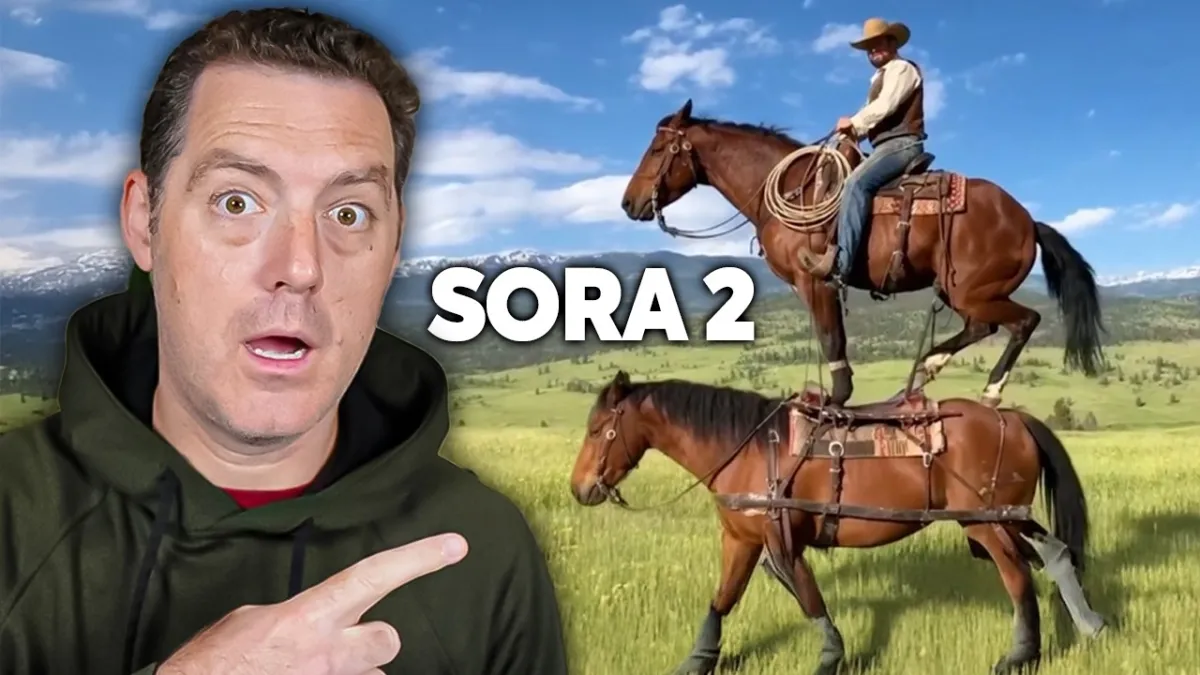
OpenAI’s Sora 2 represents a seismic shift in video generation, pushing the boundaries of realism and physical accuracy to a degree that is, as commentator Matthew Berman aptly describes, "scary good." This latest iteration moves beyond mere visual fidelity, introducing a sophisticated understanding of the physical world, synchronized dialogue, and advanced sound effects, fundamentally reshaping the landscape of digital content creation and hinting at profound implications for artificial general intelligence (AGI).
In a recent video reviewing the launch, Matthew Berman dissected the new capabilities of Sora 2, showcasing a series of astonishingly lifelike and imaginative clips. The demonstration wasn't just a highlight reel; it was a testament to a system capable of generating complex scenes with multiple characters, specific types of motion, and intricate background details, all while maintaining consistent visual style and object permanence. From fantastical glowing forests to a seemingly real Sam Altman delivering a keynote, the output blurred the lines between generated and captured reality.