

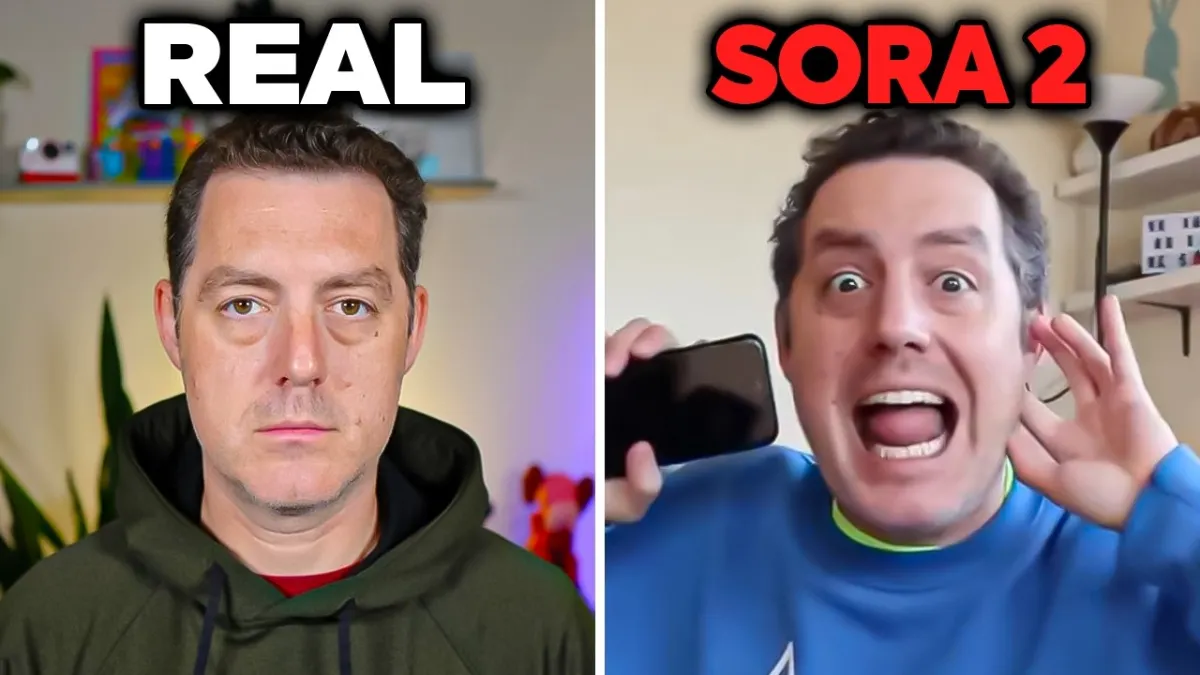
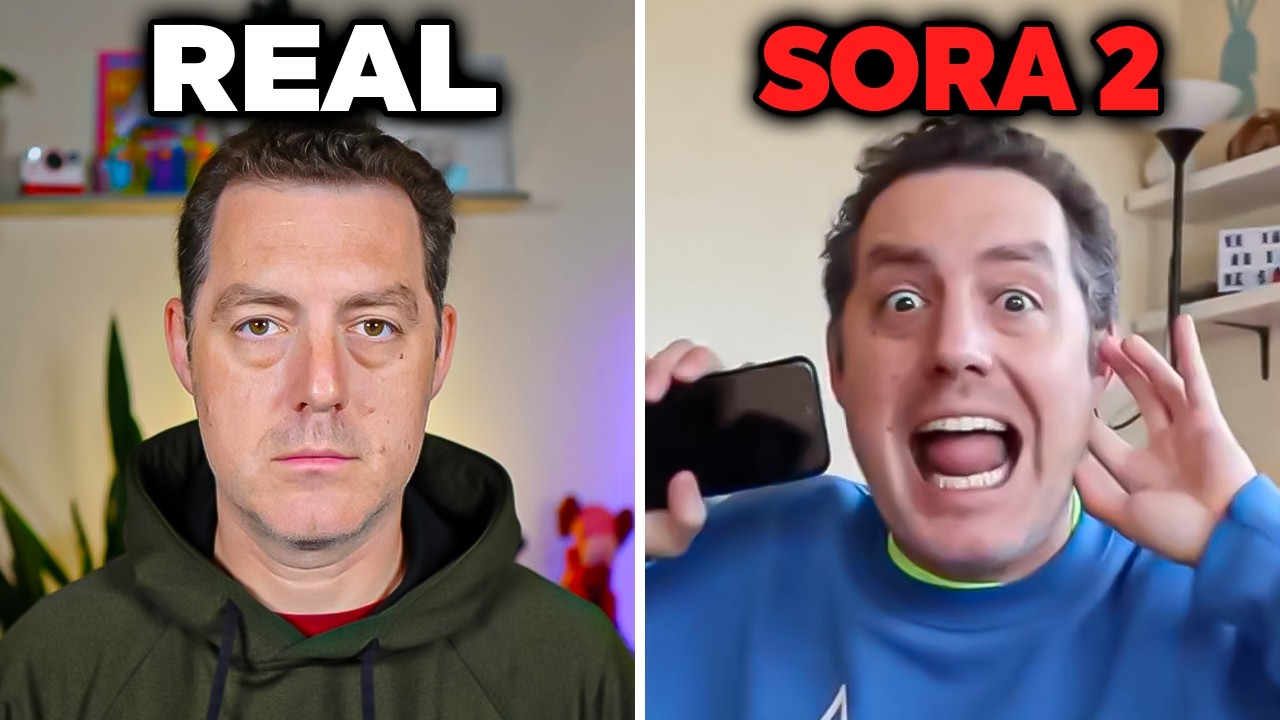
The advent of OpenAI's Sora 2 heralds a pivotal moment in generative AI, as showcased by Matthew Berman in his comprehensive video demonstration. This latest text-to-video model exhibits an astonishing leap in fidelity, spatial coherence, and the ability to interpret complex prompts, challenging our very perception of digital realism. Yet, beneath the polished surface of its most impressive creations, a nuanced landscape of emergent capabilities and subtle limitations reveals itself, offering valuable insights for the startup ecosystem and AI professionals.
Berman's initial presentation immediately plunges viewers into the "copyright wild west" that Sora 2 currently inhabits. The model effortlessly conjures a "Celebrity Deathmatch" featuring animated versions of himself and Jonah, a Spongebob Squarepants drill rap, and even a live-action Mario Kart chase through city streets. These playful, yet technically intricate, examples underscore Sora 2’s remarkable capacity for stylistic mimicry and character consistency, hinting at a future where IP limitations may become less about legal battles and more about prompt engineering.
The model's ability to replicate human likenesses is particularly striking. Matthew Berman's own face scan, transposed onto an astronaut navigating a futuristic city, demonstrates an uncanny accuracy in facial features, lighting, and reflections. "It looks insanely accurate," Berman observes, noting the convincing interplay of light on his face behind a tinted visor. This level of personalized realism, while not flawless, suggests a powerful tool for bespoke content creation, from virtual avatars to hyper-realistic digital doubles.
However, Sora 2's command over fundamental physics remains an intriguing area of mixed results. While the model convincingly renders honey pouring onto toast with fluid dynamics that are "very impressive," and generates realistic smoke plumes reacting to a fan (though not always *coherently* with the fan's motion), its grasp on fine motor manipulation and solid object interaction can falter. A basketball spinning on a finger exhibits broken physics, abruptly stopping and reversing direction. Similarly, hands playing a piano show fingers that "aren't quite connecting to the keys," and cards being shuffled merge and morph in an unnatural manner. These instances highlight the model's ongoing challenge in fully internalizing and consistently applying real-world physical laws, especially at granular levels of detail and interaction.
Despite these physical inconsistencies, Sora 2 demonstrates significant progress in scene direction and environmental coherence. Berman showcases clips adhering to precise camera instructions, a fast pan from a desk to a city street, or a gradual brightness adjustment when moving from a dark hallway to a bright room. The model executes these cinematic directives with impressive fluidity, maintaining object persistence and adapting lighting conditions realistically. This level of controllable output offers filmmakers and content creators unprecedented tools for pre-visualization and rapid prototyping.