


David Solomon, Chairman and CEO of Goldman Sachs, recently offered a nuanced perspective on the artificial intelligence revolution and the broader innovative economy. Speaking with CNBC's Leslie Picker at the company's Private Innovative Company conference, Solomon emphasized that while market volatility is a natural byproduct of rapid technological shifts, the underlying trajectory of AI is unequivocally upward, promising "enormous productivity gains in the economy." His commentary underscored a blend of cautious realism regarding short-term market dynamics and profound optimism for AI's enduring impact.
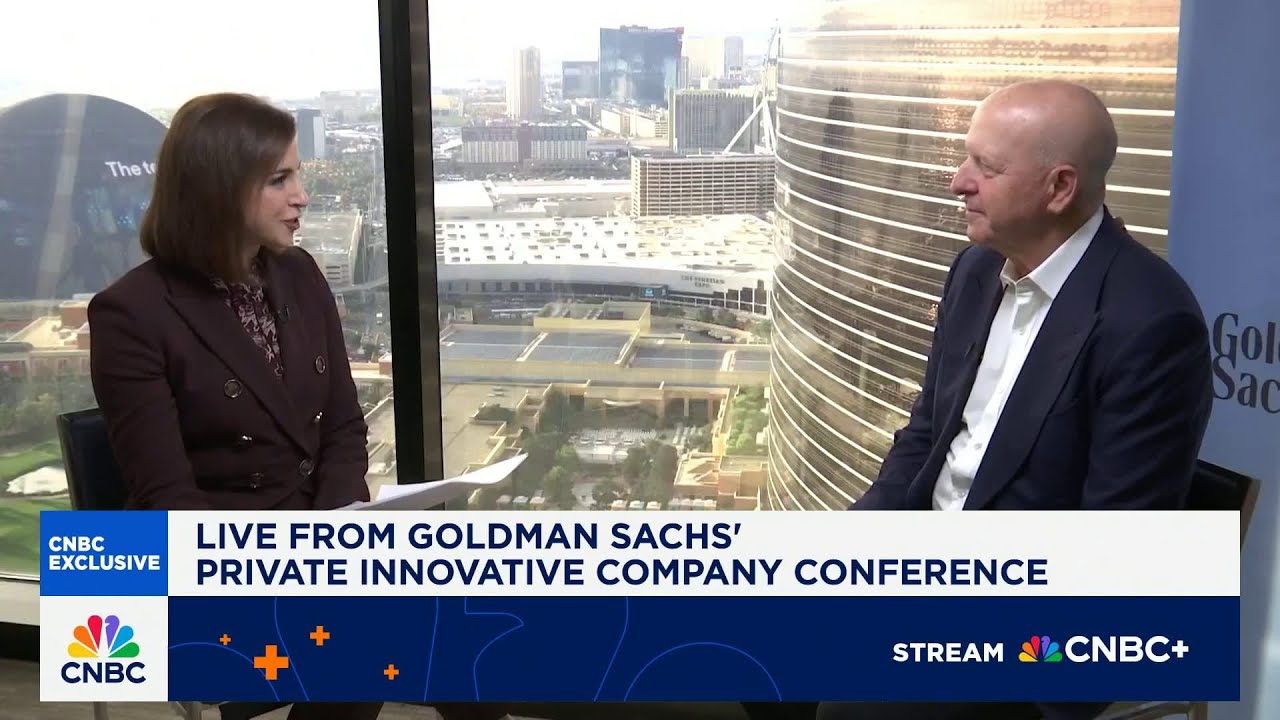
Solomon opened by celebrating the entrepreneurial spirit fostered within the United States, highlighting the hundreds of innovative companies and investors gathered at the Goldman Sachs conference. He posited that this vibrant ecosystem of new ventures and capital formation is a key differentiator for the American economy on the global stage. Yet, he quickly pivoted to acknowledge the recent market turbulence, reiterating a previous sentiment that he wouldn't be surprised by a drawdown in the next year or two, a historical pattern observed during periods of accelerated technological advancement.
Despite this acknowledgment of potential market corrections, Solomon’s core conviction in AI's future remained unshaken. He stressed, "I'm super excited about the technology. I think the investments that are being made to set this technology up so it can be deployed in the enterprise is extremely exciting. It's going to create enormous productivity gains in the economy." This outlook suggests a belief that the current enthusiasm, while perhaps overzealous in immediate expectations, is fundamentally justified by the transformative power of AI.
The market, Solomon observed, is currently "looking at all the things that can go right" and simultaneously "discounting the things that can go wrong." This dynamic, he explained, leads to an overestimation of the speed of adoption and return on investment in the short term. He anticipates a period of "ups and downs and speed bumps, some drawdowns, some accelerations" as the market recalibrates to the actual pace of enterprise deployment and capital conversion into tangible returns. This iterative process of expectation and adjustment is not a sign of reversal, but rather a typical maturation cycle for groundbreaking technologies.
A critical distinction Solomon drew was between the financing of large-scale AI infrastructure and the risk capital flowing into nascent AI companies. He characterized investments in data centers by hyperscalers, giants like Google, Meta, and Amazon, as akin to "real estate deals." These are typically backed by businesses with "enormous cash flow" and strong balance sheets, mitigating much of the credit risk. Such established players are well-positioned to fund the foundational elements of the AI revolution, and while their stock might see fluctuations, their underlying financial strength remains robust.
