
"If your two arch nemesis suddenly team up, it's the worst possible news you can have." This provocative declaration from Guido Appenzeller, an a16z Partner and former CTO of Intel's Data Center and AI business unit, set the stage for a compelling discussion on the a16z podcast. Joined by fellow General Partner Sarah Wang and SemiAnalysis chief analyst Dylan Patel, Appenzeller and host Erik Torenberg dissected Nvidia’s surprising $5 billion investment in Intel, revealing the intricate power plays and geopolitical forces shaping the burgeoning AI chip market. The conversation illuminated Nvidia's strategic genius, Intel's desperate gambit for relevance, and the formidable rise of China's domestic semiconductor industry.
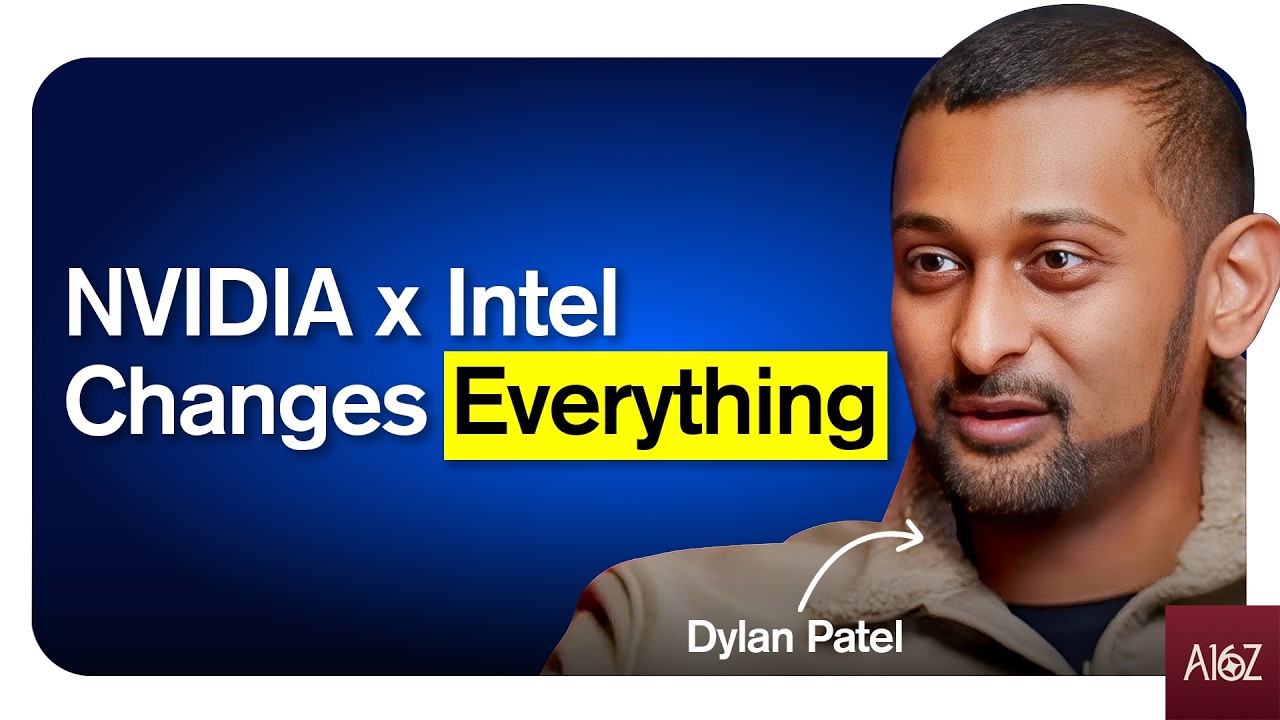
The Nvidia-Intel alliance, a pairing once deemed unthinkable due to a history of fierce rivalry and even antitrust lawsuits, now appears a pragmatic move for both titans. Dylan Patel wryly noted the "poetic" irony of Intel, once dominant, now "crawling to Nvidia" for a lifeline. This investment, while a relatively small cash infusion for Intel's ambitious foundry plans, serves a crucial purpose: validating Intel's technology roadmap and boosting investor confidence. For Nvidia, it diversifies their supply chain and secures access to Intel's X86 architecture for future integrated products, such as laptops combining Intel CPUs with Nvidia GPUs.
This unlikely partnership spells trouble for competitors. Appenzeller didn't mince words, stating, "I think AMD is fucked." He argued that AMD's primary advantage lay in partnering with companies seeking alternatives to Intel's once-monopolistic chipsets. With Nvidia now collaborating with Intel, that value proposition diminishes significantly. Similarly, ARM faces a challenge as the combined force offers a compelling integrated solution that might outcompete their growing presence in the PC market.
Nvidia's enduring dominance, or "moat," as the panel frequently termed it, stems from a combination of visionary leadership and a superior software ecosystem. Sarah Wang aptly characterized Jensen Huang, Nvidia’s CEO, as possessing "the Buffett effect for the semiconductor world," highlighting his uncanny ability to make prescient bets. Dylan Patel elaborated on Jensen’s willingness to "bet the whole company multiple times," particularly on the nascent field of AI and the CUDA software stack. This early, audacious investment created an ecosystem so entrenched that even technically superior hardware from rivals struggles to compete without comparable software support.
The discussion also cast a sharp spotlight on China's relentless pursuit of AI chip independence. Despite stringent US export bans, Huawei has demonstrated remarkable resilience, surprising many with its 7nm Ascend AI chips. Patel revealed that Huawei was, at one point, TSMC's largest customer, underscoring their prior scale and ambition. Now, facing restrictions, they are rapidly developing domestic alternatives, including custom High Bandwidth Memory (HBM), a critical component that even Nvidia and AMD are only just beginning to customize. This rapid advancement indicates China's determination to overcome supply chain limitations, potentially creating a self-sufficient, albeit currently less efficient, tech ecosystem.