

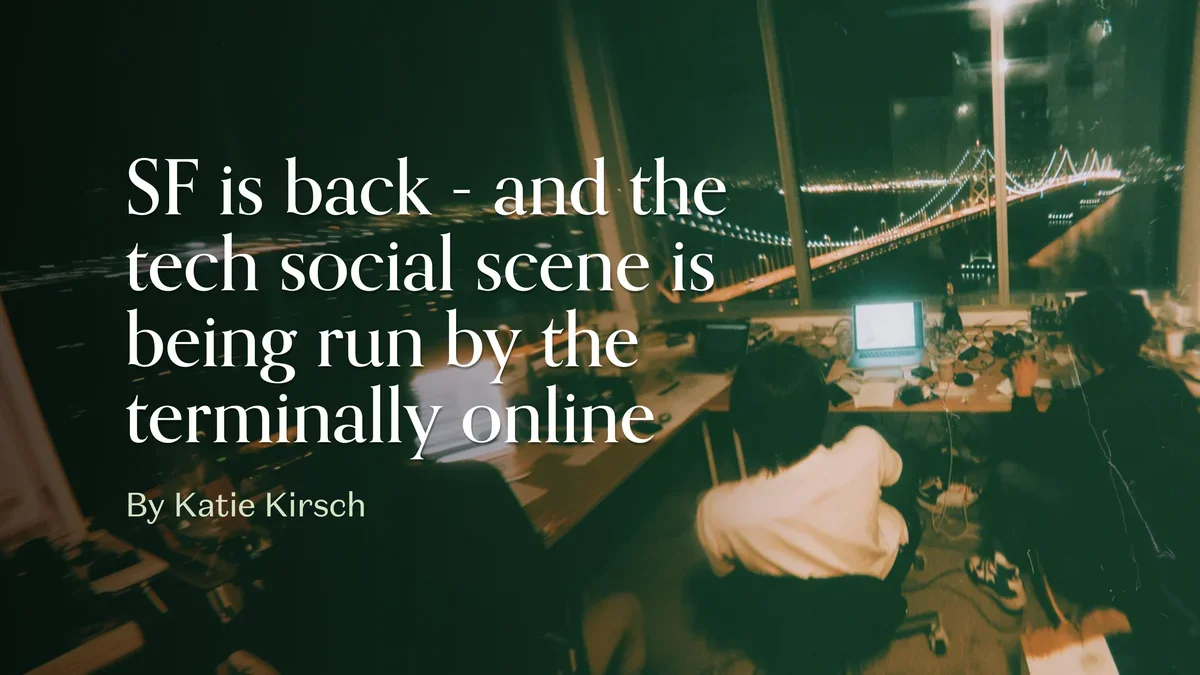
San Francisco is experiencing a tech social revival, but it's being orchestrated by individuals deeply entrenched in online life. This fundamental shift is reshaping how relationships form and trust is established within the city's tech circles.
The new "proof of work" in this ecosystem is your mutuals. This concept extends Eugene Wei's idea of social capital, where online interactions now serve as the primary currency for access and belonging. Traditionally, access to scenes required demonstrating expertise or commitment; now, it's about your curated online network.
The social graph is built digitally, starting with X (formerly Twitter) follows and progressing to exclusive group chats. From there, invitations to events via platforms like Partiful become the next gate. Even these events, designed for the digitally connected, often have waitlists, with access granted through early invites or connections to hosts.
This SF tech networking shift is evident in how talent is recruited. Startups are hosting lavish parties, exceeding typical recruitment costs, to attract engineers, signaling a new approach to talent acquisition driven by online reputation.
Many who identify as having "hundreds of friends" in SF are referring to mutuals – individuals met briefly offline but connected deeply through years of online engagement. This includes shared listening to podcasts, reading Substacks, and interacting on X. Romantic relationships are also forming through prolonged online intellectual connection, bypassing traditional dating app dynamics.
One individual moved to SF over a year ago and still only knows people met through X or events populated by its users, highlighting the platform's centrality in building a social circle.
The Internet in Real Life
SF tech events now feel distinct from those in other cities. The emphasis isn't on venue ambiance or catering, as the crucial "social work" of building comfort and connection has already occurred online.
Attendees are there to deepen existing digital connections, not to meet strangers. Their conversations often reference recent online interactions, with those who posted viral content or engaged in prominent online debates holding significant social cachet.
Consequently, SF tech gatherings are frequently held in informal settings like living rooms or rooftops, often without alcohol, as shared online discourse provides sufficient social lubricant. These events are notably age-diverse, as platforms like X and Substack prioritize ideas over life stages, connecting individuals based on intellectual exchange.
A fellowship program, described as the "Thiel Fellowship for the terminally online," eschewed traditional icebreakers, opting instead for an X group chat to foster initial connections. Subsequent in-person events mirrored this ethos, utilizing Partiful for organization and informal "tiny talks" for discussion, effectively recreating the online experience offline.
The pertinent question is whether this model is exportable. If the 'terminally online tech scene' dictates social dynamics in SF, could this become the norm globally? The reliance on digital mutuals and online social capital might represent a generational shift in how trust is built, relationships are formed, and hiring occurs.
The influence of the terminally online is undeniable, wielding significant cultural power both online and off. Historically, San Francisco's trends have often foreshadowed broader societal shifts.
