

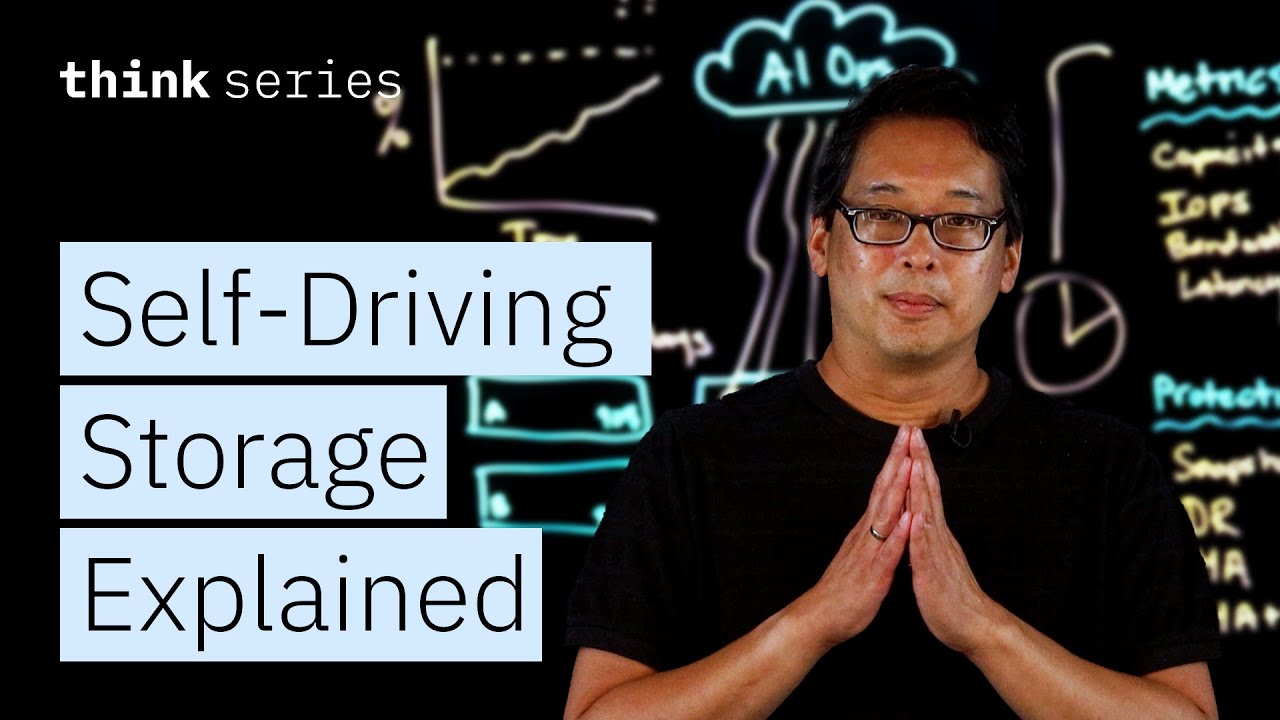
The concept of self-driving capabilities extends beyond autonomous vehicles, now steering towards the very foundation of digital operations: data storage. Eddie Lin, Storage Architecture at IBM, recently illuminated this transformative vision, outlining how AI agents and AIOps are poised to revolutionize data infrastructure by enabling what he terms "self-driving storage." This paradigm shift promises unprecedented automation, moving from manual configurations to intelligent, adaptive systems that manage themselves.
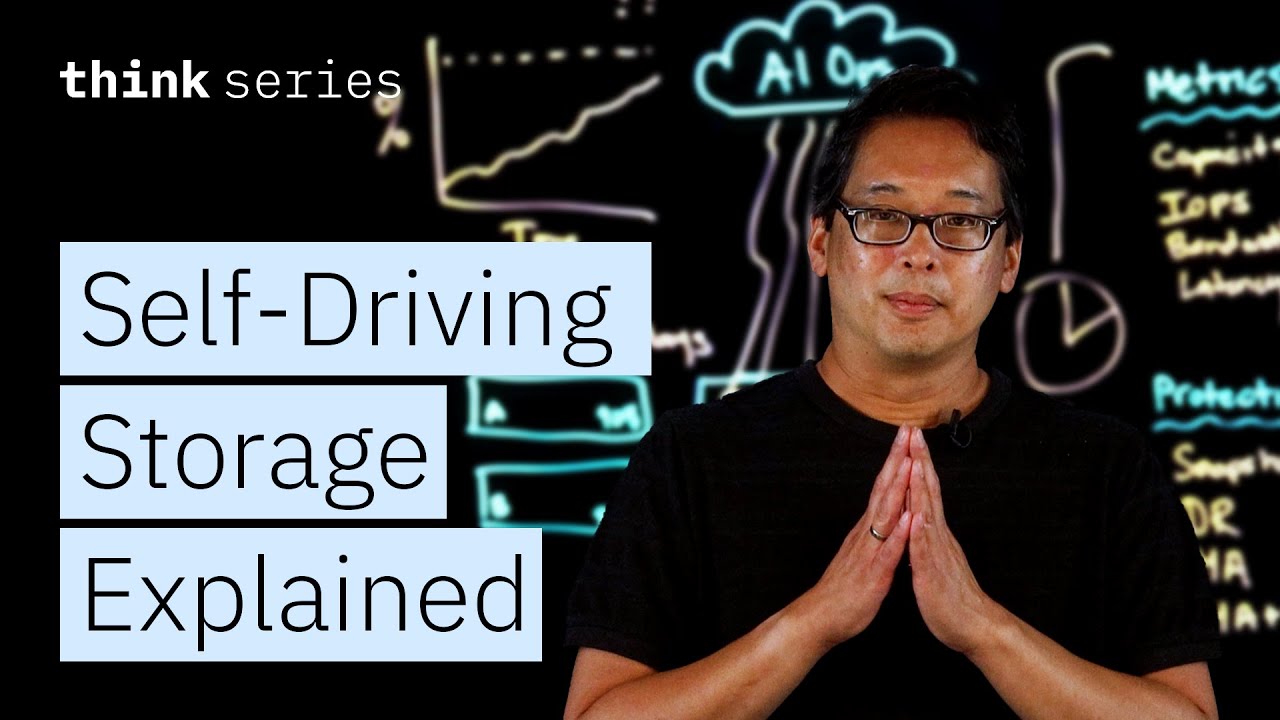
Lin introduced the foundational element: the "storage partition." Unlike traditional, static block storage, these partitions are designed for mobility. "We're going to organize all of these resources, all of these objects together into one simple container that creates the ability to make it mobile," Lin articulated, emphasizing the crucial shift from fixed data placement to fluid, dynamic allocation. This mobility is key to unlocking the full potential of AI-driven storage.
For self-driving storage to truly function, it requires an intelligent "brain", the AIOps platform. This platform continuously ingests vast amounts of data, encompassing critical metrics such as capacity, IOPS (Input/Output Operations Per Second), bandwidth, and latency. Beyond performance, it also processes information related to data protection schemes, including snapshots, disaster recovery (DR) capabilities, and high availability (HA+DR) configurations. This continuous, time-series data feed empowers the machine learning models within AIOps to understand patterns and predict future needs.
A critical step in building trust in this autonomous system is moving from reactive alerts to proactive forecasting. Where traditional systems only notify administrators when storage capacity is nearly exhausted, AIOps can predict such events well in advance. Lin noted that the system can provide "a predictive analysis and a forecast that you're going to run out in 30 to 60 days," allowing for timely human intervention. This initial phase provides recommendations, giving users the ultimate choice and control over data movement.
The ultimate ambition, however, is full autonomy. This progression leads to advanced use cases like intelligent workload placement and on-demand performance optimization. Imagine an IT infrastructure where the AIOps engine doesn't just suggest; it actively provisions and migrates data to the most suitable storage arrays based on predefined application requirements and anticipated demand. This is the promise of truly self-driving storage. "It's time to let go of the wheel and let the AI Ops engine... take you to new levels automatically, autonomously without user intervention," Lin concluded, painting a picture of an IT future where data infrastructure manages itself, optimizing resource utilization and ensuring continuous operation without manual oversight.