

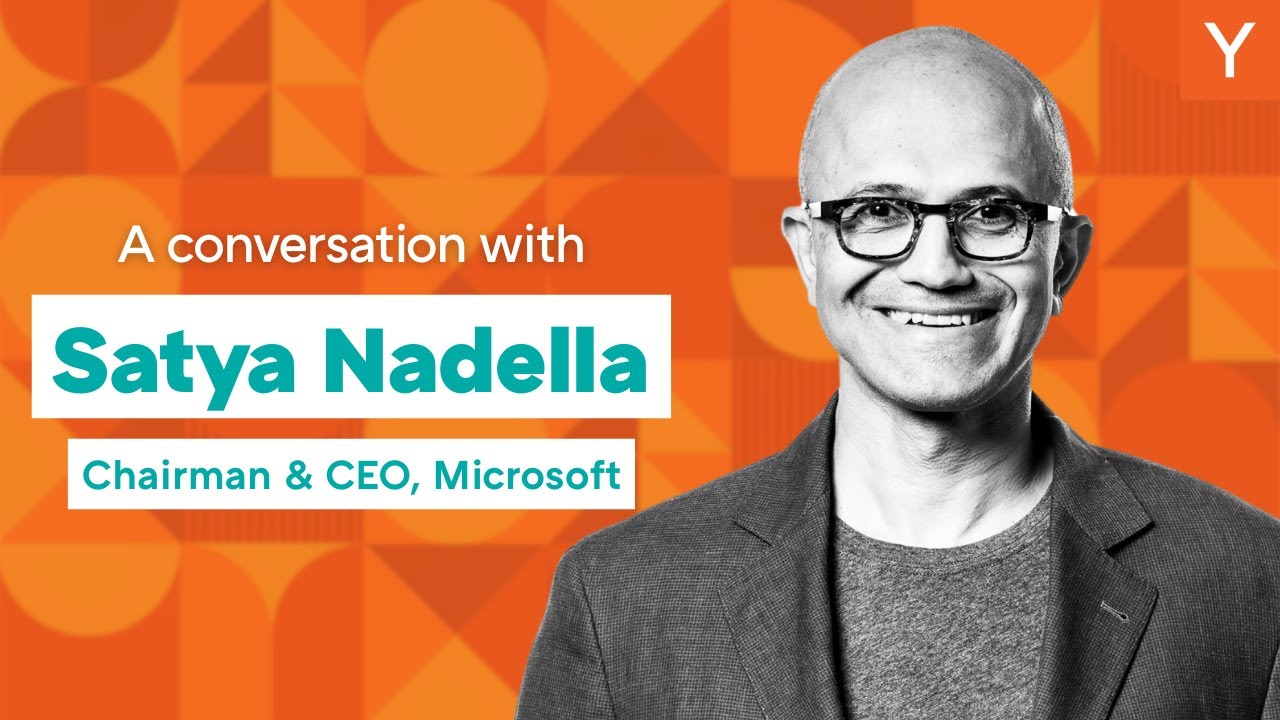
Satya Nadella, Chairman and CEO of Microsoft, posits that artificial intelligence represents the fourth fundamental platform shift in computing history. This profound transformation, he asserts, is not merely about technological prowess but about its capacity to unlock unprecedented economic growth and create societal value.
Nadella shared these insights and more during a fireside chat with Garry Tan, President & CEO of Y Combinator, at the AI Startup School in San Francisco, offering a strategic perspective on Microsoft's AI bets, hyperscaling, and the future of computation.
Nadella frames AI's explosive growth as a direct consequence of its foundational reliance on prior technological advancements. "This AI piece, the reason why I think the rate of diffusion is so fast, so well, and so wide is because it builds on the previous generation," he observed, highlighting how the maturity of cloud infrastructure, for instance, directly enabled the development of AI supercomputers and the subsequent proliferation of large models. This compounding effect accelerates innovation, presenting a unique opportunity for both established giants and agile startups.
The immense energy demands of AI's hyperscaling necessitate a clear societal justification for its deployment. Nadella succinctly stated, "My benchmark for AI is, is it creating surplus in the world around us, one community, one country, one industry, one company at a time?"
AI's impact extends deeply into the fabric of work itself, promising to redefine roles and workflows across industries. Nadella envisions software engineering, for example, evolving from coding to architectural design. "There is going to be a job called a software engineer; it's going to be different, but I look at it, you are really taking a software engineer and saying, you're now a software architect," he stated, emphasizing a shift towards higher-level problem-solving and abstraction. This transformation, while promising to eliminate much of the "drudgery" associated with knowledge work, introduces a significant hurdle. "The change management is the real rate limiter," Nadella warned, acknowledging the inherent human and organizational challenges in adapting to such pervasive technological shifts. Without clear, demonstrable value creation, the societal permission to scale AI technologies will diminish, making responsible innovation paramount.