


As the global population ages, the demand for caregivers is reaching a critical point, especially in countries like Japan where declining birth rates compound the issue. While robots for senior care do offer a promising solution, their adoption has been sluggish, largely due to ethical concerns. Now, a team of international researchers has developed a universal model that aims to understand how these ethical perceptions influence the willingness to use care robots. The model could serve as a roadmap for developers and policymakers to navigate the complex ethical landscape surrounding this emerging technology.
The study, led by Professor Sayuri Suwa from Chiba University and featuring researchers from the University of Tokyo, Tokyo Healthcare University, University College Dublin, Seinäjoki University of Applied Sciences, and others, was conducted across Japan, Ireland, and Finland. The findings were made available online on July 25, 2023, and are set to be published in the journal Archives of Gerontology and Geriatrics in January 2024.
“Today, in Japan’s super-aged society, various care robots, including monitoring cameras, have been developed and marketed to compensate for the shortage of care staff and to alleviate their stress," explained Professor Suwa. "However, there are no discussions among users—older people, family caregivers, and care staff—and developers regarding the willingness to use care robots, the protection of privacy, and the appropriate use of personal information associated with the use of care robots. The desire to improve this situation and to promote appropriate utilization of care robots beyond Japan was the impetus for this research.”
The team developed a comprehensive questionnaire that delved into ethical issues likely to affect the adoption of care robots. Conducted between November 2018 and February 2019, the survey garnered 1,132 responses from the three countries. Interestingly, willingness to use care robots was highest in Japan at 77.1%, followed by Ireland at 70.3%, and was lowest in Finland at 52.8%.
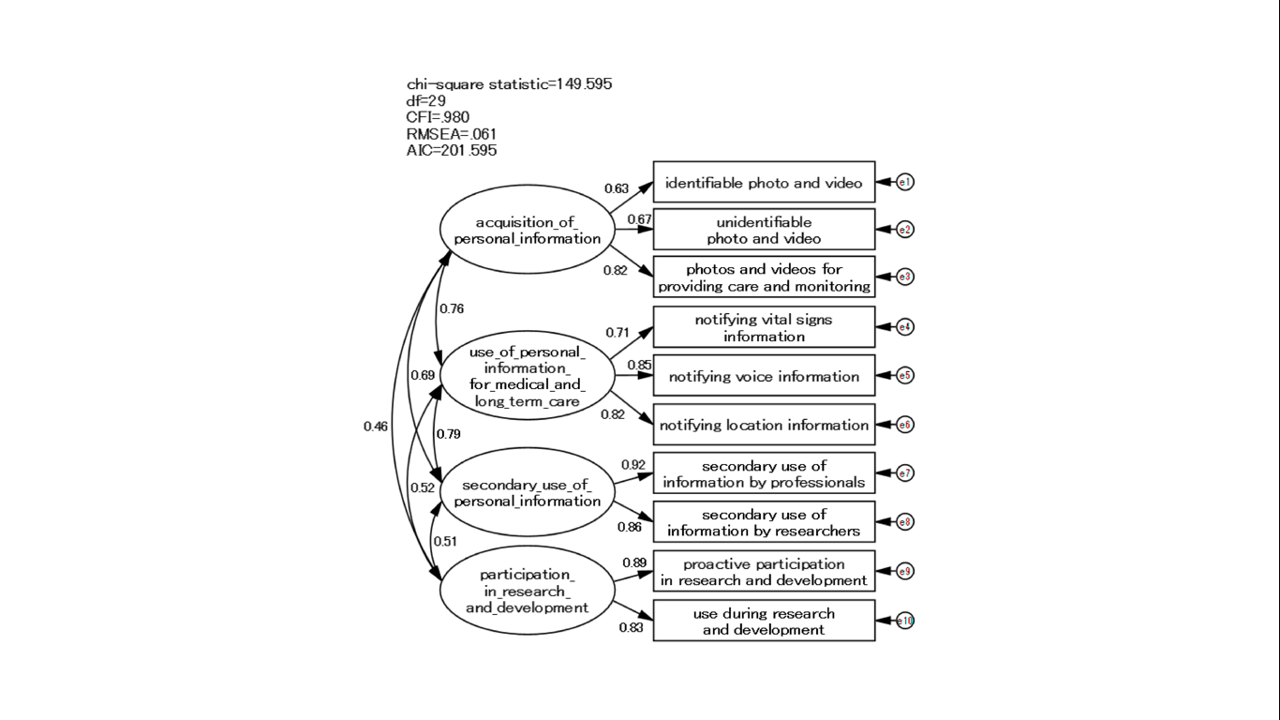
The researchers then used these responses to create a conceptual model, which they refined using Akaike’s information criterion (AIC), a statistical method. The model was designed to be universal, capable of explaining the relationship between ethical perceptions and the willingness to use care robots across different cultural, demographic, and geographic contexts.
“From our results, we can infer that social implementation of care robots can be promoted if developers and researchers encourage potential users to participate in the development process, proposed in the form of a co-design and co-production concept," concluded Prof. Suwa on the importance and long-term impact of their study. "We hope that the process of developing care robots will be improved to contribute to human well-being in a global aging society.”

