


Robotics and Scientific Discovery Emerge as Next AI Investment Themes

4 min read
Robotics and Scientific Discovery Emerge as Next AI Investment Themes

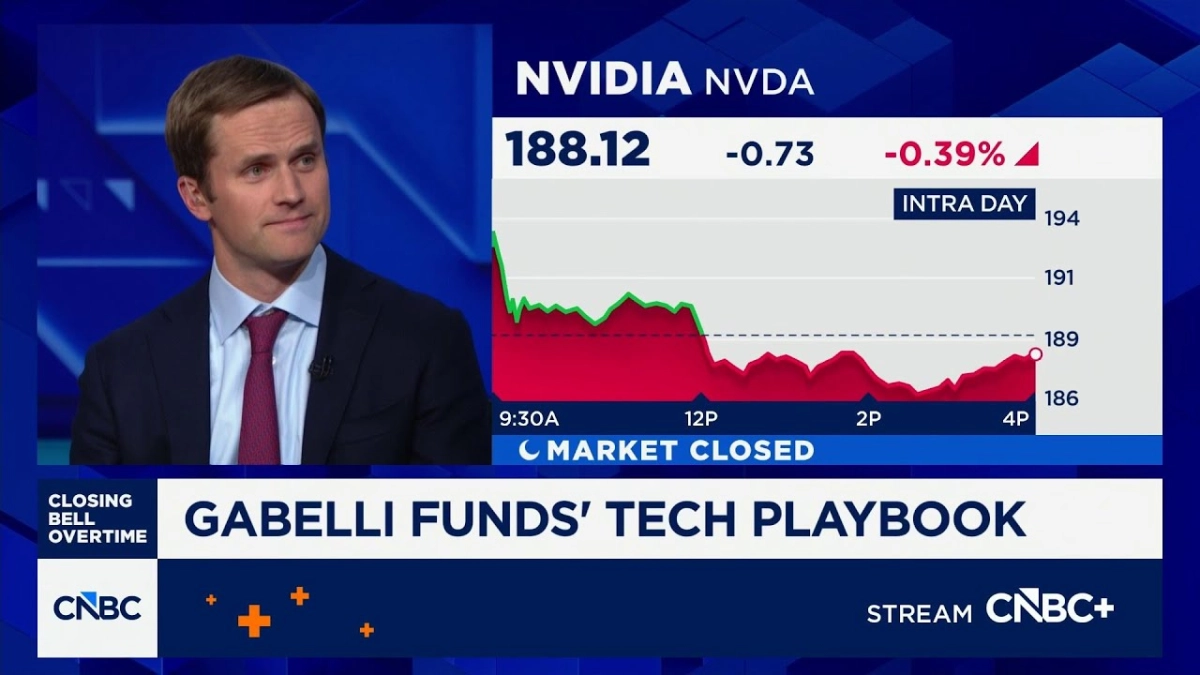
The notion that the artificial intelligence infrastructure build-out remains in its “early innings” serves as the defining perspective for investors navigating the hyper-growth phase of the technology market. This assessment, offered by John Belton, Portfolio Manager at Gabelli Funds, during a recent discussion on CNBC’s Closing Bell Overtime, frames the current investment environment not as a peak saturation point, but as a critical transition where the focus is shifting from foundational computing power to tangible, real-world applications. Belton spoke with the CNBC host about the 2026 tech playbook, detailing where Gabelli Funds sees the most compelling growth opportunities emerging beyond the established giants.

While the discussion was set against the backdrop of the Consumer Electronics Show (CES), where AI dominates the product landscape, Belton emphasized that the enduring investment thesis still hinges on the core providers of computational horsepower. He maintains a strong affinity for the leaders in the "picks and shovels" layer—the companies supplying the physical and digital infrastructure necessary for AI training and deployment. The massive capital expenditure required to support generative AI models ensures that the chip layer and data center providers remain fundamentally strong, acting as the indispensable engine of the revolution.

However, the analysis swiftly moved to the vectors of adoption that will drive the next phase of growth. Belton highlighted a significant evolution from the large language models (LLMs) that dominated 2023 discourse toward AI applications that interact directly with the physical world. This shift centers on two primary themes he expects to accelerate in 2026: robotics and scientific discovery.

The convergence of advanced AI with physical systems, often termed “physical AI” or “industrial AI,” represents a profound opportunity, particularly in areas like manufacturing, logistics, and supply chain automation. Belton pointed out that Nvidia, often seen purely through the lens of data center GPUs, is already positioning itself aggressively in this area, having dedicated significant resources to building platforms for physical AI developers and robotics. This move underscores a broader industry recognition that AI must eventually move beyond the screen and into factories, autonomous vehicles, and operational environments to deliver maximum productivity gains.

Beyond industrial applications, scientific discovery is emerging as a critical, high-impact area. Belton noted that Nvidia CEO Jensen Huang has increasingly focused his keynotes on this topic, suggesting that the application of AI to complex problems in biology, chemistry, and materials science will unlock immense value. This theme is characterized by AI models designed to accelerate research and development cycles, compressing decades of traditional lab work into months, thereby driving advancements in drug discovery and novel material creation.

The proliferation of application-layer software will determine the ultimate return on investment from the massive infrastructure build-out. Belton is closely monitoring the emergence of "agentic software," a new, growing theme.

This software involves intelligent agents capable of complex planning and execution across multiple tasks, moving AI from simple query response to proactive problem-solving. While the infrastructure layer remains essential, the exponential value creation will migrate to companies that successfully deploy these highly sophisticated, vertical-specific applications.

The market dynamics surrounding the "Magnificent Seven" (or Mag 6, excluding Tesla, as Belton prefers) also formed a crucial part of the discussion. While these companies remain fundamentally robust, exhibiting high revenue growth (near 20%) and even stronger earnings growth (north of 30% last year), the market is anticipating a relative deceleration in their growth rates. This deceleration, coupled with accelerating growth among mid-cap and smaller technology firms, fuels the expectation of a genuine market broadening in 2026. Belton cited the remarkable concentration of growth last year, noting that the Mag 6 contributed "about 70% of the S&P 500's earnings growth last year."

For investors, this broadening suggests a need for diversified exposure across the AI stack—maintaining positions in the infrastructure leaders while actively seeking out the specialized application companies poised to capitalize on the new themes of robotics and scientific discovery. The opportunity lies in the fact that while the infrastructure foundation is maturing, the deployment of AI across industry verticals is just beginning to gain momentum.