


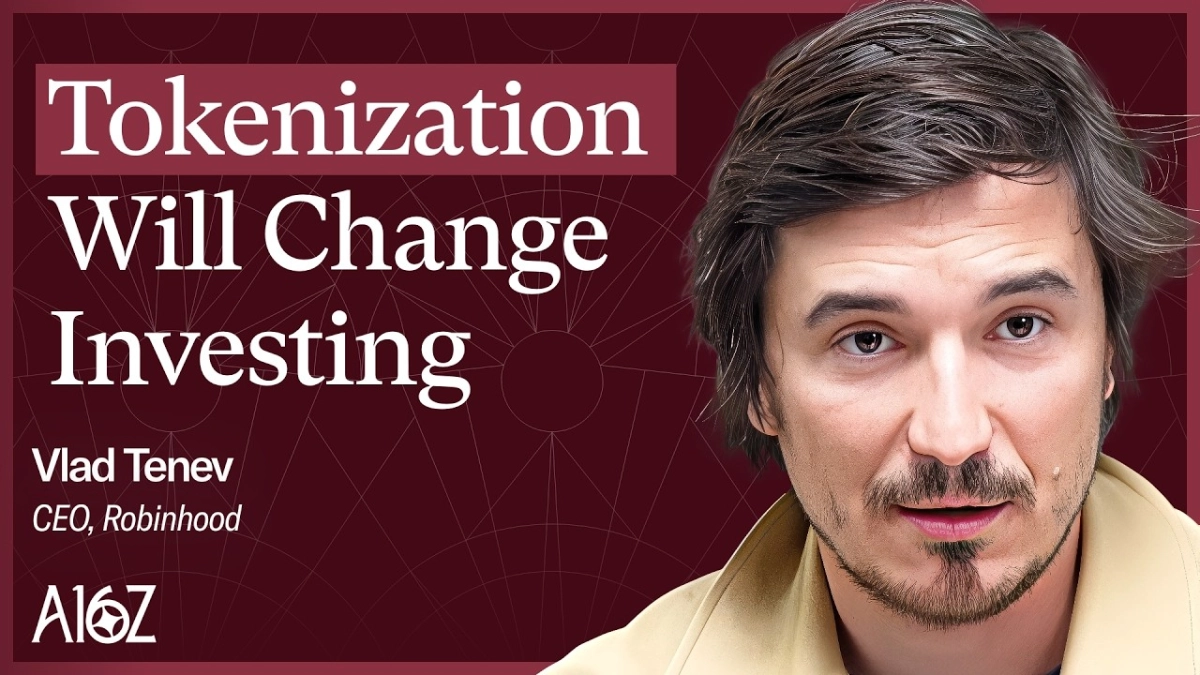
The paradox of artificial intelligence today is striking: a technology experiencing the fastest product adoption in history, yet simultaneously perceived as "the most hated category" by many. This dichotomy — rapid integration met with profound apprehension, largely due to fears of job displacement — sets a critical stage for the future of wealth distribution and societal ownership. It is against this backdrop that Vlad Tenev, CEO of Robinhood, articulates a radical vision for democratizing finance, moving beyond the zero-commission disruption that defined his company’s early years to tackle systemic issues of wealth concentration and access.
In a recent conversation with Alex Rampell and Erik Torenberg on The A16Z Show, Tenev reflected on Robinhood’s tumultuous journey and outlined an ambitious path forward. The discussion traversed Robinhood’s origins in breaking Wall Street norms, the crucible of the GameStop saga, and a bold new frontier involving tokenization, prediction markets, and a reimagined ownership economy.

Robinhood’s initial foray into finance was marked by audacious simplicity: "Why not make it free?" Tenev recalled, questioning the prevailing $7-$10 commission model for stock trades. This foundational principle, coupled with a mobile-first design, attracted millions of new investors, forcing traditional brokerages to adapt. However, building trust in financial services is a significantly higher bar than in social media, as Alex Rampell noted, stating that "having a financial relationship is a lot different than having like a Pinterest board." This distinction underscores the immense challenge and responsibility inherent in Robinhood's mission, a challenge that came to a head during the GameStop frenzy.
The GameStop event of January 2021 became a pivotal moment, triggering a two-year brand crisis for Robinhood. Tenev characterized the public narrative as a "simple lie" — Robinhood colluding with hedge funds to suppress retail traders — which proved "much more powerful than a complicated truth" about antiquated clearing mechanics. This experience highlighted the fragility of trust and the potent influence of narrative in the digital age, a lesson Tenev now applies to the broader information landscape. He champions prediction markets as "truth machines" capable of sifting through noise and information overload, offering a mechanism for collective intelligence to surface accurate probabilities, potentially outperforming traditional polls and pundits.
Beyond the immediate market dynamics, Tenev’s vision is rooted in a deeper critique of the financial system, particularly the widening gap between asset prices and wages that emerged after 1971. This historical decoupling, he argues, has locked out many from participating in the wealth generated by innovation. "If you just get paid cash... they just get left behind," Rampell observed, emphasizing the need for broader asset ownership. Robinhood’s solution involves democratizing access to private markets through tokenization, allowing retail investors to own stakes in high-growth companies like AI giants before they IPO. This radical shift aims to break the historical exclusivity of private wealth accumulation, which has traditionally been the purview of venture capitalists and institutional investors. Tenev envisions a future where ownership is more egalitarian, ensuring that the benefits of technological advancement are widely distributed rather than concentrated among a select few.
Related Reading
- Robinhood’s Vision: AI, Democratization, and the Financial Super App
- AI's Job Paradox: Senator Warner Demands Data and Industry Accountability
The conversation also touched on the often-overlooked practicalities of building a disruptive fintech company. Tenev recounted the early skepticism from investors who questioned the viability of a zero-commission model and the notion of trading stocks on a mobile phone. "Nobody was really talking about fintech," he said, recalling the regulatory uncertainty and the challenge of attracting engineering talent in New York. Yet, Robinhood persisted, betting on mobile as the primary financial device and demonstrating that a robust, commission-free trading platform was not only possible but highly demanded. This pioneering spirit, coupled with a genuine desire to serve the "little guy," ultimately reshaped the brokerage industry. The experience of being an early-career professional during the 2008 financial crisis, witnessing widespread disillusionment with the financial system, also fueled Tenev's drive to create a platform that worked for everyone.
Tenev's vision for the future of finance, particularly in the context of AI, seeks to mitigate the very fears that make AI "the most hated category." By democratizing ownership through tokenized private shares and fostering transparent "truth machines" in prediction markets, Robinhood aims to build a more inclusive financial ecosystem. This approach recognizes that the societal benefits of technological leaps must be shared broadly to avoid exacerbating existing inequalities and to counter the nihilism that can arise when people feel excluded from progress.



