

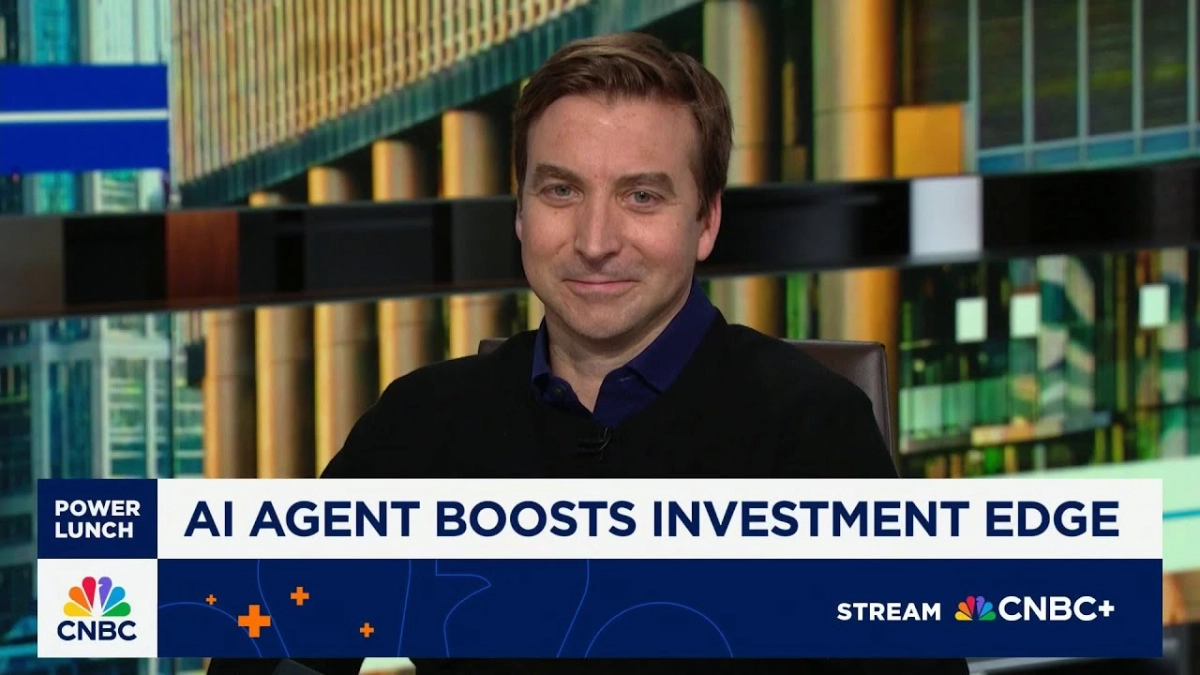
Jan Zsilagyi, co-founder and CEO of Reflexivity, recently articulated a compelling vision for artificial intelligence in finance on CNBC’s 'Power Lunch,' speaking with anchor Melissa Lee. His discussion centered on how Reflexivity’s AI platform is not merely an incremental tool but a transformative agent, fundamentally altering how institutional investors extract value from the deluge of market data. Zsilagyi underscored that the core challenge for any market participant has always been "how to really unlock the insights in the data," a challenge his company addresses head-on.
Reflexivity's platform leverages large language models (LLMs) to act as an intermediary, connecting investors with a vast array of analytics and information. This isn't just about accessing publicly available data; Zsilagyi clarified that the system taps into "premium content," data sources that institutional clients would typically subscribe to individually. The AI aggregates, processes, and presents this complex information in a digestible format, facilitating faster, more informed decision-making.
The system is already in active use by a growing number of hedge funds, investment banks, and private banks. These early adopters are experiencing tangible benefits, primarily in enhanced productivity and accelerated idea generation. Zsilagyi noted that the AI "lets them explore ideas much, much faster," enabling a "throughput of ideas that they can get through in half or a third of the time." This speed advantage is critical in fast-moving markets, allowing institutions to react and adapt with unprecedented agility.
Crucially, Zsilagyi emphasized that Reflexivity's AI is designed to augment human capabilities, not replace them. While it can function effectively as a "junior analyst" for senior portfolio managers, its primary role is to empower, not displace. This distinction is vital for an industry grappling with the ethical and practical implications of AI integration.
The platform’s ability to reduce risk by alerting users to critical market events is another significant advantage. Beyond mere alerts, the AI offers a deeper analytical lens, a crucial feature in times of economic uncertainty or when traditional data sources are compromised. This capacity to navigate ambiguity is a testament to the system's advanced analytical framework.