

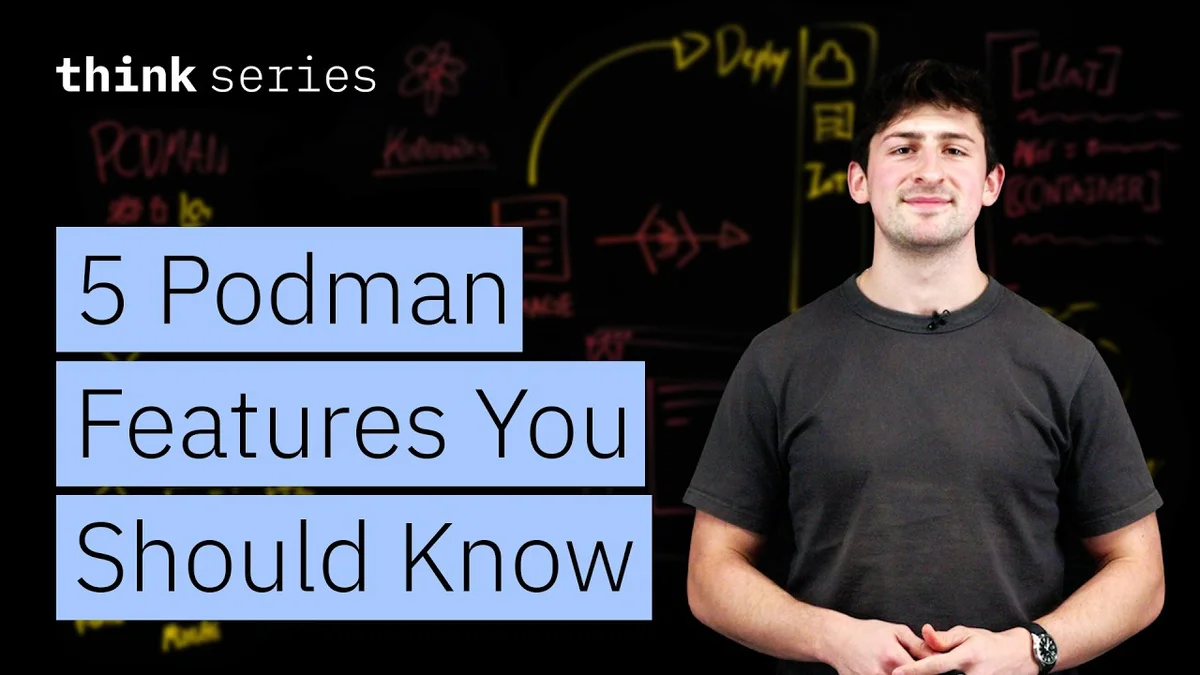
Red Hat's Clyburn on Podman's AI Potential

Red Hat's Cedric Clyburn discusses Podman, highlighting its features for AI development, including Systemd integration and bootable containers.

5 min read
Cedric Clyburn of Red Hat presenting on Podman
Cedric Clyburn, Senior Developer Advocate at Red Hat.· IBM

Cedric Clyburn, a Senior Developer Advocate at Red Hat, highlights the capabilities of Podman, an open-source containerization tool that offers a compelling alternative to Docker. In a recent discussion, Clyburn detailed how Podman's features can simplify the development and deployment lifecycle for applications, particularly those involving artificial intelligence.

Cedric Clyburn's Expertise

Cedric Clyburn is a recognized figure in the open-source community, with a focus on containerization and cloud-native technologies. As a Senior Developer Advocate at Red Hat, he plays a crucial role in bridging the gap between Red Hat's offerings and the developer community, providing insights and practical guidance on adopting and utilizing their technologies. His work often involves demonstrating the practical applications and benefits of tools like Podman.

Podman: An Open-Source Container Solution

Clyburn begins by explaining that while containers are widely understood, many users associate them primarily with Docker. He introduces Podman as a powerful, open-source alternative that provides a robust set of features for managing containerized applications. A key advantage of Podman, as highlighted by Clyburn, is its daemonless architecture, which enhances security and simplifies management.

The full discussion can be found on IBM's YouTube channel.
Related startups

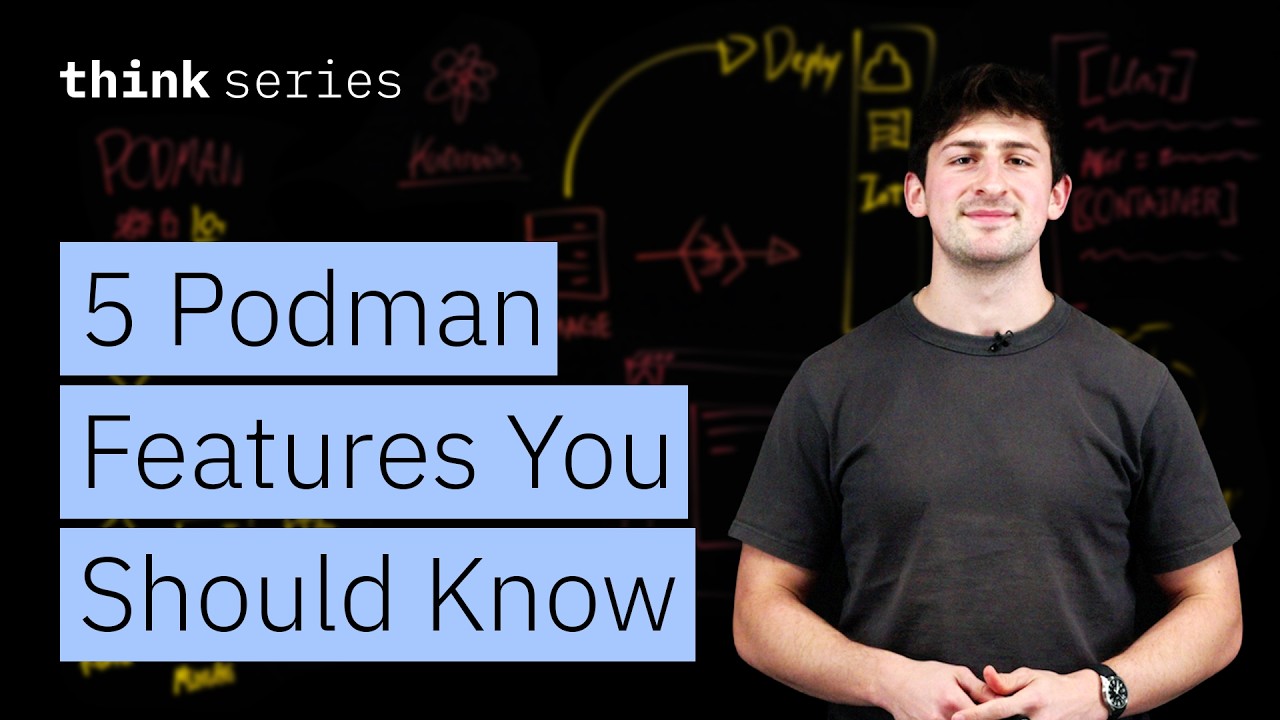
5 Podman Features You Should Know: Kubernetes & Containers Simplified - IBM
5 Podman Features You Should Know: Kubernetes & Containers Simplified — from IBM

He elaborates on how Podman enables developers to package their applications, including all dependencies and configurations, into portable container images. This process ensures that applications run consistently across different environments, from a developer's laptop to production servers. Clyburn emphasizes that this consistency is vital for efficient development and deployment workflows.

Streamlining AI Development with Podman

The conversation shifts to the specific benefits Podman offers for AI development. Clyburn points out that AI workloads often involve complex dependencies and require specific runtime environments. Podman's ability to create custom container images allows developers to precisely define these environments, ensuring that AI models and their supporting libraries are packaged correctly.

A significant feature discussed is Podman's integration with Systemd. Clyburn explains that this integration allows containers to be managed as system services, providing features like automatic startup, restart policies, and health monitoring. This capability is crucial for deploying AI applications reliably in production environments.

Introducing the 'Podman AI Lab'

Clyburn then introduces a particularly exciting feature: the 'Podman AI Lab'. This initiative focuses on making it easier for developers to leverage AI capabilities within their containerized workflows. The Podman AI Lab aims to provide pre-built container images that are optimized for running AI models and offer APIs for accessing these models.

"We have the ability to take the same container file that we use to build our applications or workloads, and deploy them to a Kubernetes cluster, or maybe a virtual machine that we want to deploy our application onto," Clyburn explains, illustrating the flexibility of containerization.

He further elaborates on the concept of bootable containers. "You can build your container file, and then deploy this container file onto something like a QEMU or a raw disk image, or even a bare metal machine," he states. This capability allows developers to package an entire operating system and application into a single, portable image, simplifying deployment across diverse hardware and environments.

The Power of Container Orchestration

Clyburn also touches upon how Podman integrates with orchestration tools like Kubernetes. He explains that by generating Kubernetes YAML manifests from Podman container definitions, developers can seamlessly transition from local development to cloud-native deployments. This process simplifies the management of containerized applications at scale.

"What's really incredible is that the team working on Podman has released Podman Desktop, which is an open-source and cross-platform application interface to manage containers," Clyburn mentions, highlighting the user-friendly aspect of the tool. This desktop application provides a graphical interface for common container operations, making it accessible even for those less familiar with the command line.

Key Features for Developers

Clyburn outlines several key features that make Podman attractive to developers:

  • Systemd Integration: Enables containers to run as system services for robust management.
  • Bootable Containers: Allows for the creation of images that can boot an entire OS with applications.
  • AI API Integration: Facilitates the use of AI models as services within containers via the 'Podman AI Lab'.
  • Kubernetes Manifest Generation: Simplifies deployment to Kubernetes clusters.
  • User-Friendly Interface: Podman Desktop offers an intuitive graphical experience.

"You can go from your container, or even just a manifest file, and deploy that container to a Kubernetes cluster, or even deploy that container onto a virtual machine that you're hosting," Clyburn explains. This level of flexibility allows for a highly portable and efficient development workflow.

Future of Podman and AI

Clyburn concludes by emphasizing that Podman's capabilities extend beyond simple container management. The ability to create reproducible environments and integrate with AI models makes it a powerful tool for the future of software development. He encourages developers to explore Podman's features, particularly its AI-related functionalities, to enhance their development and deployment processes.

© 2026 StartupHub.ai. All rights reserved. Do not enter, scrape, copy, reproduce, or republish this article in whole or in part. Use as input to AI training, fine-tuning, retrieval-augmented generation, or any machine-learning system is prohibited without written license. Substantially-similar derivative works will be pursued to the fullest extent of applicable copyright, database, and computer-misuse laws. See our terms.