

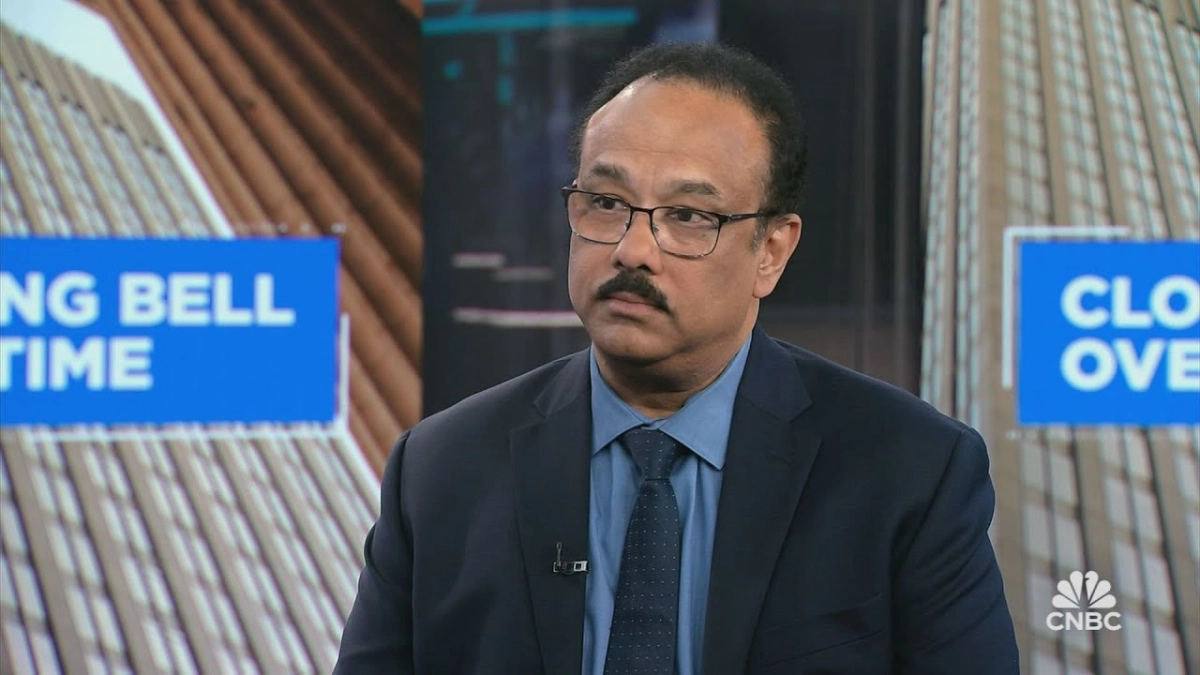
"It's a paradigm shift from research to reality." This declaration from Rajeeb Hazra, President and CEO of Quantinuum, signals a pivotal moment for quantum computing, transitioning from the theoretical confines of academic labs into tangible commercial applications. In a recent interview with Morgan Brennan on CNBC's "Closing Bell Overtime," Hazra unveiled Helios, Quantinuum's latest quantum computer, emphasizing its role in unlocking unprecedented capabilities across industries. The discussion centered on Helios's technical prowess, its immediate market availability, and the profound implications of quantum technology, particularly when converged with artificial intelligence.
Quantinuum's Helios is billed as the world’s most accurate quantum computer, representing a significant leap forward in a field long dominated by experimental breakthroughs rather than market-ready solutions. Hazra highlighted that for years, quantum computing remained largely within research labs, with progress measured in incremental advancements. Today, with Helios, Quantinuum is actively breaking out of that lab environment, offering a commercial product accessible both through the cloud and on-premise, complete with a mature software stack designed to empower developers.
The immediate impact of Helios is evident in its early customer engagements. Major players like SoftBank, JPMorgan Chase, and Amgen are already leveraging Quantinuum's cloud system for diverse, early-stage commercial applications and investigations. Furthermore, a strategic five-year partnership in Singapore will see the first Helios unit deployed on a customer premise outside the U.S., powering regional ecosystems and strengthening industrial bases. This widespread adoption underscores the growing recognition of quantum's immediate utility.
A core insight Hazra repeatedly stressed was the synergistic potential between quantum computing and artificial intelligence, dubbed "Gen Q-AI." He explained, "Unlocking the value of AI by helping AI get trained better with quantum simulations and data to discover new molecules or discover new drugs." This convergence is poised to revolutionize fields such as pharmaceuticals, material science, and energy, where the complexity of molecular interactions and data analysis often overwhelms classical computing capabilities. Quantum computers can simulate intricate molecular structures and processes with unparalleled precision, generating rich datasets that can significantly enhance AI model training, leading to faster and more accurate discoveries.
The broader implications extend to national and industrial security, with Hazra noting, "Quantum technologies is now rapidly being recognized as part of both industrial and national security. It is the great unlock to AI... It's really the next frontier of computation." This perspective elevates quantum from a niche technology to a strategic imperative. Countries and corporations that invest in developing quantum capabilities, building robust application ecosystems, and cultivating a skilled quantum workforce will gain a significant competitive advantage in the future global landscape.