

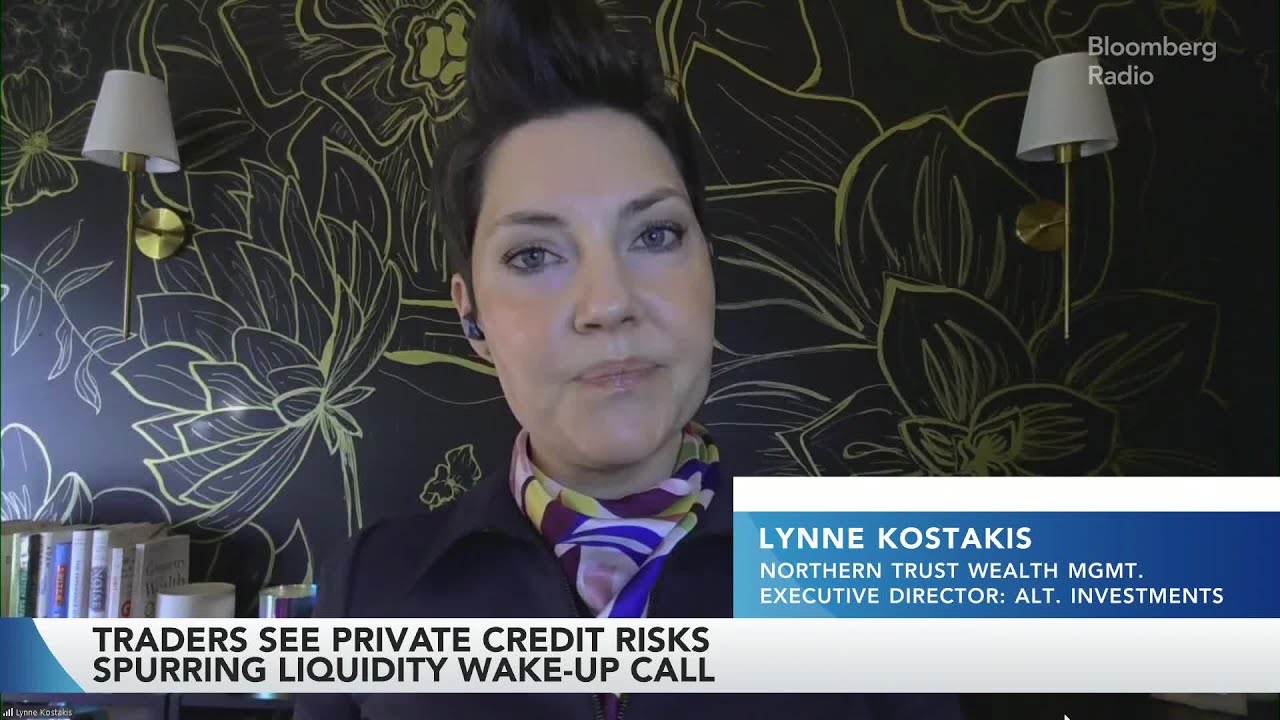
Lynne Kostakis, Executive Director of Alternative Investments at Northern Trust Wealth Management, discussed the evolving dynamics within the private credit market, highlighting a growing trend of investors demanding greater liquidity and transparency. The conversation, broadcast on Bloomberg Radio, suggests that the previously rapid growth in private credit is now facing increased scrutiny as market participants re-evaluate risk and return profiles.
Lynne Kostakis: A Key Voice in Alternative Investments
Lynne Kostakis serves as an Executive Director at Northern Trust Wealth Management, specializing in alternative investments. Her role involves guiding clients through complex investment strategies outside of traditional public markets. With extensive experience in this sector, Kostakis brings a valuable perspective on the opportunities and challenges inherent in areas like private credit, private equity, and hedge funds.
The "Liquidity Wake-Up Call" in Private Credit
Kostakis identified a critical shift occurring in the private credit space, characterized as a "liquidity wake-up call." She noted that while the market has seen substantial growth, there's an increasing disconnect between the redemption terms offered to investors and the actual liquidity of the underlying assets. This mismatch is prompting a more cautious approach from investors.
The full discussion can be found on Bloomberg Podcast's YouTube channel.
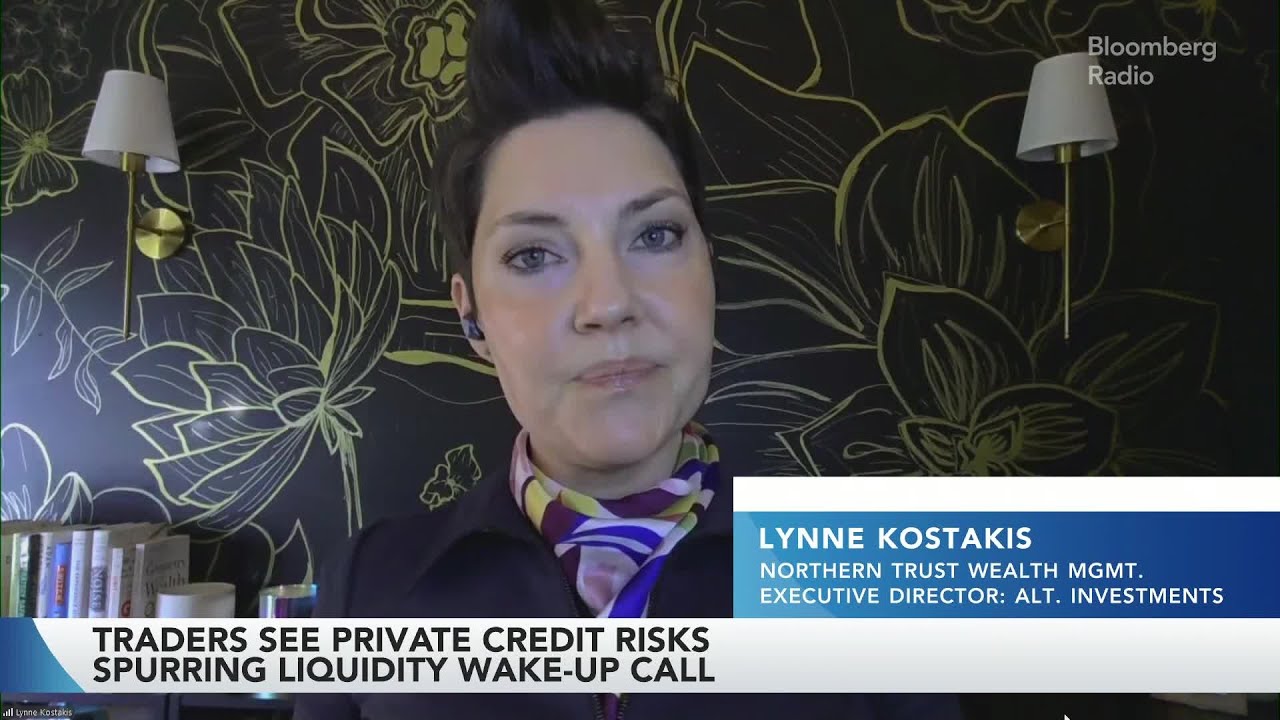
Kostakis explained, "What you're seeing is that the ones that are continuously invested, that became synonymous with this evergreen name, that are continuously invested versus that drawdown structure, that's the one that's fitting a lot of the broader market growth." She further elaborated on the concept of "evergreen" structures in private markets, which typically offer investors more continuous access to their capital compared to traditional closed-end funds. However, she cautioned that this can lead to a significant mismatch between redemption terms and the underlying, often illiquid, assets.
Private Market Growth and Investor Scrutiny
The conversation highlighted the exponential growth of private markets over the past decade, with private credit tripling in size. Kostakis pointed out that this expansion has not been uniform, with a significant portion of this growth occurring within the "evergreen" component of private markets. "It's about that evergreen name that's continuously invested versus that drawdown structure," she stated. This has led to a situation where many investors are continuously deployed in illiquid assets, creating potential challenges when liquidity is needed.
Kostakis elaborated on the investor sentiment, stating, "I think what's happening is you've got underlying investments that aren't liquid, that aren't part of a marketable security, and so what's happening is you've got this mismatch in liquidity from the redemption term and that underlying position." This mismatch means that while investors might expect to redeem their capital within a certain timeframe, the underlying assets may not be easily convertible to cash, creating a potential bottleneck during periods of market stress.
The Role of AI and Technology
While the discussion primarily focused on market structure and liquidity, Kostakis also touched upon the broader impact of technology, including AI, on various industries. She noted that AI has the potential to disrupt numerous sectors and companies, but also offers opportunities for growth. "AI definitely has the potential to disrupt lots of different industries and different companies," Kostakis observed. However, she also emphasized that "there's also this opportunity for a lot to gain and benefit from that as well too." This dual nature of technological advancement means that investors need to be particularly astute in identifying which companies and sectors are best positioned to adapt and thrive.
The Shift Towards Discipline in Private Markets
Kostakis indicated that the current market environment is prompting a greater emphasis on discipline among investors. "What we're seeing is a lot more of clients really trying to understand what are those underlying investments, what's the size, what's all this mean?" she explained. This increased focus on due diligence and understanding the intricacies of private investments is a direct response to the liquidity concerns that have emerged.
She further elaborated on the changing investor appetite, stating, "Are your clients now, are they more reluctant now to go into private credit?" Kostakis responded, "Not necessarily reluctant, but they're definitely looking for more of that education and understanding of what that actually means." The conversation highlighted that investors are moving beyond simply chasing yield and are now prioritizing a deeper understanding of the risks and liquidity characteristics of their private market allocations. This includes scrutinizing the terms of redemption and ensuring they align with the underlying asset's liquidity profile.
Kostakis provided a quantitative perspective, noting that in private credit, the premium over traditional fixed income has historically been around two percentage points. "So it's typically its been historically a couple of percentage points above that higher yield space," she said. However, she stressed that this premium needs to be carefully evaluated in light of the illiquidity premium. "If you think about the farther the out you go on that spectrum, it's a couple of percentage points. And so what we're seeing is a lot of headlines and a lot of conversation around what does this all mean?"
The core of the discussion revolved around the need for investors to understand the fundamental differences between liquid and illiquid assets. Kostakis emphasized that the market is shifting towards a more disciplined approach, where investors are not just looking at headline returns but are deeply analyzing the underlying structures and potential risks. "It's about that discipline coming back into play," she concluded, suggesting that the era of easy growth in private markets might be giving way to a more cautious and informed investment landscape.
