

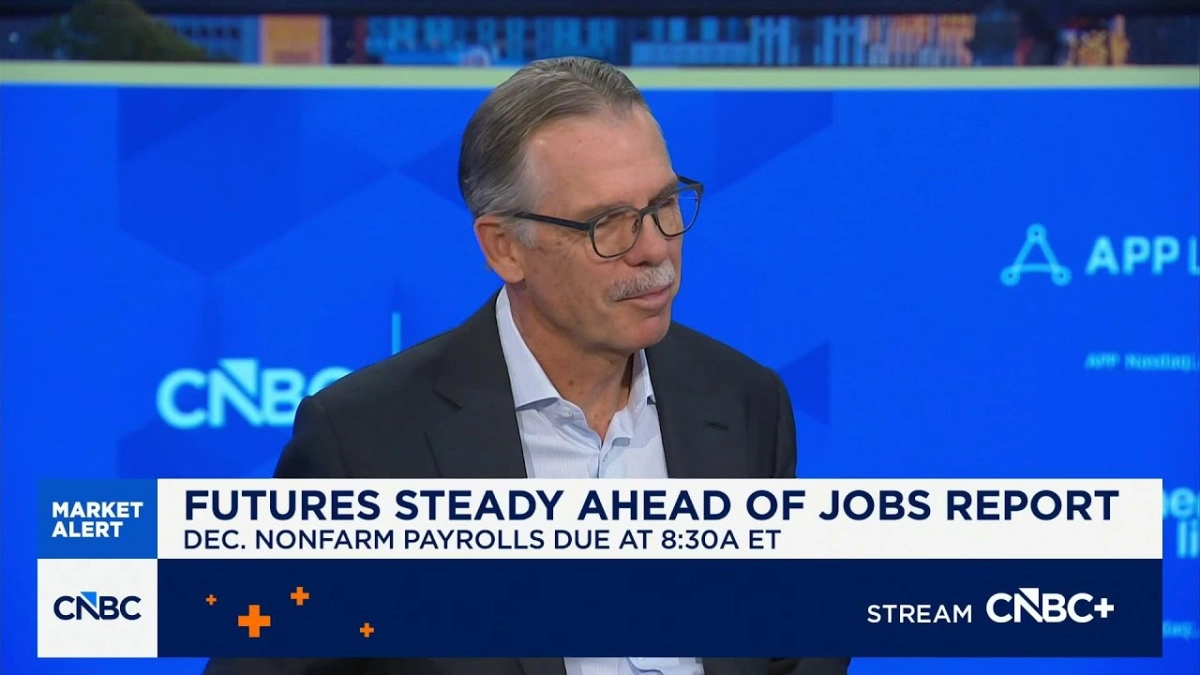
On a recent episode of CNBC’s Squawk Box, North Island Co-founder and Chairman Glenn Hutchins joined the hosts to discuss the confounding disparity between strong GDP growth and weak employment figures, the impact of AI on the labor market, and the colossal challenges facing the next Federal Reserve Chair. Hutchins offered a sharp analysis, suggesting that the current economic strength is largely a delayed benefit from technological investments made years ago, rather than a reflection of recent AI adoption.
Hutchins opened by addressing the persistent conundrum in the economic data: robust GDP growth alongside lackluster job creation and unemployment figures. He posits that this anomaly is explained by the belated realization of efficiencies from pre-AI investments, specifically in cloud computing, big data infrastructure, and machine learning. These investments, made over the last decade, are now being aggressively leveraged by a new cohort of digitally native, tech-savvy executives. “Company after company are right now extracting value in the form of efficiencies from the last ten years of investing in things like the cloud, big data, and machine learning,” Hutchins stated.
This insight suggests that the productivity gains currently being measured are not the direct result of recent generative AI breakthroughs, but rather the operational streamlining enabled by foundational digital infrastructure. The prior generation of leadership often resisted or delayed adopting these technologies, whereas today’s leaders are embracing them, leading to a surge in efficiency without a corresponding surge in hiring. This is not the AI boom yet; it is the final wave of the cloud boom’s impact on corporate efficiency.
The real impact of current AI investment, Hutchins argues, is yet to hit the economy and will follow a classic J-curve: initial investment followed by exponential, yet disruptive, returns. Because the current generation of executives is moving aggressively to invest in AI, Hutchins predicts the productivity explosion will be significant—but it will come at a cost to the labor market. The way AI will “bail us out,” he warns, is by using “many fewer people to do these things.” This implies that while AI will ultimately drive massive economic growth and productivity, it will exacerbate existing structural unemployment problems, particularly in middle-class jobs already hit hard by earlier waves of automation and globalization.
The loss of manufacturing jobs and the stagnation of middle-class wages over the last few decades have been driven more by technology than by trade. This trend will only intensify with the widespread adoption of artificial intelligence.
The looming specter of increased structural unemployment presents a unique challenge to central banks worldwide, including the Federal Reserve. Hutchins notes that the world’s 20 largest economies are generating average deficits of 6% of GDP, and many are starting with debt levels near 100% of GDP. This scenario is completely unsustainable.
The incoming Fed Chair will face an “enormously difficult task” managing monetary policy under these conditions. Central banks lack the tools to address structural unemployment. If fiscal authorities continue to run massive deficits, they will eventually run out of “policy space” to address economic issues. This leads to a situation Hutchins calls “fiscal dominance,” where the government’s immense fiscal needs drive monetary and economic policy, forcing central banks to keep interest rates low to facilitate debt financing and inflate away the debt.
The pressure to keep interest rates down to avoid a financial crisis is at odds with the need for affordability and inflation control. Investors, recognizing this precarious position, are already hedging their bets against traditional fiat currency and debt instruments. They are buying gold, silver, Bitcoin, and Treasury Inflation-Protected Securities (TIPS), seeking assets that provide a buffer against both inflation and the potential for financial instability driven by excessive government debt and structural economic shifts.



