


The burgeoning demand for artificial intelligence, particularly its infrastructural backbone, is creating unprecedented opportunities and challenges, a dynamic sharply illuminated by the recent partnership between Poolside and Coreweave. Eiso Kant, co-CEO of Poolside, spoke with CNBC's Joe Kernen on "The Exchange" about this ambitious venture, which aims to develop one of the largest AI data centers in the U.S., dubbed Project Horizon, and the broader implications for the AI landscape. The discussion revealed a strategic approach to powering the future of AI, grounded in resource proximity and modular efficiency, even as it acknowledges the speculative fervor surrounding the sector.
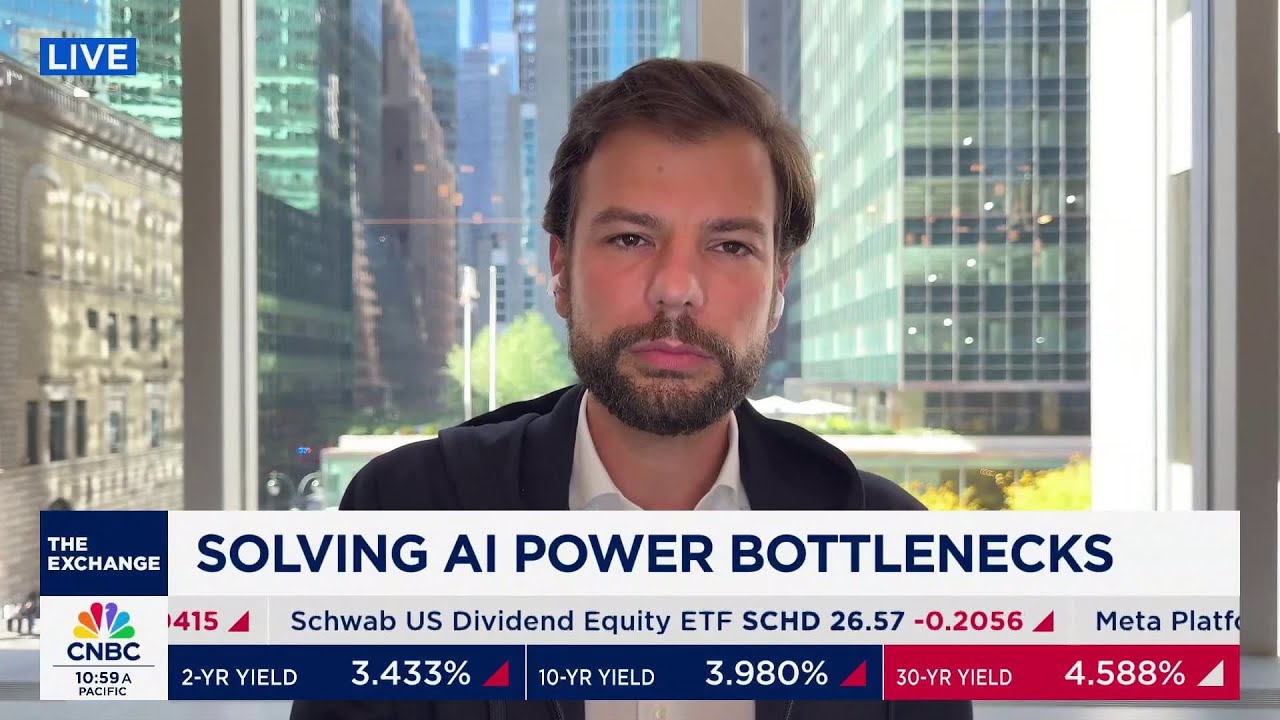
The core of the announcement centers on Project Horizon, a colossal data center complex slated for West Texas. This facility is designed to boast an impressive 2 gigawatts of total capacity, a scale roughly equivalent to the power generated by the Hoover Dam. Kant emphasized the strategic choice of location, noting that "West Texas is an incredible place to be able to power energy generation by not straining the grid, but by doing it directly next to where you’re building your data centers." This approach highlights a crucial insight in the current AI infrastructure race: direct, localized energy generation is paramount to circumventing the existing grid limitations and ensuring sustainable, scalable compute power.
Poolside, an AI company focused on achieving Artificial General Intelligence (AGI) and integrating intelligence into enterprise solutions, is collaborating with Coreweave, a specialized cloud provider known for its GPU-accelerated infrastructure. This partnership is not merely about building a large data center; it's about pioneering a more efficient deployment model. The facility will utilize off-site modular construction and on-site natural gas generation, promising faster, cheaper, and more efficient deployment of AI compute resources. This innovative construction method allows for rapid scaling and reduced lead times, a critical advantage in an industry where demand for processing power is outpacing supply at an exponential rate.
The financial backing for such an undertaking is substantial, reflecting the high stakes and perceived value in AI infrastructure. Poolside's investor roster includes prominent names like Bain, Redpoint, Nvidia, IDST, and Softbank, indicating robust private sector confidence. Kant also alluded to interest from public sectors, underscoring the broad recognition of AI's strategic importance. While acknowledging "rumors around fundraising," he firmly stated that "the fact that this project is underway, it's ongoing, and we'll be starting construction in the next 60 days," signals a concrete commitment beyond speculative headlines. This project is not merely theoretical; it is actively moving from concept to construction.
Kernen, observing the rapid succession of massive AI-related announcements, questioned the feasibility and funding of projects now being discussed in quadrillions, rather than just trillions. He provocatively asked if the money has even been "printed yet" for some of these ventures. Kant's response offered a candid and critical assessment of the current market climate, stating, "I would go as far as saying is that we're clearly seeing bubble behavior in this market." This insight is crucial for founders and VCs navigating the AI boom, suggesting a need for discernment amidst the hype.